
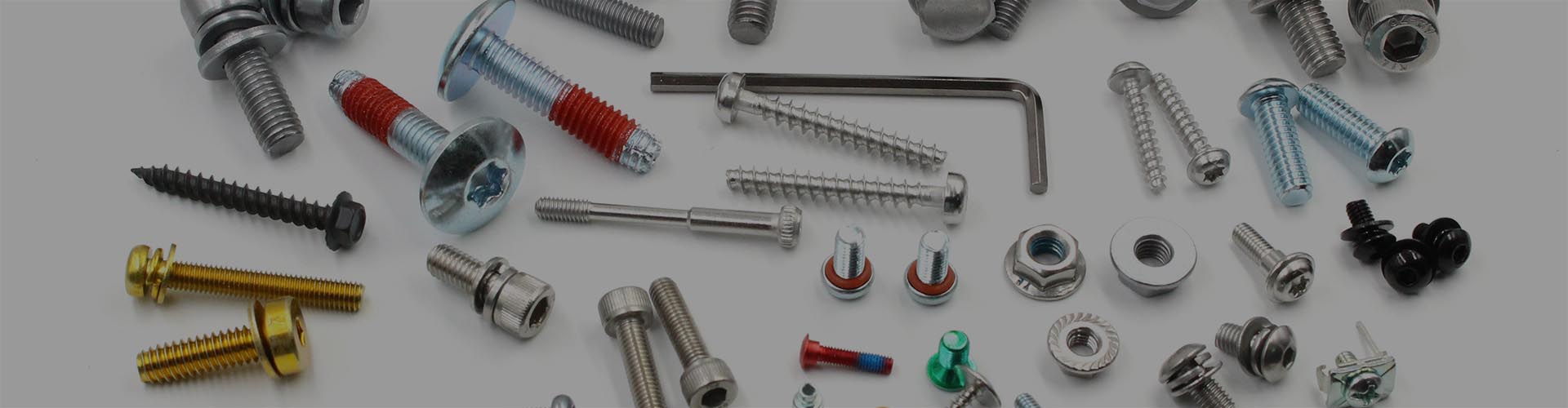
Shoulder Screws Precision‑Shoulder Fasteners For Positioning, Pivoting And Spacing Assembly


1. Functional Structure Break‑Down
Each shoulder screws consists of three core functional sections, each serving distinct engineering purposes:
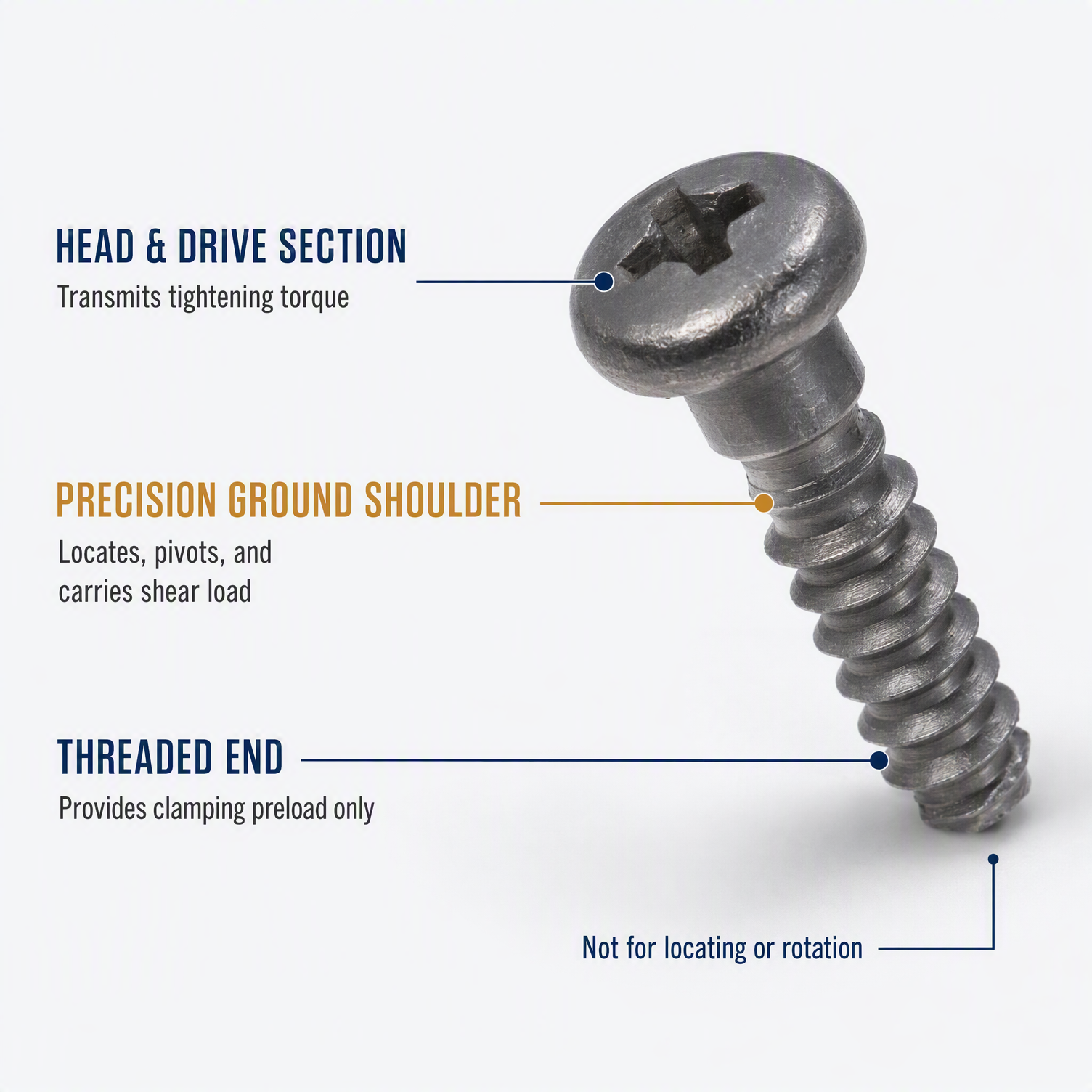
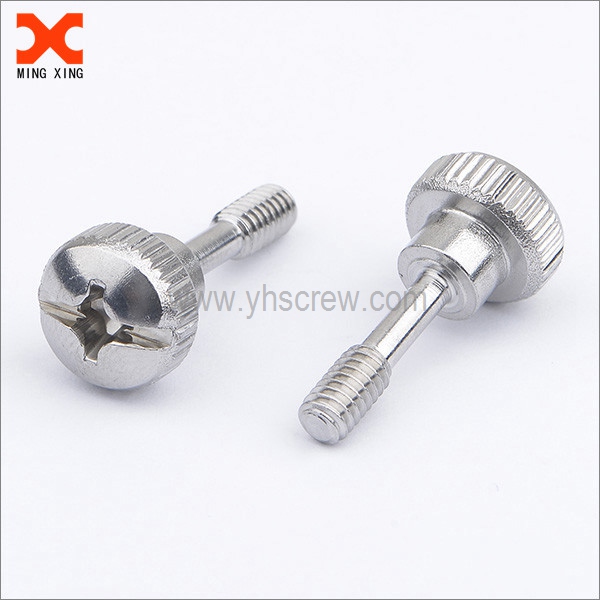
- Head & drive section: Transmit tightening torque; available in socket hex, phillips pan‑head, torx drive for different tooling conditions.
- Precision‑ground shoulder (key functional part): Smooth un‑threaded cylindrical journal, determines fit tolerance for bore hole, bearing or bushing mating; undertakes shear load, acts as pivot shaft or spacing limit.
- Threaded end section: Only provides clamping pre‑load, does NOT participate in positioning or rotation fit.
2. Main Parameter Overview Table
3. Simple Selection Decision Tree For shoulder screws
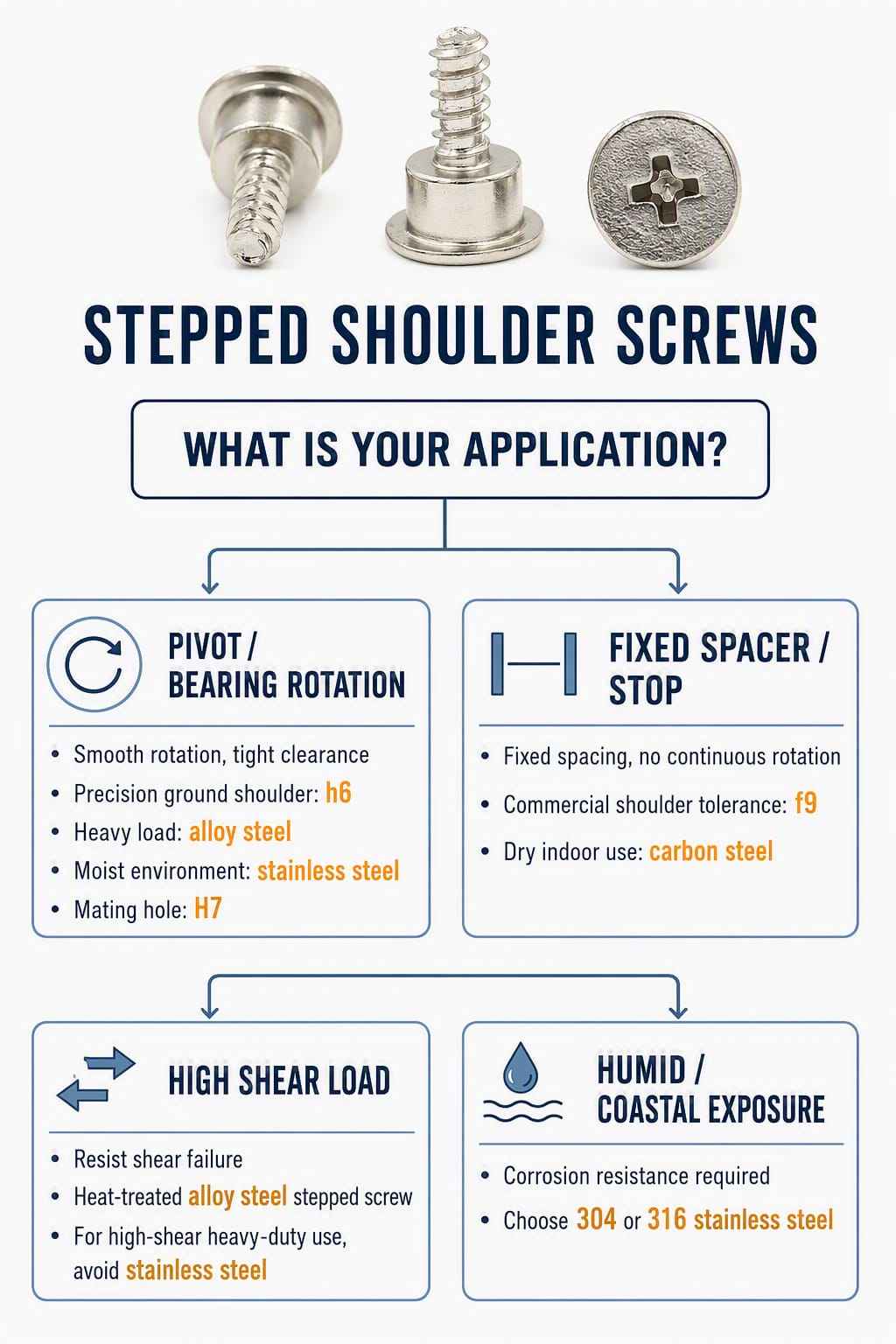
Follow these branches to narrow down your specification:
If for pivot / bearing‑rotating joint
Requirement: smooth rotation, minimal clearance ‑ Pick h6 precision ground shoulder tolerance ‑ Material: alloy‑steel for heavy load; stainless‑steel for damp environment ‑ Confirm bore hole adopts matching H7 fit tolerance
If only for fixed spacing & limit stop
Requirement: fixed spacing dimension, no continuous rotation ‑ Adopt f9 commercial‑grade shoulder tolerance ‑ Carbon‑steel is acceptable for indoor dry environment
If working under heavy shear force
Requirement: resist shear fracture ‑ Select alloy‑steel heat‑treated shoulder screws ‑ Avoid using stainless‑steel for high‑shear heavy‑load scenarios
If exposed to humid / coastal atmosphere
Requirement: anti‑corrosion ‑ Choose 304 or 316 stainless‑steel shoulder screws
4. Our Custom Manufacturing & Delivery Workflow
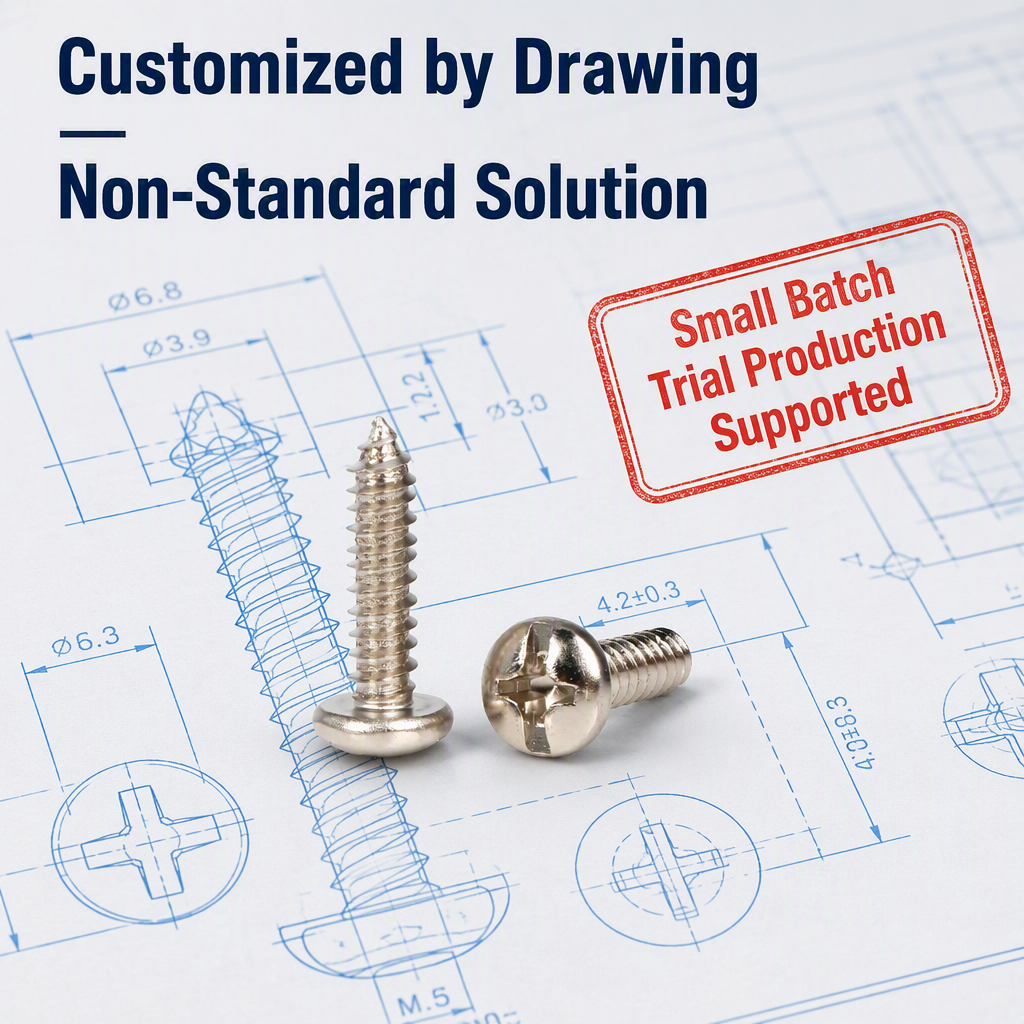
When standard‑catalog shoulder screws cannot meet special shoulder diameter, shoulder length, drive‑type or tolerance demand:
- Submit technical drawing: mark shoulder diameter, shoulder length, thread spec, tolerance grade, material and surface finish.
- Engineering team reviews manufacturability, returns formal quotation plus production lead‑time.
- Produce pre‑production samples for fit‑test, pivot test or spacing‑verification on customer’s real workpiece.
- After sample confirmation, proceed to mass‑volume manufacturing and shipment.
FAQ
Q1: What is the most critical dimension of shoulder screws ?
A: The shoulder diameter and shoulder length are core functional dimensions, not thread size. Thread only provides clamping force.
Q2: Can standard machine screws replace shoulder screws for pivot rotation?
A: Not recommended. Ordinary machine‑screw full‑thread cannot achieve stable rotating‑fit clearance, will bring wobble and positioning drift.
Q3: Do you support non‑standard shoulder tolerance for ultra‑precision instruments?
A: Yes, we can achieve tightened custom grinding tolerance against customer drawing requirements.
-
china screw factori custom torx head shoulder s...
-
Cross recessed slotted stainless steel shoulder...
-

China Fasteners Custom torx flat head step shou...
-
custom machine pan head shoulder screw
-
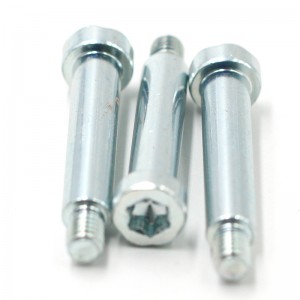
custom cheap price socket shoulder screw
-
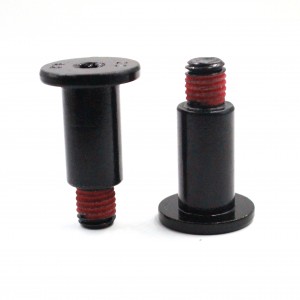
custom shoulder screw with nylon patch
-
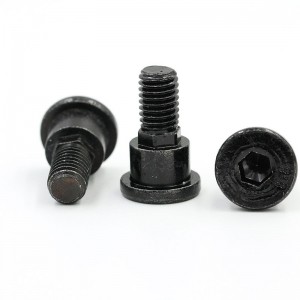
Factory Price Fasteners Custom shoulder Screws
-

Custom Stainless Steel M2 M2.5 M3 M4 Knurled C...
-

Nylon Patch step Bolt cross M3 M4 small Shoulde...
-
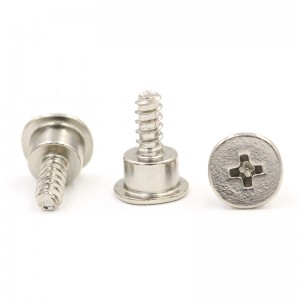
factory productions custom step shoulder screw





