banner (1)

Custom Socket Head Shoulder Screw for Factories

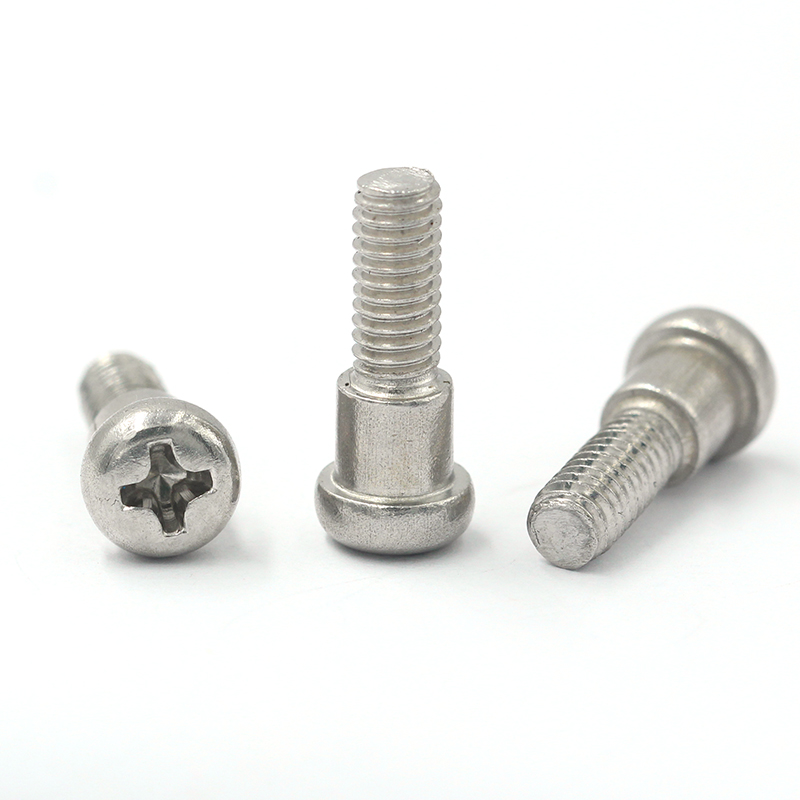
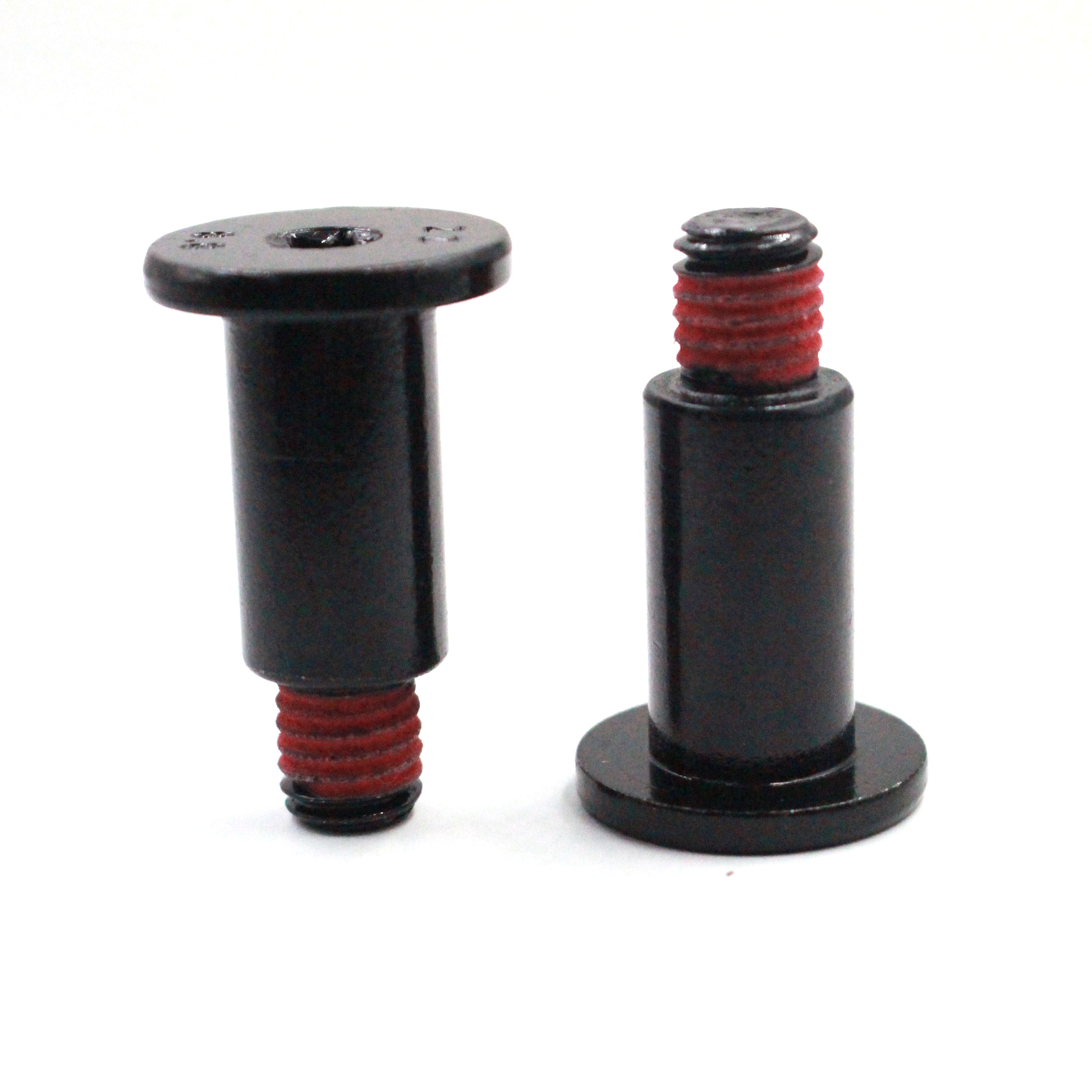
Carefully engineered Socket Head Shoulder Screw is my go-to part for precise alignment and smooth operation in production lines. I offer Custom options to match different tolerances, shoulder diameters, and thread pitches, so you can standardize parts across factories without sacrificing performance. Made from high-strength alloy steel or stainless steel, heat-treated for extra endurance, these screws resist wear in dynamic assemblies. The socket head drives allow tool-free assembly, while the shoulder provides accurate positioning and consistent preload. I can supply in customizable lengths and finishes, with tight length tolerances and head style options to meet your jig, fixture, or linkage needs. For production teams in factories, reliability matters—so I focus on clean threading, reduced galling, and corrosion resistance. If you need a precise, durable Socket Head Shoulder Screw with Custom specs, I’ve got you covered for your next batch.

Hot Selling Product

Socket Head Shoulder Screw For the Current Year Where Service Meets Innovation

In the current year where service meets innovation, socket head shoulder screws are redefining precision assemblies. They combine a cylindrical shoulder for exact axial alignment with a socket-driven head that provides secure torque without protruding hardware. Suited for robotics, automation lines, medical devices, and precision machinery, they ensure consistent shoulder height and tight clearance. Materials span stainless and alloy steels, with coatings and customization options for shoulder length, head size, and thread pitch. For global buyers, the value extends beyond parts: scalable supply, rigorous quality control, and traceable manufacturing. Expect certification-ready documentation, standardized inspection data, flexible packaging, and reliable on-time delivery across markets. Modern service models pair technical support, rapid prototyping, and proactive after-sales care with ongoing process innovation—driving performance, reducing risk, and speeding time-to-market for sophisticated assemblies.

{ Socket Head Shoulder Screw For the Current Year Where Service Meets Innovation}

Part Number Material Grade / Standard Finish Head Diameter (mm) Shoulder Diameter (mm) Shoulder Length (mm) Thread Size Thread Length (mm) Overall Length (mm) Tensile Strength (MPa) Hardness (HRC) Temp Range (°C)
SHS-304-4x10-001 Stainless Steel 304 AISI 304; ASTM F593 Satin 6.0 4.0 10.0 M4 6.0 16.0 520 22 -60 to 300
SHS-316-5x12-002 Stainless Steel 316 AISI 316 Passivated 7.0 5.0 12.0 M5 8.0 20.0 520 20 -55 to 300
SHS-6061-T6-3x8-003 Aluminum 6061-T6 ASTM B211 Anodized 5.5 3.0 8.0 M3 5.0 13.0 310 12 -40 to 100
SHS-4140-6x15-004 Alloy Steel 4140 AISI 4140 Heat Treated 6.5 4.5 15.0 M6 9.0 24.0 900 28 -60 to 315
SHS-SS304-6x20-005 Stainless Steel 304 AISI 304 Polish 8.0 6.0 20.0 M6 12.0 32.0 520 20 -60 to 250
SHS-SS316-8x25-006 Stainless Steel 316 AISI 316 Passivated 9.0 8.0 25.0 M8 14.0 39.0 570 22 -70 to 260

Related Products

banner (3)

Socket Head Shoulder Screw Dominates Custom Solutions,

Data Dimension: Custom Solutions Adoption by Fastener Type

Socket Head Shoulder Screw
92
Socket Head Cap Screw
65
Hex Bolt
40
Set Screw
35
Custom Specialty Fastener
28
Other Fasteners
16
Explanation: This chart presents a data dimension titled 'Custom Solutions Adoption by Fastener Type'. It uses a horizontal bar chart to depict relative demand across several fastener categories commonly used in custom-machined assemblies. The Socket Head Shoulder Screw dominates the spectrum, achieving the highest adoption score of 92 out of 100. This reflects its unique mechanical properties: precise shoulder length and diameter, high torque tolerance, and a flush, low-profile head that simplifies assembly in constrained spaces. Such features make it a preferred choice in custom solutions where alignment, load transfer, and repeatability are critical. Other types show progressively lower adoption: Socket Head Cap Screws at 65, Hex Bolts at 40, Set Screws at 35, Custom Specialty Fasteners at 28, and Other Fasteners at 16. The relative ranking reveals how design requirements influence fastener selection. Socket head variations are favored when accessibility and multi-axial loads are factors, while standard fasteners serve conventional assemblies and are less often optimized for customization. The chart also highlights potential growth areas: increasing demand for specialty fasteners or new coatings might shift adoption in future iterations, narrowing the gap with the dominant socket head shoulder category. From a manufacturing and sourcing perspective, the distribution informs inventory planning, supplier negotiation, and lead-time management. It suggests where engineering effort should focus—tight tolerance control, material compatibility, corrosion resistance, and finish processes for the top category—and where simplification might be possible without compromising performance. For product teams, this data helps align design guidelines with customer needs, balancing performance with cost. If trends over time are tracked, rising shares for specialized fasteners could indicate a shifting emphasis toward bespoke solutions, while a widening gap could reinforce current best practices. Overall, the chart communicates that, within custom solutions, the Socket Head Shoulder Screw plays a central role, guiding decisions across design, procurement, and production planning in mechanical assemblies.

Top Selling Products