Shoulder Screws Precision Locating Fasteners For Pivot And Spacing Work
Real‑world working principle
Most standard machine screws use threads for both clamping and locating. This creates wobble and inconsistent spacing when parts rotate or slide.
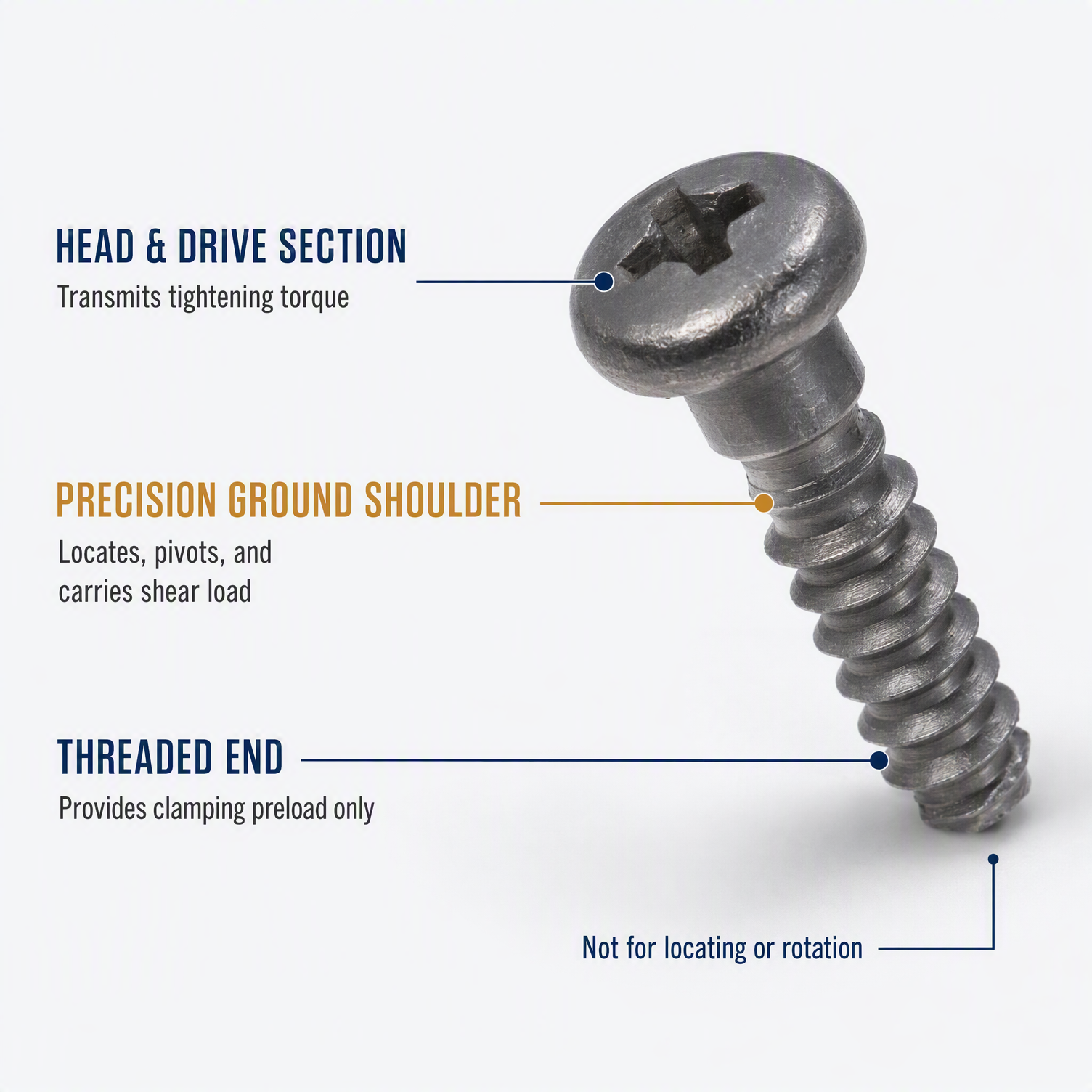
With shoulder screws, load breaks down into two simple parts:
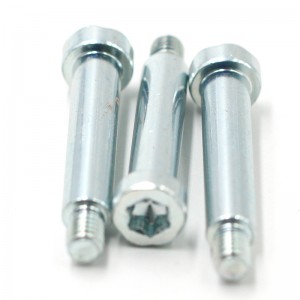
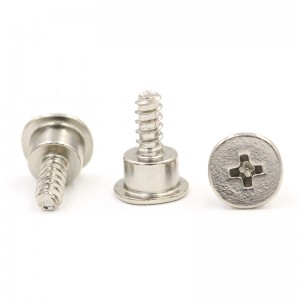
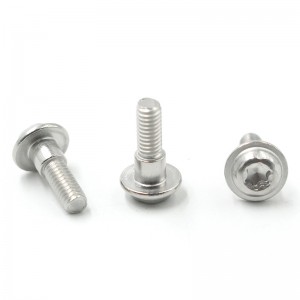
- 1 Smooth machined shoulder: takes on locating, sliding, pivoting and shear load. This is the core working section.
- 2 Threaded end: only delivers clamping pre‑load, it never acts as locating surface.
That split‑job setup makes these bolts widely used for jigs, fixture stops, hinge‑style pivots and automation linkage parts.
Available build options
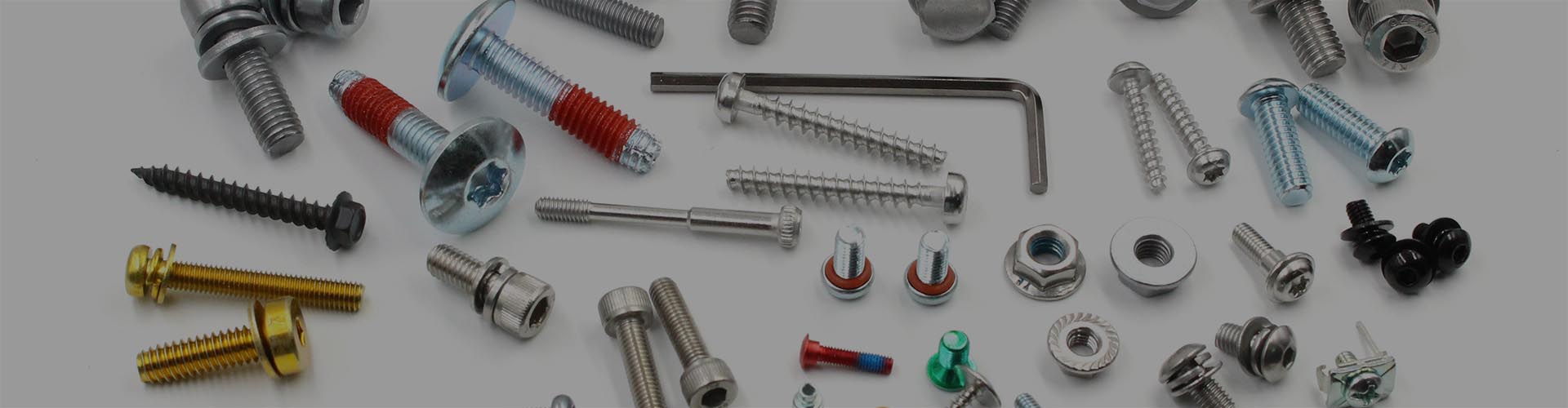
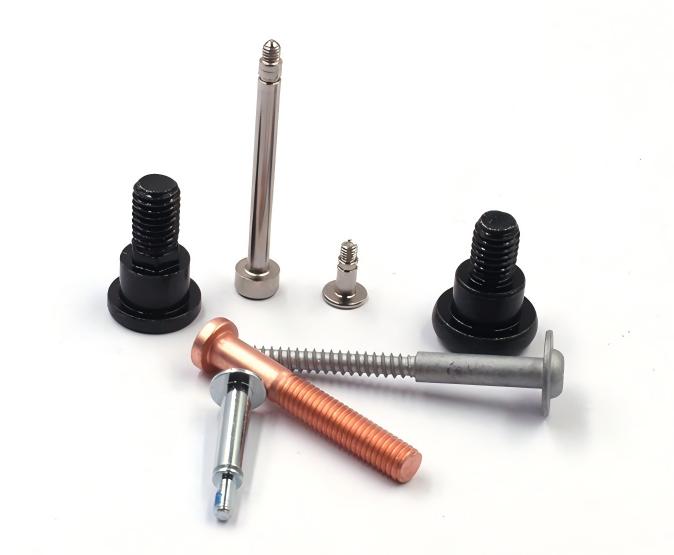
We keep flexible material, drive and finish choices to match real project conditions.
Practical picking notes from our production team
These are small but easy‑to‑miss points gathered from years handling OEM orders for shoulder screws.
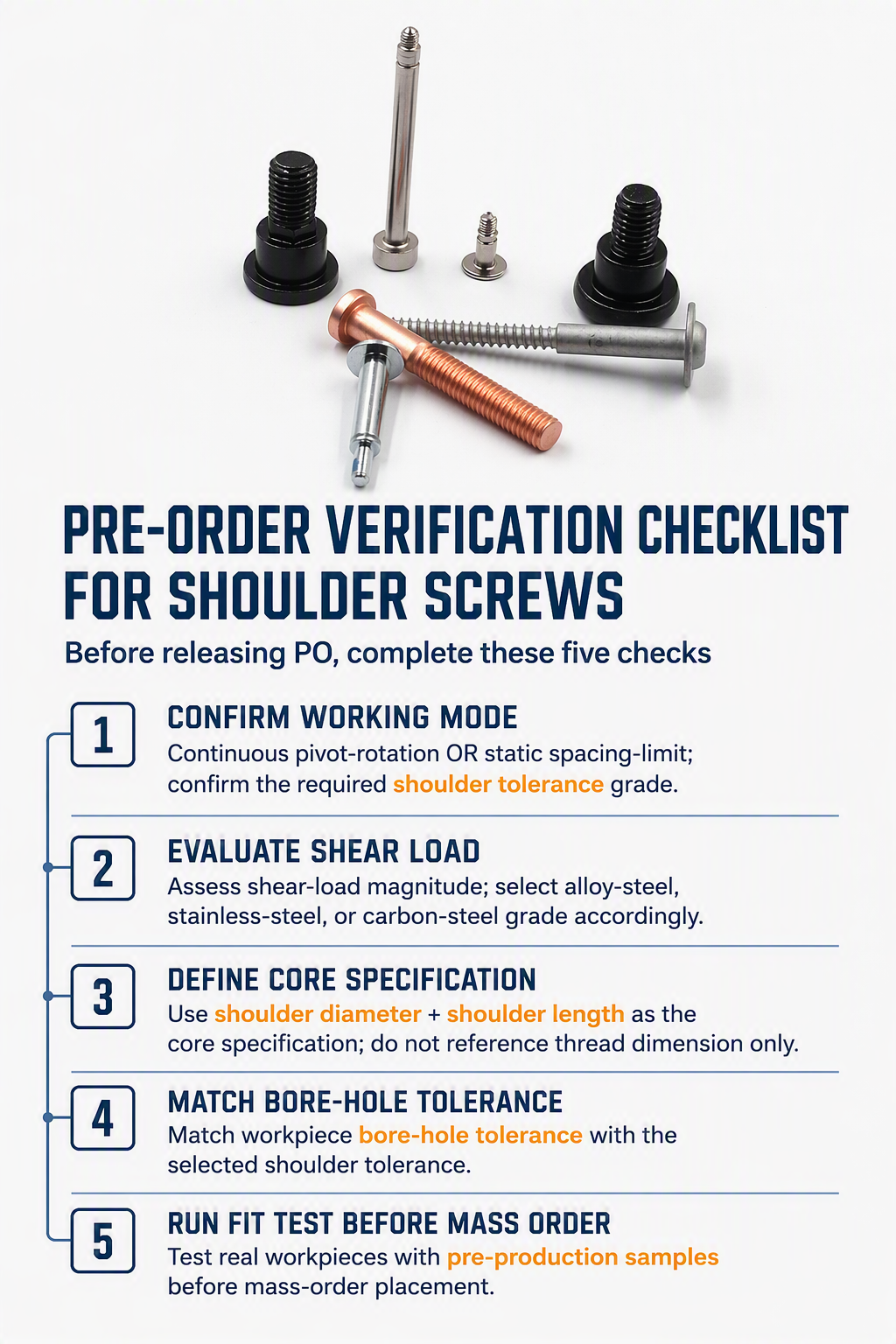
- If parts keep rotating back and forth: pick h6 ground shoulder, and match workpiece bore hole to H7 tolerance. Loose fit will bring obvious play after running cycles.
- Static spacing stop without continuous movement: f9 grade shoulder works fine, helps hold project cost down.
- Heavy repeated shear load: go for heat‑treated alloy steel. Stainless versions do well on rust‑proof work but lack high shear strength.
- Humid, coastal or condensate‑prone cabinets: switch over to passivated stainless material, plain zinc carbon steel will develop surface rust on moving shoulder surfaces.
Our custom order workflow
Quite a number of OEM projects cannot use catalogue standard sizes. We support custom‑machined shoulder screws, and follow this practical workflow:
- 1 Send over your drawing or physical sample, mark shoulder diameter, shoulder length, thread specs, tolerance and finish requirements clearly.
- 2 Our hardware engineers review manufacturability, send formal quotation plus realistic lead‑time.
- 3 Produce small pre‑production batches, so you can run fit, pivot or spacer tests on your real workpiece.
- 4 Only after sample performance gets confirmed do we move on to mass‑volume production.
FAQ
Q1: Can regular machine screws replace shoulder screws for pivot points?
A: Not advised. Full‑thread machine screws cannot give stable rotating clearance, you will see wobble and positioning drift after repeated cycles.
Q2: Which dimension matters most for shoulder screws?
A: Shoulder diameter and shoulder length rank top priority. Thread mainly serves clamping, not locating. Many customers mistakenly quote total screw length on BOM and run into assembly trouble.
Q3: Do you handle small prototype custom batches?
A: Yes, prototype‑level small runs are accepted for project validation before full‑scale purchase orders.