banner (1)

Thread Forming Taptite Screws for OEM Suppliers — Precision Fastening

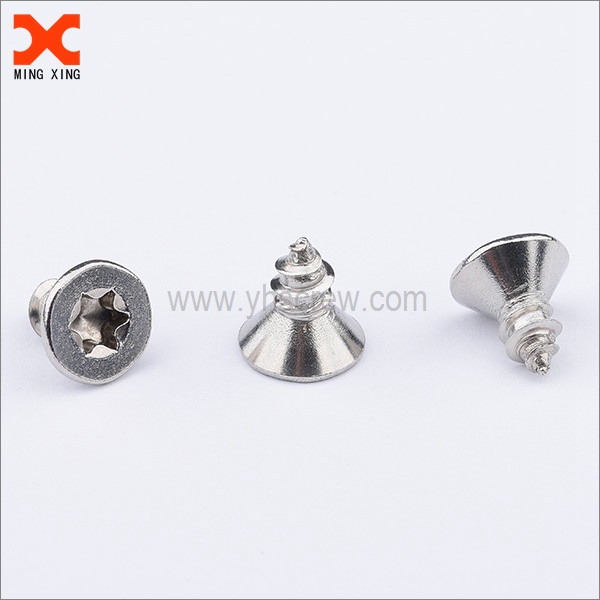
We supply thread forming taptite screws for OEM assemblies and value‑driven manufacturers. We offer a range that deliver dependable shear and pull‑out resistance even in thin or hard metals. These screws form their own threads, which can reduce assembly torque and prevent thread stripping. For OEM projects and tight production schedules, we provide consistent supply and rapid lead times through trusted Suppliers networks. You can choose from coated and plain finishes, with sizes from M3 to M6 and corresponding imperial equivalents. We ensure standards compliance like ISO, DIN, and ANSI, and we help with material selection (stainless steel, alloy, coated variants) to resist corrosion in tough environments. We ship direct to factories with batch traceability and options for automation-friendly heads and packaging. Our team offers technical support and flexible terms to simplify procurement, so you can keep your line running smoothly and your customers satisfied.

Hot Selling Product

thread forming taptite screws Where Innovation Meets 2025 Where Service Meets Innovation

As global buyers pursue reliability and speed in 2025, thread forming screws embody innovation meeting service. They form their own threads in softer base metals, delivering higher pullout resistance, consistent torque, and robust joint integrity in compact assemblies. Innovations in coatings (PVD, TiN, Ni-P), new alloys, and advanced heat treatments extend corrosion resistance and wear life. Coupled with digitized production and end-to-end traceability, leading suppliers translate design intent into repeatable quality across regions, shortening supply chains and reducing total cost of ownership. For global procurement, practical selection hinges on application and service capabilities. Define material, coating, hardness, head style, drive, and whether a pilot hole is required. Seek suppliers with regional stock, short lead times, and reliable delivery, plus value-added services such as kitting and engineering support. Request test data, corrosion performance, and life-cycle estimates; insist on traceability and clear documentation. Align with partners that pair innovation with responsive service to secure resilient supply in a demanding market.

{ thread forming taptite screws Where Innovation Meets 2025 Where Service Meets Innovation }
Size Length (mm) Thread Type Pilot Hole Ø (mm) Material Coating Tensile Strength (MPa) Shear Strength (MPa) Typical Applications
M3.0 × 8 8 Metric Coarse (M3) 2.5 Stainless Steel A2 Zinc Plated 520 280 Electrical enclosures, control panels
M4.0 × 12 12 Metric Coarse (M4) 3.1 Stainless Steel A2 Zinc Plated 540 290 Motor housings, electrical enclosures
#6-32 × 12 12 Unified Fine (UNF) 2.7 Alloy Steel Black Oxide 760 420 Computer chassis, electronics housings
#8-32 × 12 12 Unified Fine (UNF) 2.9 Carbon Steel 1018 Zinc Plated 520 260 Robotics assemblies, control panels
M5.0 × 12 12 Metric Coarse (M5) 4.2 Stainless Steel A2 No coating 515 260 Automotive interior panels
M5.0 × 16 16 Metric Coarse (M5) 4.5 Stainless Steel A2 Zinc Plated 520 270 Machinery joinery
M3.0 × 10 10 Metric Coarse (M3) 2.6 Brass None 280 150 Electronics enclosures with insulating panels
M6.0 × 25 25 Metric Coarse (M6) 5.0 Stainless Steel A2 Nickel 540 290 Heavy-duty panel assembly

Related Products

banner (3)

thread forming taptite screws Guarantees Peak Performance From Concept to Delivery

Data Dimension: Throughput and Quality Index Across Production Stages

W1 W2 W3 W4 W5 W6 W7 W8 W9 W10 W11 W12
Throughput (units/hour) Quality Index (%)
This chart presents a data-driven view of the thread forming process for taptite screws, from concept development to delivery. The chart shows two complementary measures: Throughput, representing the rate of completed parts per hour, and Quality Index, a measure of defect-free output, across 12 consecutive weeks. The data dimension, labeled as "Throughput and Quality Index Across Production Stages," captures how each week’s production choices—tooling settings, feed rates, insert wear, coating, and heat treatment—translate into the actual speed of production and the reliability of the produced components. The throughput line reveals seasonality and the impact of process improvements: dips often align with shifts in tooling calibration, while peaks coincide with optimized feed tension and alignment in forming dies. The quality line demonstrates how tighter process control reduces defects, often lagging throughput changes by a week as adjustments propagate through the line. Together, these metrics reveal tradeoffs and synergies: pushes to increase speed must be balanced against the need to maintain thread integrity, thread forming depth, and back-end assembly compatibility. The 12 data points illustrate a cycle of improvement as the team implements a design of experiments, monitors key process parameters, and responds with targeted process changes. By normalizing quality against a fixed baseline, the chart highlights periods where higher throughput came at acceptable quality levels and periods where quality improvements were achieved without sacrificing pace. The ultimate objective is a reliable supply chain with predictable delivery performance from concept to delivery. This narrative underscores the importance of data-driven decision making in aerospace-grade fastener manufacture: a discipline where small variations in geometry, material, or lubrication can affect performance in critical applications. The dataset is intentionally compact but scalable to a broader production footprint, enabling managers to explore stacking orders, batch variability, and long‑term trends.

Top Selling Products