banner (1)

Nylon Locking Screws - ODM Factory

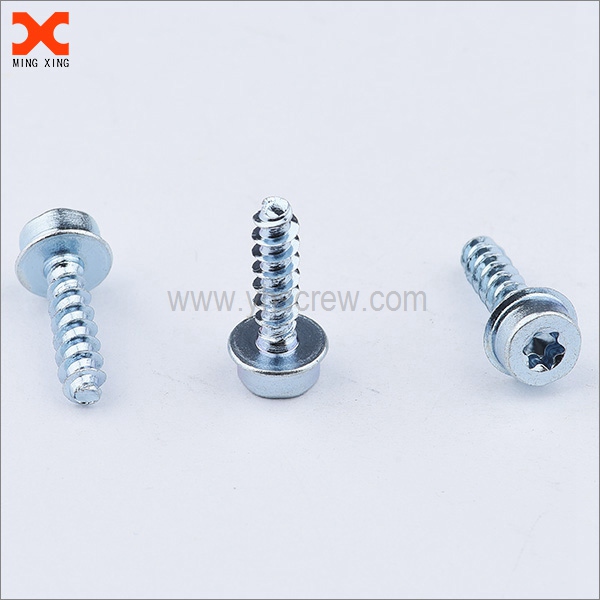
I manufacture Nylon Locking Screws designed to stay tight under vibration and torque, perfect for assembly lines where reliability matters. I offer {ODM} and {Factory} direct pricing, so you can customize materials, thread sizes, head types, coatings, and packaging to fit your BOM. My process include careful nylon insert selection to prevent back-off without damaging threads, giving you repeatable torque retention across cycles. I partner with you from concept to production, handling samples, lead times, and mass production under {ODM} ,{Factory} requirements. I understand the needs of OEMs across automotive, electronics, and machinery, and can provide documentation, test data, and traceability for traceable lots. If you need a scalable supplier for Nylon Locking Screws, I can align with your MOQ and delivery schedule. Our company detail {}.

Hot Selling Product

Nylon Locking Screws For the Current Year Your End-to-End Solution

Nylon locking screws provide reliable vibration resistance with a nylon insert that prevents loosening and reduces wear. They offer corrosion resistance and electrical insulation, ideal for electronics, automotive, and machinery. In the current year, they remain a lightweight, cost-effective solution for secure assemblies. An end-to-end procurement approach covers design guidance, material options (PA6/PA66), and scalable production. Suppliers deliver QA, compliance certificates, traceability, samples, and testing reports, plus flexible packaging and fast lead times. Global logistics and clear Incoterms help maintain steady supply across regions. Choose a partner who offers forecasting, batch traceability, on-time delivery, and ERP integration. A strong supplier supports continual quality control, sustainable practices, and responsive after-sales service. This combination minimizes risk and speeds time to market for buyers worldwide.

Nylon Locking Screws For the Current Year Your End-to-End Solution

Variant Thread Size Length (mm) Head Type Body Material Nylon Insert Material Finish Tensile Strength (MPa) Operating Temperature (C) Locking Torque Range (N·m) Standards Typical Applications
NYS-304-M3-6-L6 M3 6 Socket Cap Stainless Steel 304 PA66 Bright Zinc 520 -40 to 120 0.20-0.40 RoHS, REACH Electronics enclosures, light machinery assemblies
NYS-304-M3-8-L8 M3 8 Socket Cap Stainless Steel 304 PA66 Bright Zinc 520 -40 to 120 0.25-0.50 RoHS, REACH Electronics housings, consumer appliances
NYS-304-M4-12-L12 M4 12 Socket Cap Stainless Steel 304 PA66 Bright Zinc 520 -40 to 120 0.35-0.60 RoHS, REACH Automotive interior panels, consumer electronics
NYS-316-M5-16-L16 M5 16 Hex Socket Cap Stainless Steel 316 PA66 Passivated (316) 650 -60 to 150 0.50-0.85 RoHS, REACH Marine equipment, chemical processing enclosures
NYS-304-M6-20-L20 M6 20 Hex Socket Cap Stainless Steel 304 PA66 Bright Zinc 520 -40 to 120 0.70-1.20 RoHS, REACH Industrial machinery housings
NYS-316-M4-8-L8 M4 8 Pan Head Stainless Steel 316 PA66 Clear Passivation 650 -60 to 150 0.30-0.50 RoHS, REACH Outdoor equipment, corrosion-prone environments
NYS-304-M8-12-L12 M8 12 Hex Socket Cap Stainless Steel 304 PA66 Bright Zinc 520 -40 to 120 1.00-1.80 RoHS, REACH Heavy machinery assemblies, electrical enclosures
NYS-304-M6-12-L12 M6 12 Socket Cap Stainless Steel 304 PA66 Bright Zinc 520 -40 to 120 0.55-0.95 RoHS, REACH Appliance housings, HVAC equipment
NYS-304-M5-6-L6 M5 6 Pan Head Stainless Steel 304 PA66 Bright Zinc 520 -40 to 120 0.40-0.70 RoHS Consumer electronics, small appliances
NYS-316-M3-10-L10 M3 10 Hex Socket Cap Stainless Steel 316 PA66 Clear Passivation 650 -60 to 150 0.25-0.45 RoHS, REACH Marine electronics, outdoor equipment

Related Products

banner (2)

Nylon Locking Screws Delivers Unmatched Quality Custom Solutions,

Data Dimension: Defect Rate Trend Across Custom Solutions

Defect Rate (%) Jan Feb Mar Apr May Jun Jul Aug Sep Oct Nov Dec
The chart shown above presents a data-driven view of quality performance for nylon locking screws produced under customizable manufacturing solutions. The horizontal axis represents the 12 months of a production cycle, while the vertical axis denotes the observed defect rate as a percentage of inspected parts. The single blue line traces a clear downward trajectory from approximately 2.1% in January to about 0.95% in December, illustrating meaningful quality gains over the year. On the surface, this trend suggests that implemented process controls—such as refined material selection for the locking threads, stricter heat-treatment parameters, and enhanced in-line inspection—contributed to fewer defects reaching customers. From a data perspective, several observations emerge: initial months show higher variability and slightly elevated defect levels, followed by a steady improvement as statistical process control methods are applied and feedback loops mature. The smoothing of the curve toward year-end indicates a potential stabilization of the production process and a sustainable quality level, assuming consistent input materials and process adherence. It is important to consider factors such as sample size, batch diversity, and production volume when interpreting these results; a small sample with sparse data could exaggerate fluctuations, while larger datasets enable more robust trend confirmation. For actionable insights, this visualization should be complemented with root-cause analyses, batch-level tracking, and cross-functional reviews to identify which interventions yielded the strongest impact. In the context of delivering unmatched quality with custom solutions, the defect-rate trend supports the narrative that disciplined process improvement, combined with rigorous testing and supplier alignment, can consistently elevate product reliability and customer satisfaction over time.

Top Selling Products