

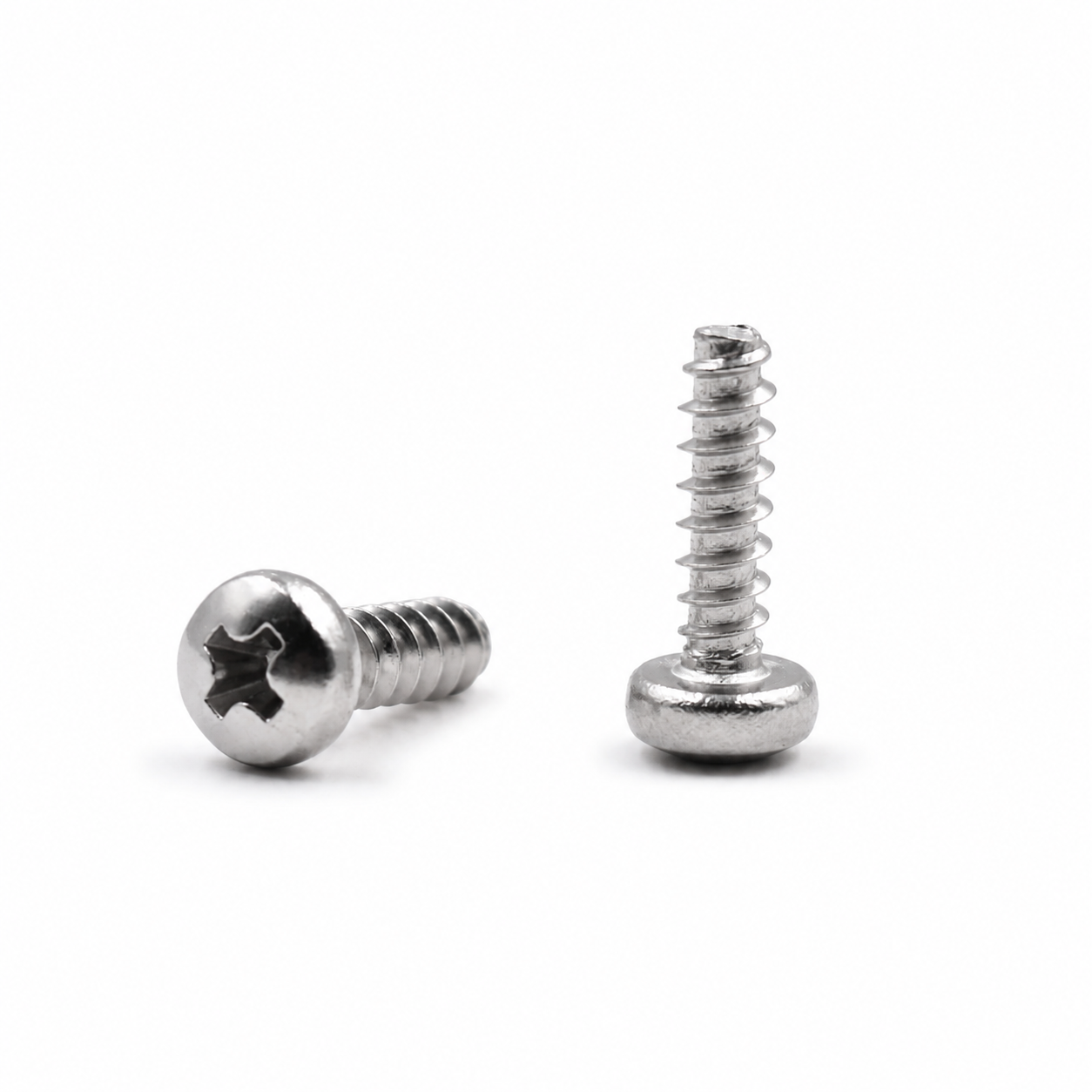
Many design teams treat Pan‑Head Self‑Tapping Screws as universal commodity tapping screws. They overlook pan‑head’s pressure‑dispersion feature and cross‑recess torque limits. Improper specification decisions will cause workpiece denting, slot‑stripping or loose fastening after mass‑production roll‑out.
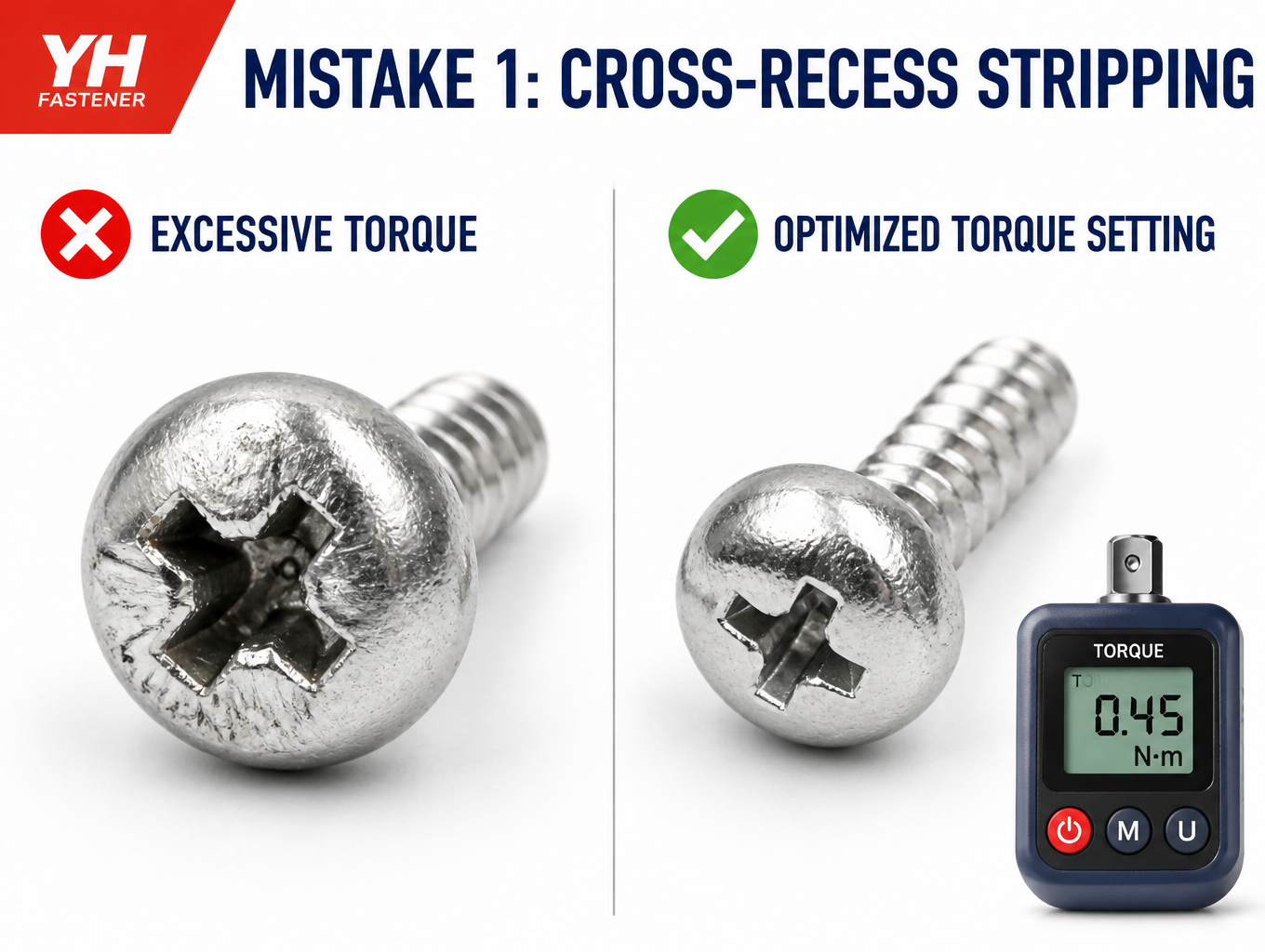
Mistake 1: Excessive driving torque causing cross‑recess stripping
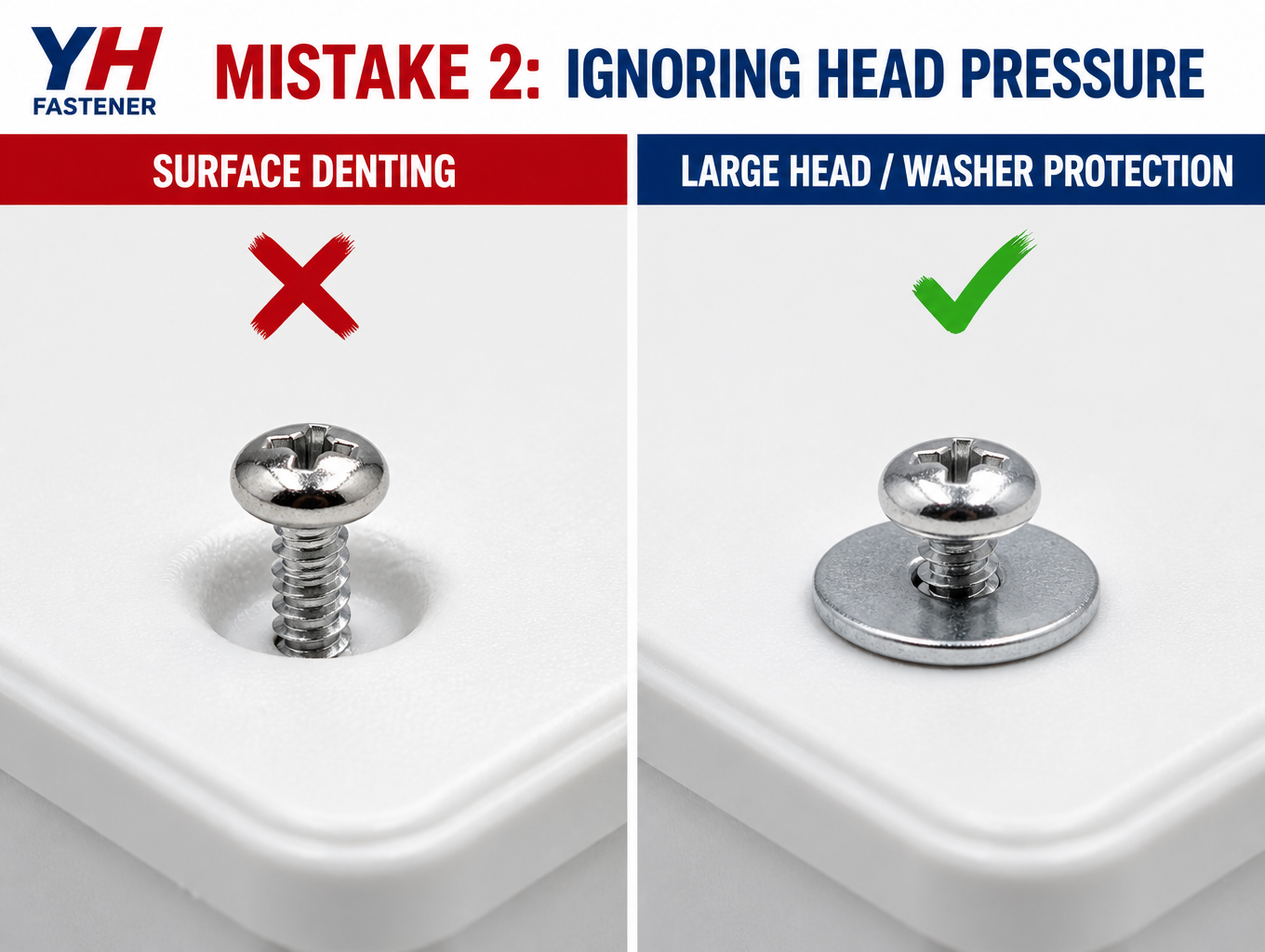
Mistake 2: Ignoring pan‑head pressure, leading to denting on thin plastic or sheet‑metal
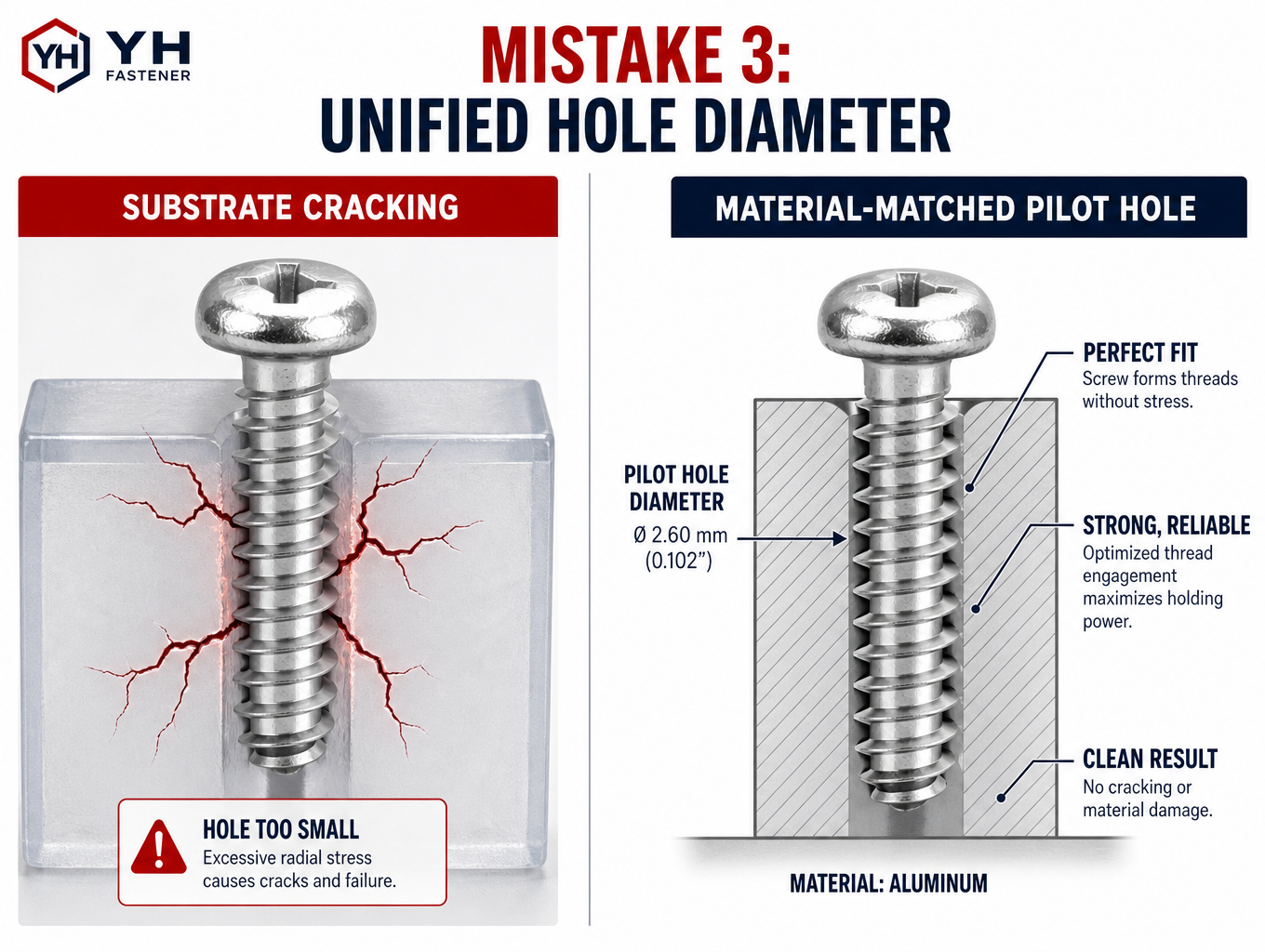
Mistake 3: Unified pilot‑hole diameter for different substrate materials
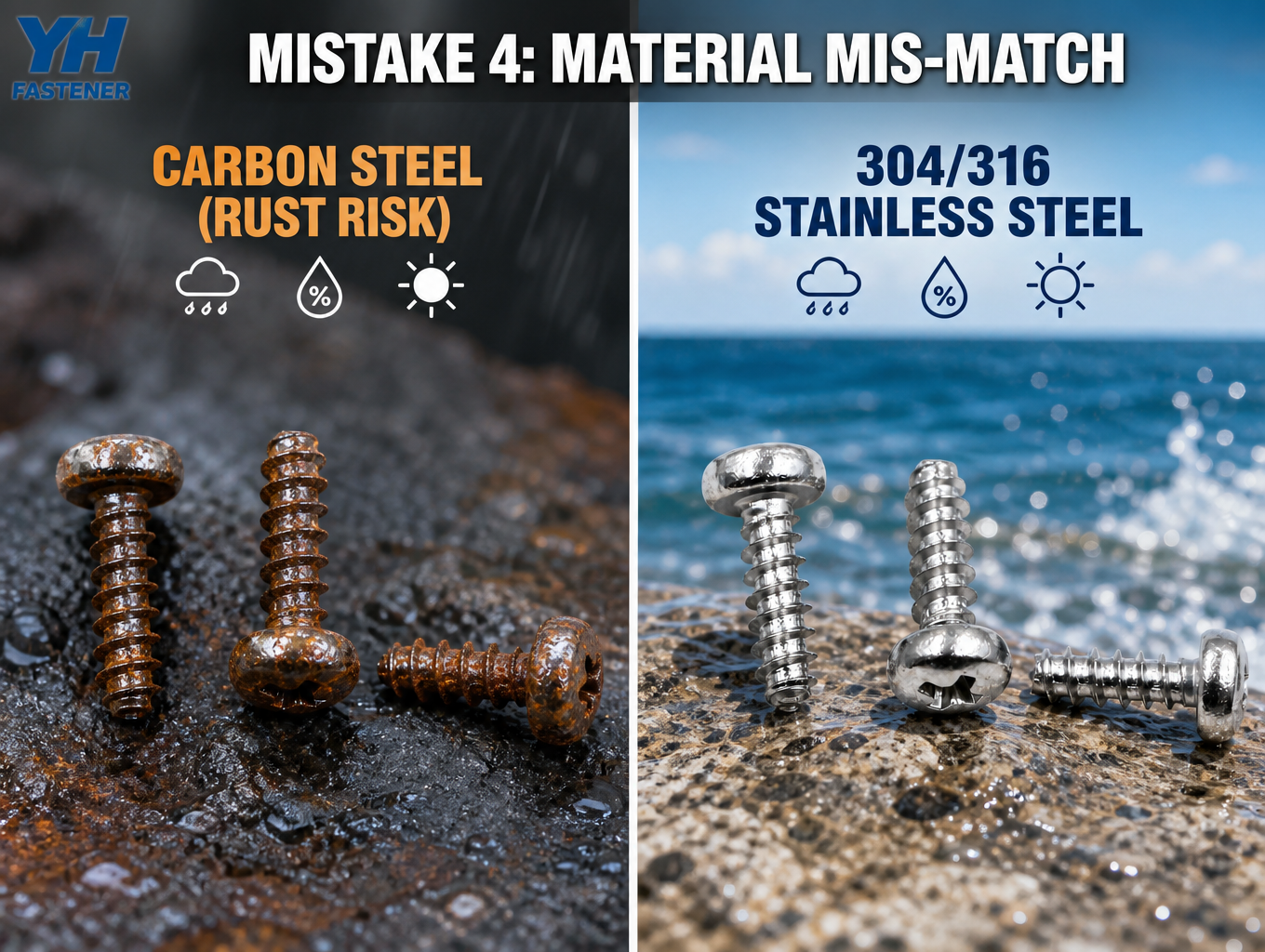
Mistake 4: Material mis‑match against actual service environment
Pre‑Order Check‑List For Pan‑Head Self‑Tapping Screws
Go through these points before releasing bulk purchase orders:
- 1 Confirm workpiece wall‑thickness, select proper pan‑head diameter to avoid surface indentation.
- 2 Confirm base‑material type (plastic / aluminum / steel sheet), get correct pilot‑hole‑diameter reference.
- 3 Set maximum allowable assembly torque to prevent cross‑recess stripping.
- 4 Evaluate working‑environment humidity & corrosion risk, pick proper screw material & surface finish.
- 5 Run real‑workpiece fit‑test with pre‑production samples, verify fastening performance and surface condition.
Closing
The practical performance of Pan‑Head Self‑Tapping Screws depends not merely on thread specs, but also on head‑diameter matching, torque setting, pilot‑hole dimension and material‑environment fit. Many assembly‑field troubles originate from ignoring these auxiliary parameters. Clarify workpiece structure and service‑condition requirements in the design phase, and hand‑over full specifications to fastener suppliers to avoid mass‑production risks.
About Our Factory & How To Reach Us
We are an experienced fastener manufacturer supplying both standard‑stock and custom‑built self‑tapping screws for global B2B clients. Our in‑house quality‑control procedures cover raw‑material incoming inspection, in‑process monitoring and finished‑product dimension checking. We support sample evaluation, small‑batch prototype and large‑volume OEM orders.
If you face selection confusion for Pan‑Head Self‑Tapping Screws or need quotation support for your upcoming project, kindly send over your drawing, material info and application background. Our technical‑sales team will respond with targeted suggestions for your project.

Post time: Sep-10-2026





