banner (1)

Truss Head Self Tapping Screws - China Manufacturer

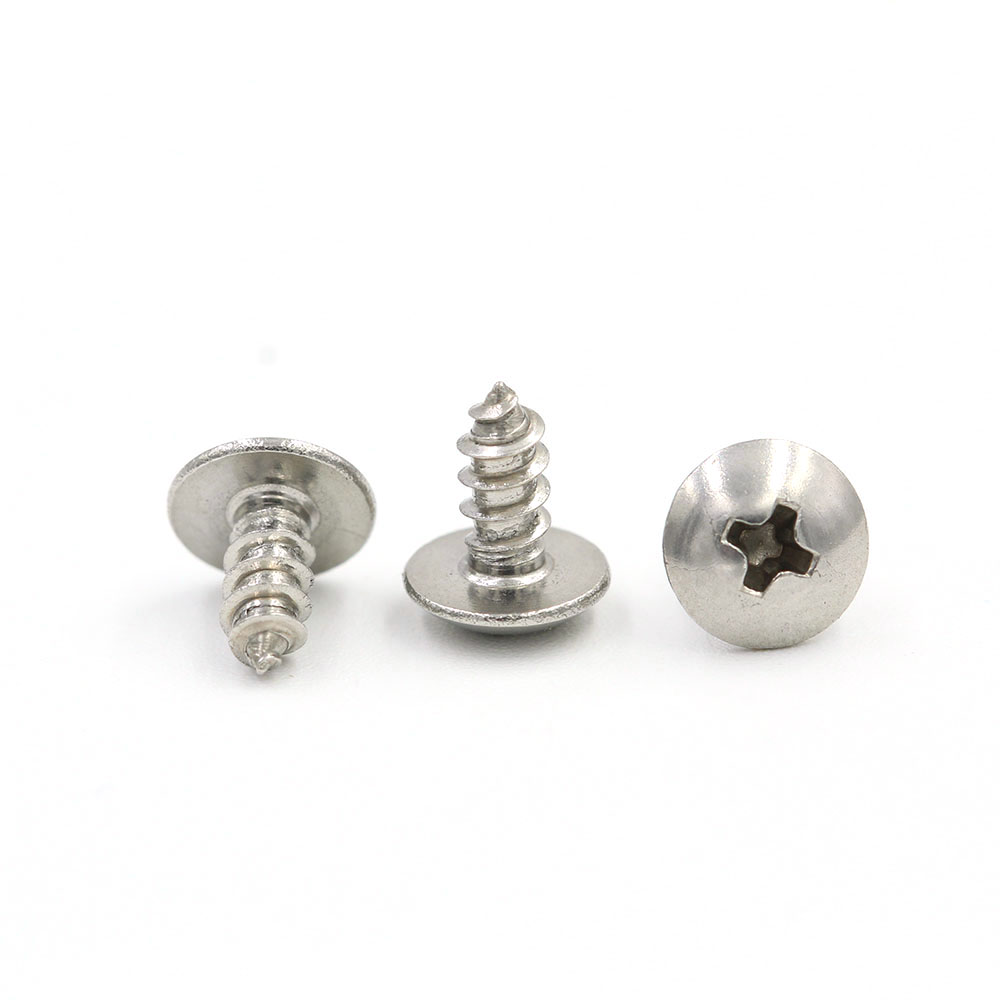
We are a China-based Manufacturer offering robust Truss head Self Tapping screws ideal for metal roofing, enclosures, and electrical cabinets. With a broad range of diameters and lengths, these fasteners provide excellent pull-out strength and fast installation. The truss head delivers a uniform bearing surface to avoid dimples and ensure flush seating. The self-tapping thread bites into steel and aluminum cleanly, reducing drilling needs and downtime on site. Our screws are finished with zinc plating or coating options for corrosion resistance in outdoor or humid environments. We offer customization in coating, head style, drive type, and packaging to fit your assembly line. Short lead times, competitive pricing, and strict quality checks from our factory in China ensure reliable supply. Partner with us for steady stock, consistent tolerance, and documentation you need for imports and compliance.

Hot Selling Product

Truss head Self Tapping screws For the Current Year Factory-Direct Excellence

Global manufacturers increasingly rely on truss head self-tapping screws to join metal frames and enclosures quickly and reliably. Factory-direct supply this year delivers consistent quality, shorter lead times, and transparent pricing by eliminating middlemen. The truss head distributes clamping force over a wider area, while the self-tapping point threads into metal sheets, reducing pre-drilling and assembly steps. Options include carbon steel with zinc coatings or stainless steel, with corrosion-resistant finishes to meet RoHS and REACH requirements. Choosing the right screw means matching material, length, thread pitch, and drive type (Phillips or Torx) to your application. For harsher environments, stainless or coated grades perform better. Direct-from-factory partners support customization: batch tolerances, tailored packaging, and scalable production for automated lines. They also offer reliable global logistics and documentation aligned with international standards, helping buyers minimize risk and lower total cost.

{ Truss head Self Tapping screws For the Current Year Factory-Direct Excellence}
Product Code Diameter (mm) Length (mm) Material Finish Head Type Drive Type Thread Length (mm) Coating Tensile Strength (MPa) Certifications Country of Origin Last Updated
TS-ST-3.5x12 3.5 12 Carbon Steel Zinc Plated Truss Head Phillips 11 Bright Zinc 520 RoHS, REACH China 2026
TS-ST-4.0x16 4.0 16 Carbon Steel Zinc Plated Truss Head Phillips 14 Bright Zinc 520 RoHS Vietnam 2026
TS-ST-4.8x20 4.8 20 Stainless Steel (A2) Satin Truss Head Phillips 18 Electropolished 650 RoHS, REACH China 2026
TS-ST-5.5x25 5.5 25 Carbon Steel Zinc Plated Truss Head Phillips 23 Bright Zinc 520 RoHS India 2026
TS-ST-6.0x30 6.0 30 Carbon Steel Black Oxide Truss Head Phillips 28 No Coating 550 RoHS Taiwan 2026
TS-ST-6.0x40 6.0 40 Stainless Steel (A4) Bright Truss Head Phillips 38 Electropolished 650 RoHS, REACH USA 2026

Related Products

banner (2)

Truss head Self Tapping screws Stands Out Factory-Direct Excellence

Data Dimension: Production Throughput vs Tensile Strength

New Title: Multivariate Trend of Production Throughput and Tensile Strength

This chart explores two key production metrics for truss head self-tapping screws over ten production periods (weeks). The data dimension is intentionally chosen to examine how manufacturing throughput and part strength evolve together under changing process conditions. Throughput represents daily output capacity (parts per day) on the line that produces self-tapping screws with a truss head, while tensile strength measures the mechanical robustness of the finished screws, indicating their ability to resist pulling forces in assemblies.

Using a dual-axis line chart allows directly comparing trends that operate on different scales. Throughput typically evolves with changes in press speed, feed rate, lubrication, and tool wear. Tensile strength reflects material quality, heat treatment consistency, and geometry tolerance including head form and thread engagement. By plotting weekly data, we can observe whether process improvements designed to boost speed compromise material quality, or whether optimization yields gains on both fronts.

From the synthetic data, we observe several typical patterns. Earlier weeks show moderate throughput with lower tensile strength, suggesting early-stage setup and calibration deficits. In the middle weeks, throughput climbs while tensile strength remains stable, indicating a favorable balance where speed enhancements do not degrade strength. In later weeks, a slight dip in strength corresponds with peak throughput, hinting at marginal quality drift that could be mitigated by process control adjustments. The dual-axis presentation highlights the importance of controlling both process parameters and material properties simultaneously. For manufacturers, the takeaway is that optimization should target not only higher output but also consistent mechanical properties to preserve performance in real-world joint applications. The chart helps quality engineers, operators, and product teams visualize how line changes ripple into component performance, supporting data-driven decisions about tooling, lubrication, heat treatment, and inspection regimes. In practice, continuous monitoring of both metrics supports proactive adjustments and reduces the risk of returning faulty batches, ultimately improving reliability without sacrificing efficiency.

Top Selling Products