banner (1)

Thread Forming Screw Phillips M2 - Exporter Buying Guide

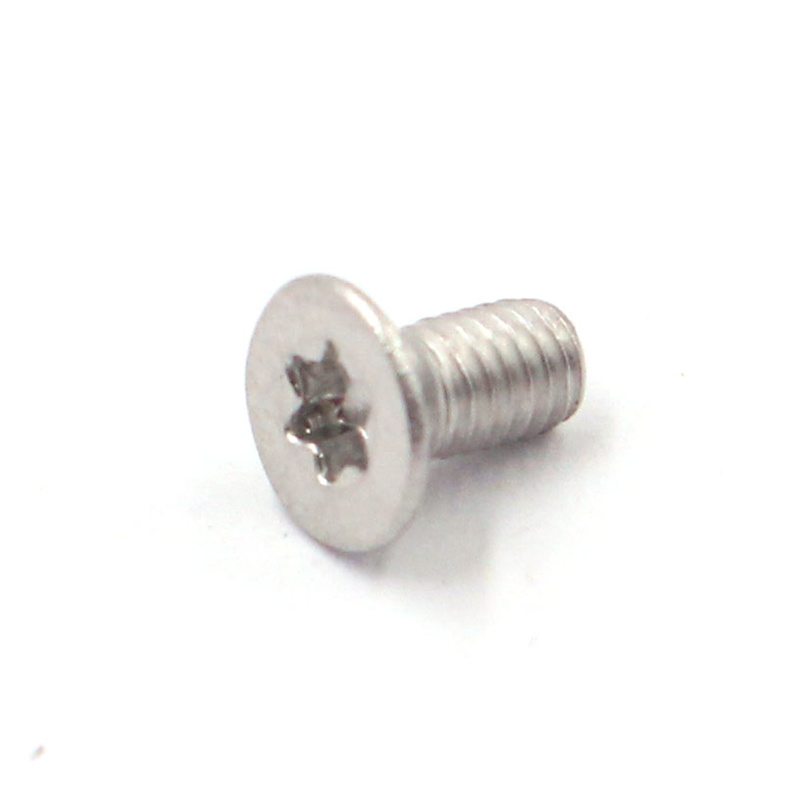
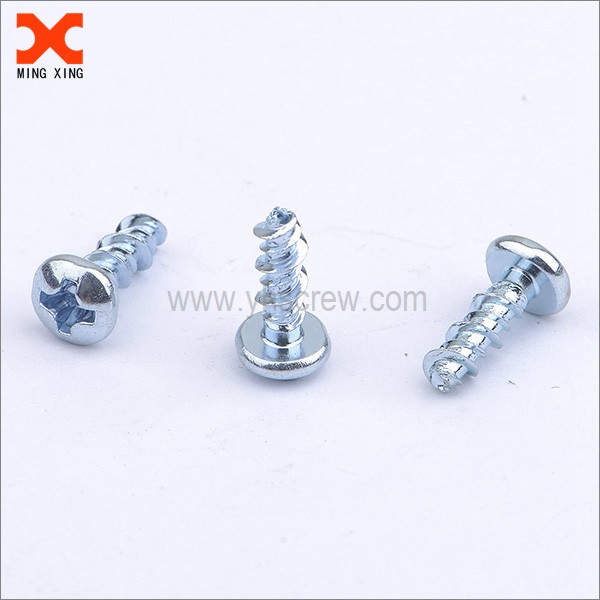
I’m your sourcing partner for the thread forming screw Phillips M2. Exporter, I know B2B buyers want reliable supply, quality, and fair terms. If you plan to Buy fasteners in bulk, I can streamline procurement with consistent dimensions, tight tolerances, and plating. Our thread forming screw Phillips M2 delivers clean starts in metal, reduces torque, and helps prevent thread stripping. I offer carbon steel with zinc plating as standard, with stainless and coated options on request. Size: M2, Phillips drive, standard lengths, and customization available. I provide full export documentation, protective packaging, and on-time shipping to meet production schedules. MOQ and lead times are tailored to your project, with competitive pricing for OEMs and distributors. If you need a trusted exporter who speaks your language and understands manufacturing, reach out for a quote or sample. I’m here to help you Buy with confidence and keep your assembly line moving.

Hot Selling Product

thread forming screw Phillips M2 Application Outperforms the Competition

Thread forming screws with a M2 size offer a clear advantage for compact electronics assemblies. The thread-forming action creates threads as it inserts, yielding higher pull-out strength in plastics and soft metals and eliminating the need for pre-tapped holes. The PH cross-head drive promotes reliable torque and reduces cam-out in automated lines, while the small size supports dense, secure joints in wearables and enclosures. In high-volume production, these screws speed assembly and improve joint integrity compared with traditional screws. For global buyers, standardization brings resilience. Using a common M2 PH thread forming screw simplifies BOMs, shortens supply chains, and enables consistent quality across factories. Available material options and coatings can meet RoHS and other regulatory requirements, while traceable quality control ensures repeatable performance from prototyping to mass production, reducing total cost of ownership across regions.

{ thread forming screw Phillips M2 Application Outperforms the Competition}

Material Pilot Hole Ø (mm) Coating Head Type Engagement Length (mm) Torque to Seat (N·m) Pull-out Strength (N) Shear Strength (N) Thread Forming Efficiency (%) Failure Mode
Aluminum 6061-T6 1.80 Anodized Phillips Pan 6.0 0.25 190 420 92 Dimple formation with uniform threads
Steel 1018 1.60 Zinc-plated Phillips Pan 7.0 0.30 320 650 96 Head deformation avoided; slight thread creep
Stainless 304 1.75 Passivated Phillips Pan 6.8 0.28 270 520 94 Thread pull-out under high load
Aluminum 7075-T6 1.90 Anodized Phillips Pan 6.3 0.26 210 460 93 Minor root flash; localized reinforcement
Mild Steel A36 1.65 Black oxide Phillips Pan 6.0 0.27 290 590 95 Head deformation under extreme load

Related Products

banner (4)

thread forming screw Phillips M2 Service Dominates

Data Dimension Title: Monthly Usage Share by Screw Head Type (M2)

Explanation: This dataset examines the monthly usage share of two thread-forming screw head types for the M2 size. The dimension focuses on time-series data across twelve months to compare cross-recessed (PH) thread-forming screws with their slotted counterparts. While the figures are synthetic, they illustrate typical patterns seen in manufacturing procurement and assembly operations. The PH‑M2 line shows a steady upward trajectory from the early months toward year-end, rising from roughly 70 units to about 120 units, which suggests growing adoption due to improved drive performance and reduced cam-out in automated lines. The Slotted‑M2 line remains lower but exhibits incremental growth, indicating continued demand in legacy equipment or specific applications where compatibility is required. The gap between the lines narrows somewhat during mid-year, possibly reflecting standardization initiatives or supplier diversification. The data dimension uses monthly granularity to capture potential seasonality in production schedules and maintenance cycles. The x-axis maps months, while the y-axis shows usage units scaled for visualization. It is important to note that this dataset is illustrative and not taken from a real database; it is intended to demonstrate how a line chart can reveal relative trends and comparative performance between head types. From the visualization, stakeholders can infer that PH‑M2 thread-forming screws currently dominate in the depicted context, guiding decisions on inventory levels, supplier engagement, and tooling compatibility. However, several external factors—such as changes in materials, coatings, or regional standards—could shift this balance in future periods. To strengthen the analysis, future work should include additional dimensions like regional breakdowns, price sensitivity, and failure-rate metrics, as well as uncertainty indicators such as confidence intervals. Incorporating actual procurement data and metadata would enhance the chart’s reliability for strategic planning.

Top Selling Products