banner (1)

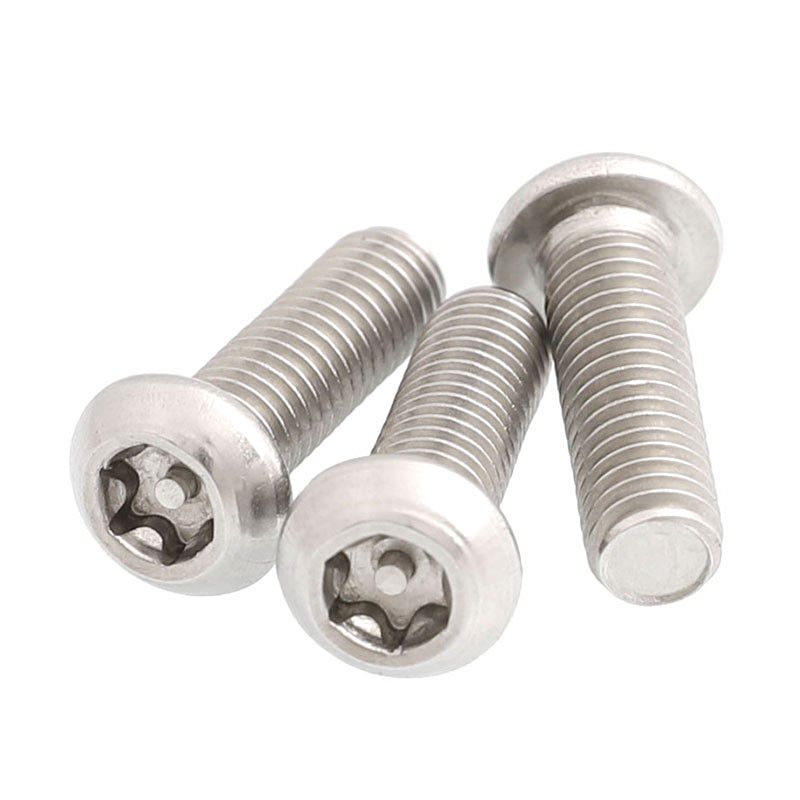
Socket Shoulder Screw - Exporter Quality Parts for Industrial Use

I’m here to help you source reliable fasteners as an exporter and supplier. Our Socket Shoulder Screw is engineered for precise alignment and strong load handling in automation, machinery, and instrumentation assemblies. I produce these with high-grade steel, corrosion resistant finishes, and strict dimensional control. Whether you’re designing a linear guide, hinge, or bearing assembly, this shoulder screw provides smooth rotation and repeatable torque. For B2B buyers, Buy with confidence: I offer consistent stock, customizable lengths and head styles, and fast shipping worldwide. I understand what export customers need: competitive pricing, traceable material certificates, and scalable quantities. Our process includes strict QA, on-time delivery, and friendly after-sales support. If you're in need of a reliable Socket Shoulder Screw, tell me your required thread size, shoulder diameter, and finish, and I’ll tailor a solution that keeps your line moving.

Hot Selling Product

Socket Shoulder Screw Trusted by Pros Where Innovation Meets 2025

Socket shoulder screws are the go-to fasteners for pros who demand precision and reliability as automation accelerates in 2025. They ensure precise shoulder alignment, controlled axial motion, and robust torque transfer, making them ideal for robots, jigs, and modular assemblies across electronics, machinery, and automotive components. Innovations in materials, coatings, and heat treatment are delivering longer life, easier maintenance, and tighter tolerances for fast-changing production lines. Global buyers should seek standardized specs (DIN/ISO), documented material grade, finish, hardness, and corrosion resistance. Look for clear tolerance data, socket drive compatibility, scalable production, traceable QA, and flexible packaging. A Guangdong-based partner can align lead times with multi-region logistics, support customized lengths and finishes, and provide reliable supply chains that keep assembly lines running smoothly into 2025 and beyond.

{ Socket Shoulder Screw Trusted by Pros Where Innovation Meets 2025}
Variant Material Grade Finish Shoulder Diameter (mm) Shoulder Length (mm) Thread Size Thread Length (mm) Head Type Overall Length (mm) Tensile Strength (MPa) Surface Treatment Compliance
V001 A2 Stainless Steel (304) 2 Plain 6.0 12.0 M6 15.0 Socket Shoulder Screw 40.0 505 Passivation ASME B18.3, RoHS
V002 316 Stainless Steel 2 Satin 8.0 16.0 M8 18.0 Socket Shoulder Screw 50.0 520 Passivation RoHS, REACH
V003 Alloy Steel 8.8 Black Oxide 5.0 14.0 M5 14.0 Socket Shoulder Screw 45.0 850 Oxidized DIN 912, RoHS
V004 Aluminum Alloy 2024 2 Anodized 6.0 10.0 M6 12.0 Socket Shoulder Screw 42.0 420 Anodized RoHS, REACH
V005 Stainless Steel 17-4PH 5 Zinc Plated 10.0 25.0 M10 22.0 Socket Shoulder Screw 70.0 980 Zinc Plated RoHS, REACH, ISO 9001

Related Products

banner (2)

Socket Shoulder Screw Factory Custom Solutions,

Data Dimension: Month-to-Month Production Output and Defect Rate for Custom Socket Shoulder Screws

Explanation

This chart demonstrates a data dimension that merges monthly production output with the monthly defect rate for a facility producing customized socket shoulder screws. The left axis shows production output in units, while the right axis shows defect rate as a percentage. By aligning these two metrics on a single timeline, stakeholders can quickly assess whether periods of higher throughput coincide with quality changes, and where process adjustments may be most needed.

Across the 12 months, production output rises from about 1,200 units in January to a peak near 1,800 units around August, then tapers slightly toward December. Defect rate hovers around 0.8% to 1.5% in most months, with small spikes in March and September. The separation of axes allows both signals to be visible without one dominating the scale. From a manufacturing perspective, several patterns appear: (1) months with firmer demand show improved production efficiency but a modest uptick in defects, suggesting tighter schedules may stress setup and changeover processes; (2) months with lower output often exhibit relatively lower defect rates, indicating more stable operation but potential underutilization of capacity; (3) periods of simultaneous high output and higher defects flag opportunities for targeted maintenance, operator training, or supplier quality checks for material lots.

The data dimension is designed to support continuous improvement for custom components where tolerance and dimensional accuracy are critical. By integrating this chart into a broader dashboard with MES and QA data, managers can correlate defects with specific machines, shifts, or material lots, track progress against quality targets, and simulate the impact of process changes on both production throughput and defect rates. The visualization supports evidence-based decisions on equipment upgrades, preventive maintenance scheduling, and staffing levels to sustain high-quality production at scale, while preserving the flexibility required for customization. Note that data integrity is essential; when data gaps exist, the chart should display nulls or use imputation to avoid misleading trends. The approach can be extended to include other dimensions such as material grade, response time, or first-pass yield to enrich decision making.

Top Selling Products