banner (1)

Precision Bent Hex Key for Custom Factories

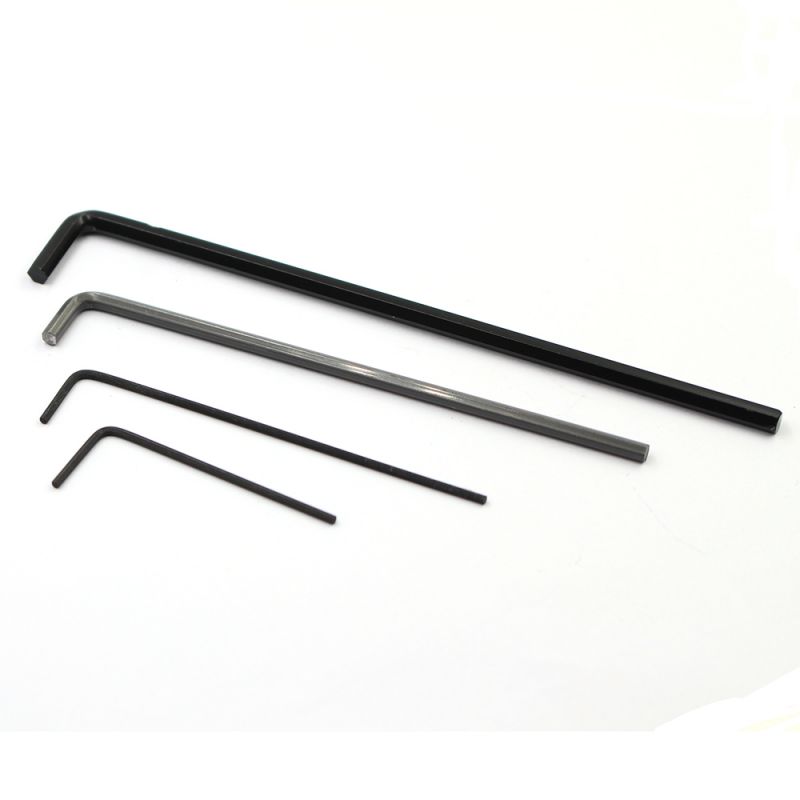
I’m a tool supplier focused on delivering for production lines. Our Precision Bent Hex Key is engineered for precision and durability in busy factories. Each key is ground to exact angles and heat-treated for longevity, resisting wear on tough tasks. For Custom needs, I work with factories to tailor sizes, finishes, and tolerances so the tool fits your jigs and sockets perfectly. Bulk pricing, short lead times, and traceable steel sources keep your operations smooth. This key minimizes slipping and speeds maintenance, boosting uptime across the line. If you’re upgrading equipment or designing new assembly flows, I can align a solution to your spec sheet. Let me help you lock in reliable performance and consistent quality—say the word, and we’ll start the customization.

Hot Selling Product

Precision Bent Hex Key Trusted by Pros Winning in 2025

Precision bent hex keys are earning the respect of professionals in 2025 for tackling stubborn fasteners in tight spaces. The best designs combine a long, balanced blade with a precisely bent tip to reach recessed bolts without sacrificing torque. Hardened and tempered steel, kept within tight tolerances (±0.03–0.05 mm), delivers flat faces and durable corners. Anodized or oxide finishes resist corrosion, while standardized bends ensure reliable access in electronics, automotive, and machinery assembly. Global buyers should prioritize certified tolerances, traceable quality control, and scalable supply. Look for compliance with DIN/ISO standards, consistent hardness (HRC 56–60), predictable lead times, flexible MOQ or customization, protective packaging, and available sets or single pieces. A supplier that aligns with production schedules can deliver steady performance across regions, minimizing tool failures and speeding up assembly for teams worldwide.

Precision Bent Hex Key Trusted by Pros Winning in 2025

Size (mm) Arm Length (mm) Material Finish Tolerance (mm) Hardness (HRC) Weight (g) Application
1.5 40 S2 tool steel Black oxide ±0.01 58-62 0.9 Electronics assembly
2.0 45 Chrome-vanadium Matte chrome ±0.01 60 1.1 Mechanical assembly
2.5 50 S2 tool steel Black oxide ±0.01 59-61 1.3 Automotive repair
3.0 55 Chrome-vanadium Bead blasted ±0.01 61 1.5 Aerospace maintenance
4.0 60 Stainless steel 304 Satin nickel ±0.01 57-59 2.0 Industrial equipment
5.0 70 S2 tool steel Black oxide ±0.01 60-62 2.3 Precision assembly
1.8 42 Chrome-vanadium Matte chrome ±0.01 59 0.96 Consumer electronics
3.5 58 Stainless steel 304 Polished ±0.01 58-62 1.8 Robotics
4.5 65 S2 tool steel Black oxide ±0.01 60 2.1 Automotive
6.0 75 Chrome-vanadium Matte chrome ±0.01 62 2.6 Aerospace maintenance
1.2 38 S2 tool steel Black oxide ±0.01 57-59 0.8 Small electronics
2.8 52 Stainless steel 304 Satin nickel ±0.01 58 1.4 Home repair

Related Products

banner (2)

Precision Bent Hex Key For the Current Year From Concept to Delivery

Data Dimension: Stage-wise Lead Time Across Concept-to-Delivery Lifecycle

Data Narrative: Stage-wise Lead Time Insights

This chart offers a data-driven view of how long each phase takes to move a precision bent hex key from concept to delivery. Each bar corresponds to a lifecycle stage: Concept, Design, Tooling, Prototype, Manufacturing, Quality Assurance, and Delivery. The height represents the average duration in days observed during the current year across a representative sample of projects. The visualization is designed to illuminate where time concentrates, so teams can target process improvements rather than focusing on a single step. By comparing early and late stages, stakeholders identify bottlenecks and opportunities for parallel work streams that preserve quality while shortening cycles. The Concept and Design phases are generally shorter, reflecting rapid scoping and specification capture when requirements are well defined. Tooling and Prototype stages tend to extend the schedule because fixture development, tooling tolerance checks, and build validation require careful iteration. Manufacturing is typically the longest phase for precision products, driven by toolpath programming, setup time, material preparation, and multi-operation finishing. Quality Assurance adds a necessary but time-consuming verification layer to ensure dimensional accuracy and process stability, while the Delivery stage encompasses packaging and logistics that influence customer lead time. Interpreting these data suggests actionable levers: advance design for manufacturability, conduct design reviews early, and align supplier readiness to reduce waiting time for critical materials. Parallel activity where possible, such as initiating tooling while final prototypes are being tested, can compress cycles without compromising outcomes. Emphasizing data capture, traceability, and real-time monitoring across stages enables rapid deviation detection and continuous improvement. While the precise durations vary by project, the relative differences between stages reveal where to invest resources for the greatest impact on cycle time, reliability, and customer satisfaction in precision engineering.

Top Selling Products