banner (1)

Custom Hollow Shaft: Discount Quotes

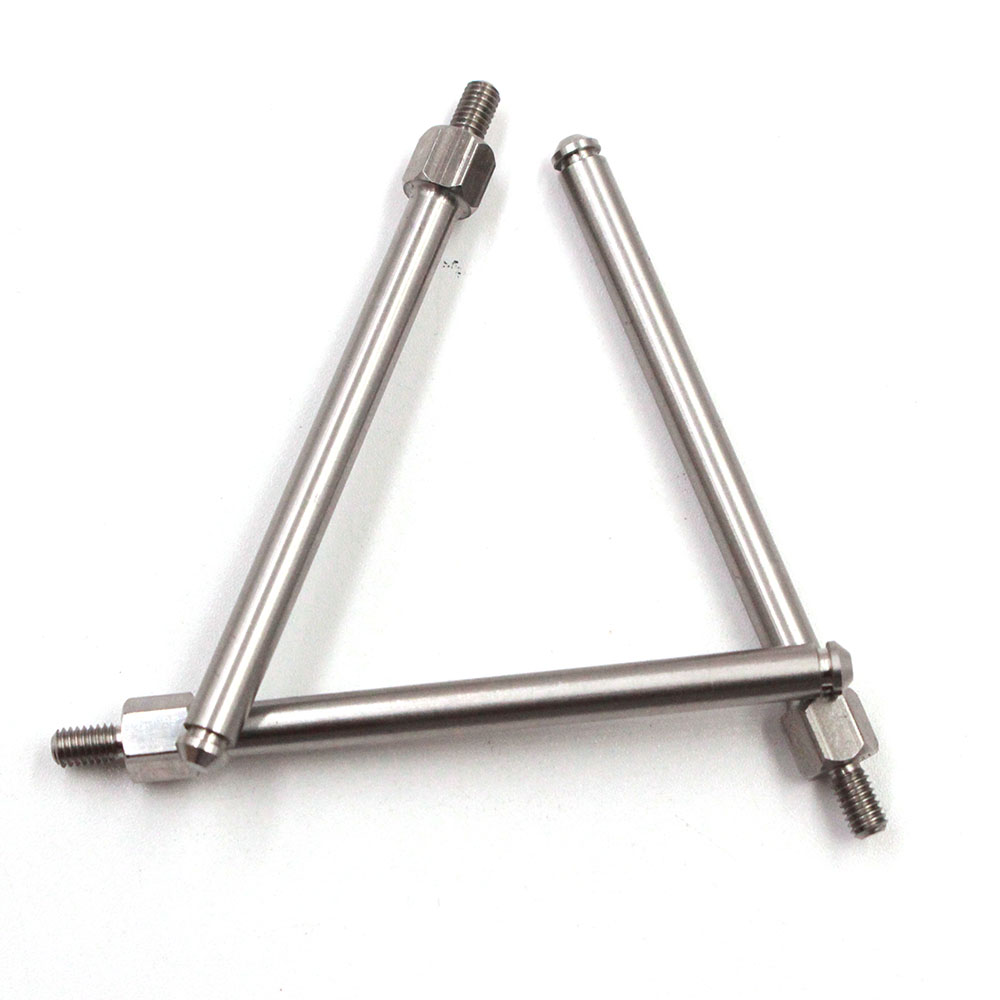
From my workshop, I craft Custom Hollow Shaft solutions that fit your exact application. I listen to your requirements, then engineer hollow shafts with precise bore, wall thickness, and outside dimensions. Materials range from stainless steel to aluminum and alloy steels, with heat-treatment and surface finishes to survive harsh environments. I use CNC turning and milling for true roundness, tight tolerances, and straightness, so your assemblies run smooth and with less wear. Count on dependable quality, traceability, and on-time delivery—every batch tested and documented. For bulk projects, I offer a volume Discount and fast Quotes to keep your procurement simple. I can supply standard lengths or bespoke shafts across your production lines, with custom keyways, seals, and end finishes. If you need rapid prototyping or full-scale production, I’ve got you covered. Share your specs and I’ll respond promptly with a clear proposal and a fair price.

Hot Selling Product

Custom Hollow Shaft Sets the Industry Standard From Concept to Delivery

From concept to delivery, a custom hollow shaft demonstrates how a supplier translates a simple idea into a dependable mechanical solution. Global buyers seek reliability, precise tolerances, and suitable materials for demanding applications—from robotics to automated systems. The process begins with clear specs: bore and outer diameters, wall thickness, surface finish, fit with bearings, and corrosion resistance. Engineering turns sketches into reality through collaboration. CAD analysis guides the design, followed by rapid prototyping and functional testing to verify fit and performance. Precision machining, heat treatment, and finishing meet tight tolerances and ensure long service life. A rigorous quality system provides in-process checks, final inspection, and traceability for every lot. Delivery is built on scalable production, transparent lead times, and secure packaging. Clear documentation and compliant shipping keep parts moving across borders. With dependable service and engineering flexibility for future adjustments, this hollow shaft sets a benchmark for quality in the global supply chain.

{ Custom Hollow Shaft Sets the Industry Standard From Concept to Delivery }

Variant Material OD (mm) ID (mm) Length (mm) Wall (mm) Tolerance (mm) Finish Hardness Weight (kg) Production Process Lead Time (days) Certifications End-use Sectors
HS-AX-001 AISI 4140 Alloy Steel 60 40 200 10 ±0.05 Ground HRC 48 2.46 CNC turning, heat treatment 14 ISO 9001 Conveyors, CNC machinery, Robotic actuators
HS-AX-002 316 Stainless Steel 45 25 150 10 ±0.05 Satin Polished HB 180 1.32 CNC turning, internal grinding 7 ISO 9001, RoHS Medical devices, Precision machinery
HS-AX-003 Aluminum 6061-T6 80 60 100 10 ±0.05 Anodized HV 95 0.59 CNC milling and turning 3 ISO 9001 Automotive, Lightweight robotics
HS-AX-004 AISI 1045 Steel 100 80 250 10 ±0.05 Ground/Black Oxide HRC 50 5.55 CNC turning, heat treatment, surface finishing 21 ISO 9001, IATF 16949 Heavy machinery, Automation

Related Products

banner (2)

Custom Hollow Shaft Now Trending Guarantees Peak Performance

Hollow Shaft Performance Index Across Load Scenarios

Dimension: Peak Performance Index across Load Scenarios
Light load: Peak Index 68% Moderate load: Peak Index 74% High load: Peak Index 83% Very High load: Peak Index 91% Overload: Peak Index 88% Extreme load: Peak Index 76% Light Moderate High Very High Overload Extreme
Explanation: This visualization examines how peak performance of a custom hollow shaft responds to incremental loading conditions. The dimension represented here is the Peak Performance Index (PPI), a composite score derived from efficiency, stiffness, and vibration attenuation measured during simulated steady-state operation. The six scenarios model typical service conditions: Light, Moderate, High, Very High, Overload, and Extreme. The hollow-shaft design supports compact power transmission while maintaining structural integrity, yet performance can drift under greater loads due to deflection, bearing friction, and thermal effects that influence dynamic response. Key observations: As load increases from Light to Very High, the Peak Performance Index rises, indicating the design delivers greater transmit efficiency when operating near its nominal envelope. The slight dip at Extreme load illustrates the onset of degradation mechanisms such as micro-wear, resonance effects, and thermal softening that erode peak response. The resulting pattern reveals a non-linear relationship between load and performance: initial gains are meaningful but margins shrink at the high end, and variance widens suggesting less predictable behavior under extreme conditions. Data perspective: The dataset here is synthetic for demonstration purposes, intended to show how a data-driven dashboard can reveal patterns not obvious in raw measurements alone. In a practical setting, engineers would collect real sensor data across longer duty cycles, different hollow-shaft geometries, materials, lubrication regimes, and temperature profiles. Expanding to additional dimensions such as rotational speed, thermal load, and misalignment would allow construction of a multidimensional performance map. The goal is to balance reliability, efficiency, and peak response while extending service life and reducing maintenance risk. Practical implications: With a quantified PPI, design teams can compare variants, set operating envelopes, and trigger preventive actions before performance falls below acceptable thresholds. The visualization supports hypothesis testing about material choices, surface treatments, and lubrication strategies, enabling data-backed trade-offs between performance and durability. By integrating this chart into a broader analytics dashboard, organizations can monitor production batches, track wear trends, and optimize shaft designs for diverse mission profiles.

Top Selling Products