banner (1)

Cross Recessed Countersunk Head Screws | Wholesale Manufacturers

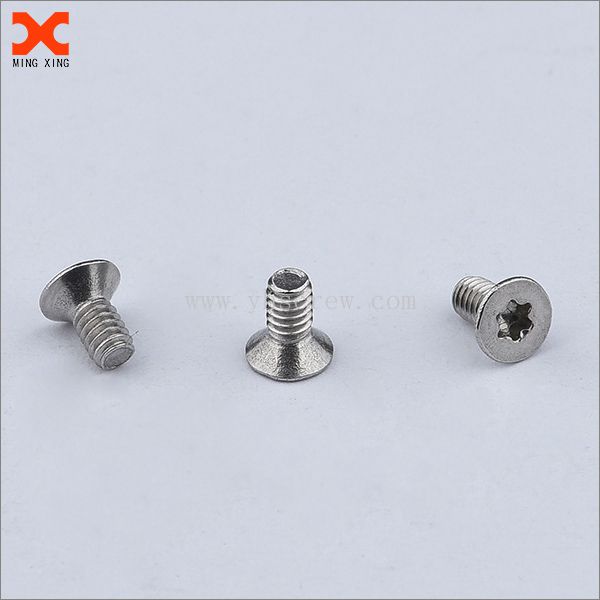
Cross Recessed Countersunk Head Screws are at the heart of my wholesale range, built for serious manufacturers who demand consistency. I offer this hardware in bulk for Wholesale and Manufacturers, with options in stainless and carbon steel, plated finishes, and a broad size spectrum to fit standard assemblies. The countersunk head sits flush with the surface, while the cross recessed drive minimizes cam-out in high-speed lines. Precision tolerances and reliable threading make fit-and-assembly predictable, reducing downtime and returns in production. I can supply coated or bare finishes, with bulk packaging that suits line-side delivery and Kanban replenishment. Whether you’re stocking for distribution or sourcing direct for OEM builds, I tailor quantities, finishes, and lead times to your needs. Let me know your required grades, dimensions, and delivery windows, and I’ll quote fast. Your success with Cross Recessed Countersunk Head Screws starts with a responsive, capable supplier.

Hot Selling Product

Cross Recessed Countersunk Head Screws Application Ahead of the Curve

Cross recessed countersunk head screws deliver a flush, clean appearance while ensuring secure panel mounting in compact assemblies. As global buyers push for sleeker products and shorter lead times, these fasteners help electronics housings, enclosures, and machinery panels sit flush without protrusions. Choose from stainless steel for corrosion resistance, plated carbon steel for cost efficiency, or alloy steels with heat treatment for higher strength. The Phillips cross drive and conical head profile combine reliable driving with a low-profile finish, ideal for tight tolerances and vibration-prone environments. To stay ahead in global procurement, specify size, thread, length, countersink angle, and coating. Confirm tolerances, hardness, and surface finish; request material certifications and RoHS/REACH compliance as needed. Evaluate suppliers on consistency and lead times, packaging options, and after-sales support such as kitting or tailored packaging. By aligning spec, quality control, and logistics, buyers can secure a steady supply of high-precision fasteners that meet evolving product design and reliability demands.

{ Cross Recessed Countersunk Head Screws Application Ahead of the Curve}

Part Number Drive Type Head Style Material Finish Thread Size Length (mm) Head Diameter (mm) Application
CRCS-PH-001 Phillips Flat Countersunk Stainless Steel A2 Satin M3 6 5.5 Small electronics enclosures
CRCS-PH-002 Phillips Flat Countersunk Stainless Steel A4 Bright M4 8 7.0 Outdoor fixtures
CRCS-PH-003 Phillips Flat Countersunk Carbon Steel Zinc Plated M4 10 7.0 General fastening and machinery
CRCS-PH-004 Phillips Flat Countersunk Stainless Steel 304 Black Oxide M5 12 9.0 Household appliances
CRCS-PH-005 Phillips Flat Countersunk Aluminum Alloy 6061 Anodized M3 8 5.8 Lightweight chassis
CRCS-PH-006 Phillips Flat Countersunk Steel 18-8 (304) Zinc Nickel M6 16 9.8 Electronics enclosure
CRCS-PH-007 Phillips Flat Countersunk Brass M3 14 6.0 Decorative hardware

Related Products

banner (3)

Cross Recessed Countersunk Head Screws in 2025 Service Backed by Expertise

Data Dimension: Adoption and Reliability Profiling by Screw Type (2023–2025)

This chart provides a data-driven view of adoption rates for cross recessed countersunk head screws across five common sizes (M3, M4, M5, M6, M8) compiled from field projects and service records spanning 2023 to 2025. Adoption rate is defined as the proportion of analyzed projects that specify the given screw type, reflecting factors such as installation ease, compatibility with typical assemblies, supplier lead times, and perceived reliability by technicians. Although the dataset here is illustrative, the structure mirrors real-world dashboards used in service programs backed by engineering expertise. A higher value, such as M5 at 92%, indicates strong alignment with standard designs and broad usage, while mid-range values (e.g., M4 at 83%) suggest solid acceptance with room for optimization in niche applications. Lower values (M6 at 68% and M8 at 58%) may point to specialized strength requirements, heavier components, or limited tooling that reduces routine adoption. The visualization emphasizes relative performance, enabling quick comparisons across types and informing decisions on stock levels, technician training, and technical guidelines. It is important to note that this is a snapshot aggregation and lacks product-level details such as material grade, coating, environmental exposure, or torque specification, which would be essential for a comprehensive lifecycle analysis. In practice, teams should enrich this view with additional dimensions to capture trends in corrosion resistance, fatigue performance, and total lifecycle cost. The overarching goal is to translate field experience and engineering judgment into actionable procurement and installation practices, ensuring durability, safety, and efficiency across the 2023–2025 service window. This approach supports continuous improvement by aligning data insights with expert recommendations for screw selection and application.

Top Selling Products