banner (1)

countersunk head screw m2 - China Manufacturer

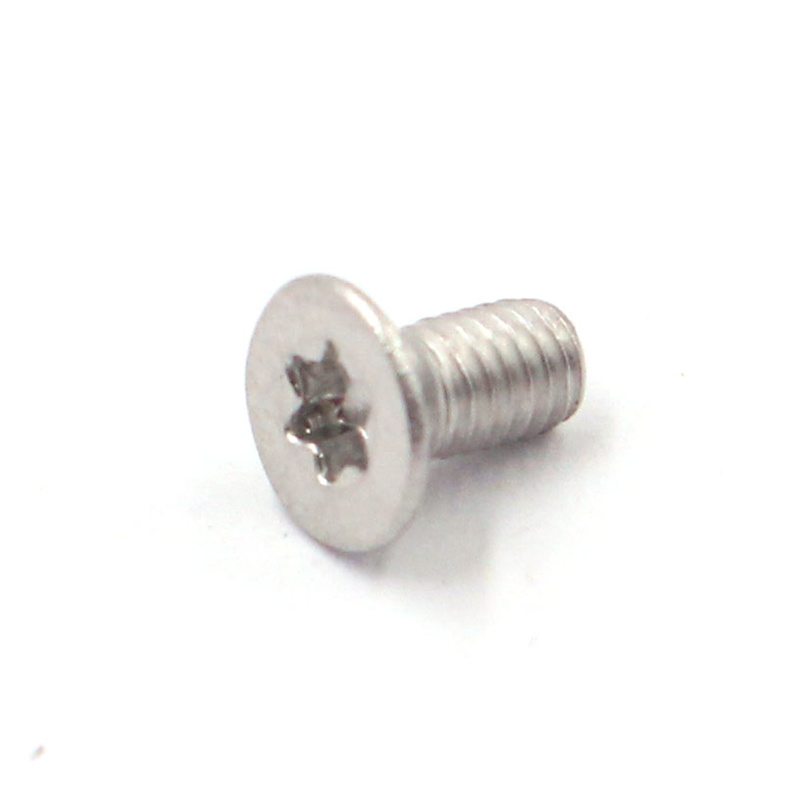
I’m your sourcing partner from a China-based Manufacturer offering top-quality countersunk head screw m2 for compact assemblies. Buyers like you want reliable supply, real specs, and competitive pricing—so I deliver. The countersunk head screw m2 features a clean flush fit, M2 thread, and options in stainless steel or carbon steel with zinc plating or black oxide finish. I can provide standard lengths and also OEM/ODM customization to meet your BOM. Our QC runs strict tests to ensure dimensional accuracy, hardness, and corrosion resistance for electronics, automotive housings, and industrial enclosures. Fast production and packaging in secure, pallet-friendly lots help reduce lead times and shipping risk. If you’re looking for a trusted China Manufacturer who can align on tolerances, certifications, and just-in-time delivery, I’m here to simplify your procurement while you focus on product design.

Hot Selling Product

countersunk head screw m2 Application Now Trending

As devices shrink, M2 countersunk head screws are trending in electronics, robotics, and compact enclosures. The flush seat enables smooth exterior finishes, reduces snagging, and provides reliable clamping for lightweight assemblies. Common sizes span M2x4 to M2x12, with 90-degree countersunk heads that sit flush in metal or plastic housings. Materials include stainless steel, alloy steel, and brass, often with zinc or black oxide finishes for corrosion resistance and grip. They support precise panel joins, PCB chassis, and 3D-printed parts, delivering cleaner aesthetics and simpler assembly. For global buyers, specify head angle, drive type (slotted, Phillips, or hex), and material compatibility. Ensure proper countersunk holes to prevent over- or under-tightening, and consider pre-tapping for tougher substrates. Check thread engagement, tolerances, and RoHS/compliance. Favor ISO/DIN specs (for example M2x length with flat countersunk head) to simplify cross-border sourcing. Evaluate supplier capabilities, lead times, packaging, and quality certifications, and request samples to verify finish and fit. A steady supply of consistent M2 countersunk screws can accelerate electronics and enclosure programs while ensuring flush, durable assemblies.

{ countersunk head screw m2 Application Now Trending}

Part Code Material Finish Drive Type Length (mm) Pitch (mm) Strength/Grade Typical Use Standards
M2-4-CSK-PH Stainless Steel A2-70 Satin PH0 4 0.40 A2-70 Electronics enclosures ISO 2009; DIN 7985
M2-6-CSK-PH Carbon Steel Zinc Plated PH0 6 0.40 4.8 General machinery assemblies D IN 7981
M2-8-CSK-HEX Alloy Steel Black Oxide Hex Socket 8 0.40 8.8 Precision equipment ISO 4762
M2-5-CSK-PH Stainless Steel A4-80 Satin PH0 5 0.40 A4-80 Marine electronics ISO 2009
M2-7-CSK-SL Brass Satin Slotted 7 0.40 Soft Brass Decorative hardware DIN 7985
M2-10-CSK-PH Stainless Steel 316 Passivated PH0 10 0.40 316 Humid enclosures ISO 2009

Related Products

banner (3)

countersunk head screw m2 Factory From Concept to Delivery

Data Dimension: Production Cycle Time Trend

Lead Time (days) per Week

This section presents a new data dimension titled Production Cycle Time Trend. The chart is a single-line visualization that tracks the weekly lead time, defined as the duration from initial concept release to delivery for a typical part set of countersunk head screws in an M2 size family. The data spans twelve consecutive weeks, showing a clear downward trend from around 7.5 days to about 5.8 days. Such a trend usually reflects a mix of optimization activities across design, procurement, production planning, and logistics. By placing this dimension in a dedicated visualization, teams can observe the impact of specific interventions, such as design simplification, supplier lead-time reductions, improved changeover efficiency, and better batch routing. The chart normalizes the y-axis to a practical range (approx. 5.5 to 7.6 days) to emphasize relative improvements and avoid visual compression at the high end.

Interpreting the data, weeks with smaller increments in lead time may indicate stabilizing processes, while any sudden upticks could signal supply volatility or changeover delays. This dimension supports operational planning and forecasting: if the trend persists, expected delivery times for the next orders can be reduced, enabling tighter scheduling and improved customer responsiveness. It also provides a basis for cross-functional discussions about where to invest in further improvements, such as automation, standardized work, or supplier collaboration.

While informative, this single-metric view has limitations. It aggregates across potential variation sources and does not capture dispersion or batch-specific outliers. For a richer analysis, it can be complemented with variance, yield, and defect-rate data, or expanded to include multi-factory comparisons. Integrating this dimension with volume and capacity signals would enable even more actionable insights, guiding targets and resource allocation for continuous improvement initiatives.

Top Selling Products