banner (1)

Nylon Insert Lock Nut - High-Quality Supplier

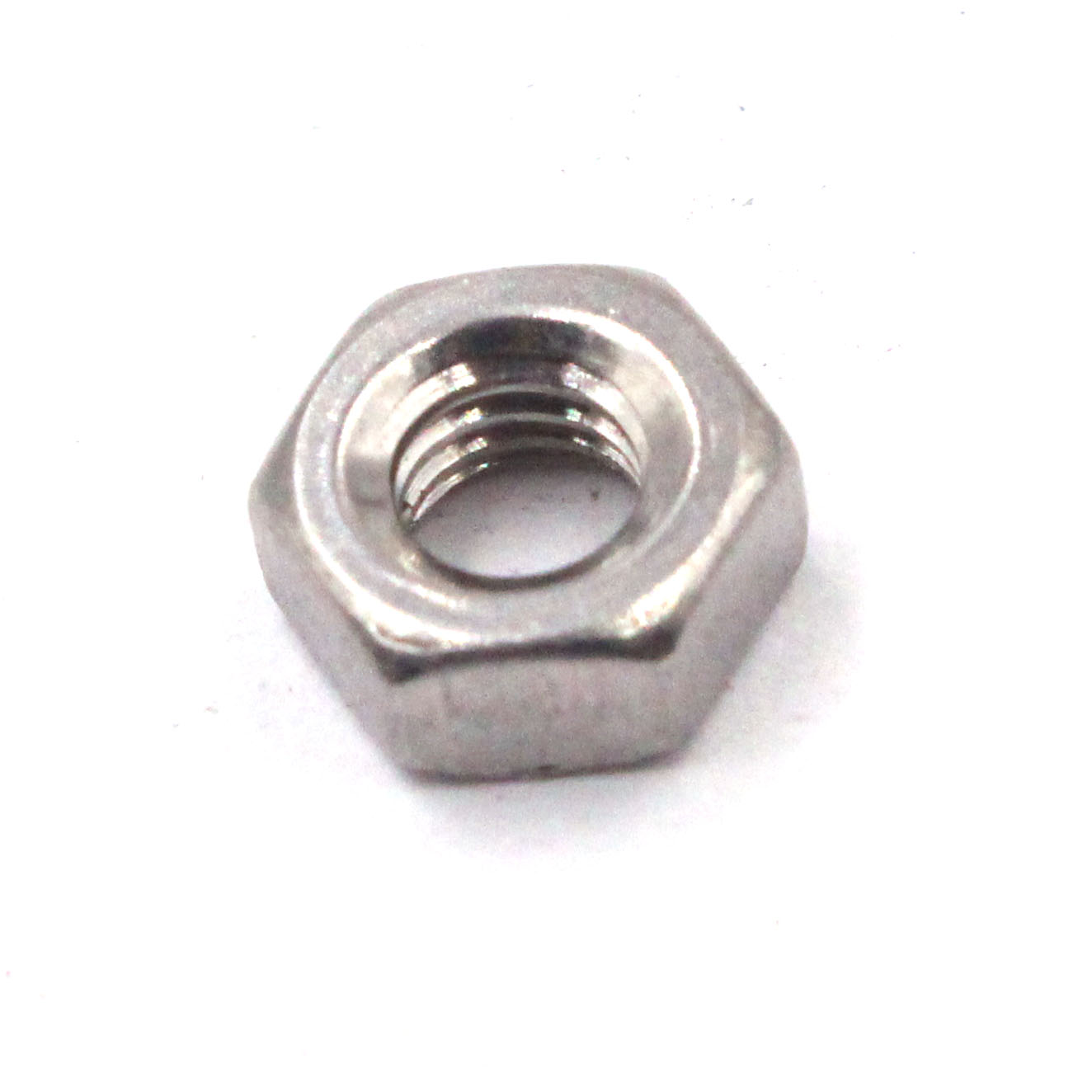
From my catalog as a Supplier, I offer High-Quality Nylon Insert Lock Nut for secure, vibration-prone assemblies. I know you need dependable performance, so this nut uses a nylon locking insert that bites into the bolt threads, preventing loosening under dynamic loads while resisting corrosion in harsh environments. Available in steel or stainless options, these nuts are easy to install with standard wrenches and no extra coatings required. I source only proven profiles and tolerances to match your drawings and fastener standards. For your production line, this is a cost-efficient solution that reduces retorquing and downtime. If you look for quick procurement and consistent quality, I’ve got you covered with flexible pack sizes and reliable lead times. Let me help you design assemblies that stay tight in the field with Nylon Insert Lock Nut that blends performance and value.

Hot Selling Product

Nylon Insert Lock Nut Where Service Meets Innovation Your End-to-End Solution

Nylon insert lock nuts provide secure locking, robust vibration resistance, and reliable performance across a wide range of assemblies. When service meets innovation, you get an end-to-end solution guiding you from concept through production. We offer nylon insert lock nuts in steel, stainless steel, and brass, with multiple thread pitches and precise tolerances to ensure consistent locking force. A design-for-manufacture mindset accelerates prototyping and scales to high-volume production. From engineering support and rapid sampling to thorough quality control and compliant documentation, the lifecycle is managed under a single program. Global procurement teams benefit from predictable lead times, end-to-end traceability, and flexible logistics. Whether you need standard parts or customized inserts, this approach reduces supplier fragmentation and simplifies procurement—delivering dependable performance, lower risk, and a faster path from design to field-ready service.

{ Nylon Insert Lock Nut Where Service Meets Innovation Your End-to-End Solution}
Variant ID Thread Size Outer Diameter (mm) Nut Height (mm) Outer Material Nylon Insert Material Operating Temperature (°C) Standard Typical Applications
V-01 M3 x 0.5 5.4 3.4 Carbon Steel, Zinc Plated PA66   -40 to 120 DIN 985 Electronics, General Machinery
V-02 M4 x 0.7 7.0 4.3 Carbon Steel, Zinc Plated PA66   -40 to 120 DIN 985 Automotive Assemblies, Household Appliances
V-03 M5 x 0.8 9.0 5.0 Stainless Steel 304 PA66-GF30   -40 to 125 DIN 985 CNC Machinery, Packaging Equipment
V-04 M6 x 1.0 11.0 6.0 Stainless Steel 304 PA66   -40 to 120 DIN 985 Heavy Equipment, Food Processing
V-05 M8 x 1.25 13.5 7.0 Stainless Steel 304 PA66   -40 to 120 DIN 985 Automotive Assemblies, Robotics
V-06 M10 x 1.5 17.0 9.0 Stainless Steel 316 PA66   -40 to 120 DIN 985 Marine Machinery, Outdoor Equipment
V-07 4-40 6.3 3.8 Carbon Steel, Zinc Plated PA66   -40 to 120 DIN 985 Small Electronics, Instrumentation
V-08 6-32 8.5 4.5 Carbon Steel, Zinc Plated PA66   -40 to 120 DIN 985 Computer Peripherals, Home Appliances
V-09 M4 x 0.7 (Low-Profile) 6.8 3.9 Stainless Steel 304 PA66   -40 to 125 DIN 985 Lightweight Machinery

Related Products

banner (2)

Nylon Insert Lock Nut Factory Guarantees Peak Performance

Data Dimension: Stage-wise Efficiency Index

Data-driven Explanation

This dataset displays a stage-wise efficiency index for a nylon insert lock nut production line. Each stage contributes to the overall performance by combining throughput, quality yield, and downtime into a single composite score. Raw Material Preparation scores 78, indicating stable supply but occasional variance that can cause minor line stoppages. Forming/Molding reaches 85, reflecting solid automation and controlled cycle times, yet small drift in tooling wear can still impact downstream steps. Cooling & Defect Check stands out at 91, showing effective QC and low rework rates; this stage acts as a gate that prevents quality issues from propagating. Threading/Lock Nut Assembly is 74, revealing room for improvement in alignment and torque consistency, possibly requiring fixture optimization or process tuning. Quality Inspection at 88 indicates robust checks with relatively few rejects, but opportunities exist to automate decision criteria to reduce manual inspection time. Packaging & Dispatch at 94 demonstrates strong packing efficiency and reliable on-time delivery, which contributes significantly to customer satisfaction.

From a data perspective, the chart reveals where the greatest gains can be realized. The lower scores at early forming and later threading stages suggest a potential ripple effect; small improvements here can lift overall line performance more than marginal gains at high-scoring stages. Implementing preventive maintenance on molds and threading tools, standardizing torque targets, and introducing lightweight automation for part orientation can lift scores by several points. In addition, tightening Statistical Process Control around raw material variance and adopting root-cause analysis for any defect detected in cooling can reduce downtime and waste.

Despite its simplicity, the 6-stage breakdown is a practical lens for continuous improvement. It enables scenario analysis: for example, a 5% cycle-time reduction in Forming or a 10% improvement in defect detection yield could translate into measurable throughput gains and lower unit costs. In the context of production of nylon insert lock nuts, sustaining high efficiency across stages correlates with reduced lead times, higher yield, and stronger market competitiveness. Regular data refreshes will help keep the chart aligned with evolving process realities and cost structures.

Top Selling Products