banner (1)

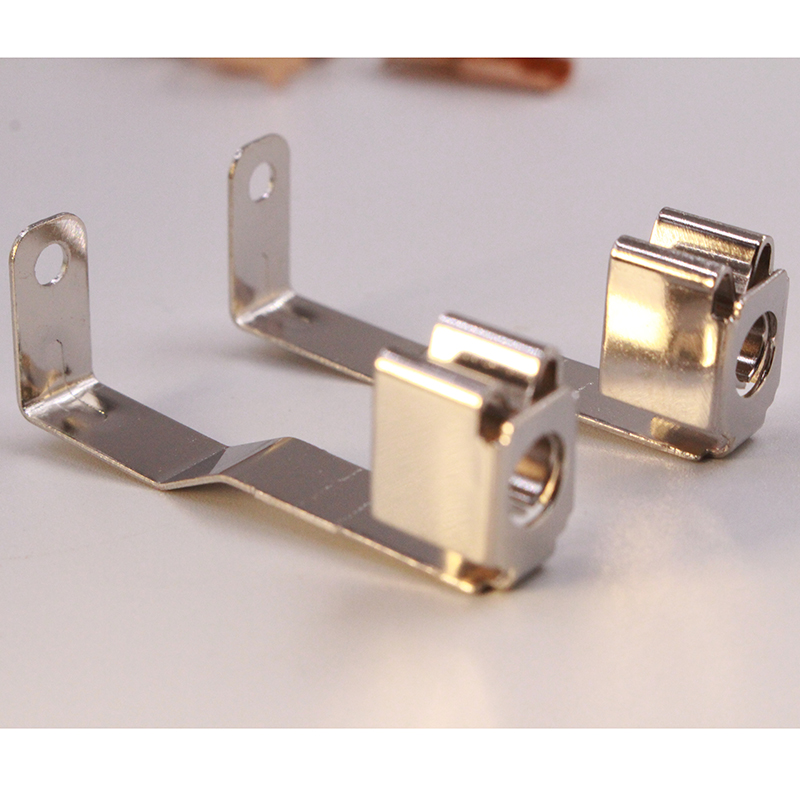
Stainless Steel Stamping Part from China Manufacturer

We are a China-based manufacturer dedicated to delivering precision Stainless Steel Stamping Part that meet strict industry standards. Our Stainless Steel Stamping Part combines durable corrosion resistance with tight tolerances, making it ideal for automotive, electronics, and industrial equipment applications. We use high-quality raw materials and advanced stamping processes to ensure consistent batch-to-batch performance. From prototyping to mass production, I work closely with clients to tailor thickness, hole patterns, and finishes to your drawings. Our team controls every step, from blanking and forming to deburring and surface finishing, to reduce assembly time and defects. If you’re sourcing in China, you’ll appreciate our responsive communication, on-time delivery, and competitive pricing. We stay compliant with international standards and can provide PPAP, FMEA, and material certificates. Trust our Stainless Steel Stamping Part to deliver reliable, scalable components for your manufacturing line.

Hot Selling Product

Stainless Steel Stamping Part Stands Out Trusted by Pros

Stainless Steel Stamping Part Stands Out Trusted by Pros Stainless steel stamping parts deliver durability, precision, and long service life. Tight tolerances and high-tensile alloys make them reliable in demanding environments, from electronics housings to automotive fittings. Modern stamping lines plus proper finishing—deburring, passivation, and polishing—produce clean surfaces and repeatable dimensions even in high-volume runs. The inherent corrosion resistance and strength of stainless steel reduce wear, heat damage, and maintenance costs for end users. For global procurement, a trusted partner offers more than parts: design-for-manufacture input, in-house stamping, inspection, and material traceability. Seek certified quality systems and clear lead-time communication. A capable supplier adapts to evolving specs, offers fast prototyping, and scales production while maintaining batch-to-batch consistency—crucial for assemblies requiring precise alignment and reliable performance.

{ Stainless Steel Stamping Part Stands Out Trusted by Pros }

Part ID Grade Thickness (mm) Finish Process Tolerance (mm) Length (mm) Width (mm) Weight (g) Production Line Weekly Output QA Pass Rate (%) Lead Time (days) Applications Certification(s)
P-1001 AISI 304 0.5 Polished Flanging ±0.05 25 15 2.3 Line A 3200 99.2 5 Kitchen Appliance Components ISO 9001
P-1002 AISI 316L 0.8 Brushed Piercing ±0.04 40 18 5.1 Line B 4200 98.9 7 Automobile Interior Trim ISO 9001, IATF 16949
P-1003 AISI 304 1.0 Electropolished Forming ±0.05 55 22 9.6 Line C 3900 99.5 7 Electronic Enclosures ISO 9001, RoHS
P-1004 AISI 316L 0.6 Polished Dimpling ±0.03 32 16 4.2 Line A 3600 99.0 5 Medical Device Housing ISO 13485, ISO 9001
P-1005 AISI 304 1.2 Passivated Chamfering ±0.08 45 20 8.9 Line B 2500 98.5 10 Kitchen Appliance Components ISO 9001
P-1006 AISI 304 0.7 Polished Forming ±0.05 28 14 2.8 Line D 3000 99.1 6 Lighting Fixture Housings ISO 9001
P-1007 AISI 316L 0.5 Brushed Flanging ±0.04 22 12 1.8 Line C 2900 98.7 6 Consumer Electronics Housings ISO 9001, RoHS
P-1008 AISI 304 0.8 Electropolished Piercing ±0.03 38 20 6.5 Line A 4100 99.3 8 Automotive Battery Housing ISO 9001, IATF 16949

Related Products

banner (4)

Stainless Steel Stamping Part Supplier Trusted by Pros

Data Dimension: Production Efficiency by Stamping Line

Line 1 Line 2 Line 3 Line 4 Line 5 Line 6 0 20 40 60 80 100

This chart presents production efficiency across six stamping lines within a stainless steel component manufacturing context. The metric displayed is an efficiency score on a scale from 0 to 100, derived from a composite of throughput, quality yield, and cycle time, where higher scores indicate a better balance of high output, low scrap, and shorter cycle durations. Lines 1 through 6 show different performance profiles: Line 5 achieves the highest score (around 94), suggesting strong throughput and excellent quality with stable cycle times; Line 2 trails with a score near 78, indicating potential bottlenecks such as downtime or misalignment that merit investigation. Lines 1 and 3 perform well (roughly 92 and 85, respectively), reflecting robust tooling conditions and efficient stamping processes. Line 4 and Line 6 fall in the 70s to high 80s, signaling moderate variability that could be mitigated through preventive maintenance, operator coaching, or process parameter optimization. The visual separation of bars helps identify lines that warrant closer attention and rapid corrective actions. For a practical improvement program, this data should be complemented with related metrics like scrap rate, tool-change frequency, and press uptime to form a more comprehensive view of process health. Integrating such visuals into a live dashboard would enable operators and managers to respond to deviations in real time, allocate maintenance resources effectively, and uphold consistent quality in stainless steel stamping operations. Over time, tracking trends across lines can reveal recurring issues and facilitate data-driven decision-making to boost overall plant efficiency and competitiveness in pros-based manufacturing environments.

Top Selling Products