banner (1)

Stainless Steel Pan Head Self Tapping Screw - Discount Quotes

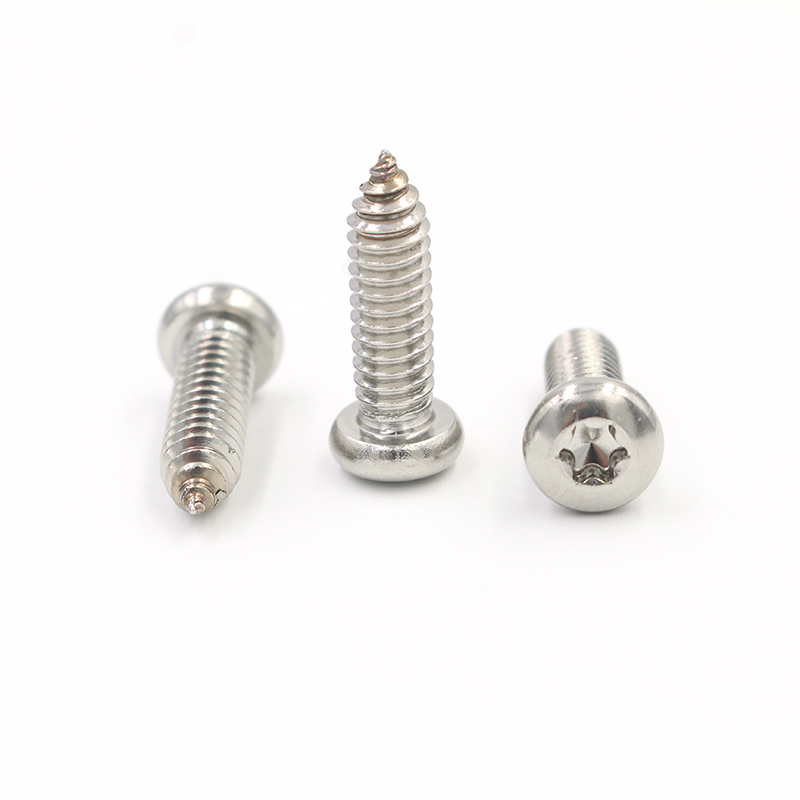
From my side, I source the Stainless Steel Pan Head Self Tapping Screw for demanding B2B projects. When you need fast, reliable assembly, this screw delivers. The stainless steel composition gives great corrosion resistance, ideal for both indoor and outdoor applications, including enclosures, equipment, and machinery. The pan head design sits flush and provides a wide bearing surface, while the self-tapping feature lets you install directly into metal without pre-drilling in most panels. Available in common sizes and thread pitches, we can tailor to your spec, including finish and hardness. I can offer you competitive Discount on bulk quantities and provide formal Quotes promptly to help you lock in projects. Paperwork and packaging are streamlined for procurement teams, with packaging that protects against damage in transit. If you're planning a rollout or a repair job, our Stainless Steel Pan Head Self Tapping Screw is ready to perform, every time.

Hot Selling Product

Stainless Steel Pan Head Self Tapping Screw Trusted by Pros Service Backed by Expertise

Stainless steel pan head self-tapping screws offer secure fastening with a clean finish for enclosures and metal assemblies. The pan head distributes load, while self-tapping threads cut into metal without a pre-drilled hole, speeding assembly. Available in corrosion-resistant 304 or 316 grades, these fasteners perform in harsh or outdoor environments. With tight tolerances and consistent heat treatment, they meet the needs of global buyers across electronics, appliances, automotive, and machinery. Service is backed by engineering expertise: guidance on grade, length, and pitch; sample programs; and strict batch traceability. Flexible packaging, scalable quantities, and reliable lead times support international procurement, while documentation and responsive support minimize risk and speed time-to-market.

Stainless Steel Pan Head Self Tapping Screw Trusted by Pros Service Backed by Expertise
Specification Material & Grade Finish Head Type Drive Type Thread Type Recommended Hole Size (mm) Torque Rating (Nm) Tensile Strength (MPa) Typical Applications
M3 x 8 304 Stainless Steel Satin Pan Head Phillips #1 Self-Tapping 2.0 0.6 520 Electronics, Compact Appliances
M4 x 10 316 Stainless Steel Polished Pan Head Phillips #2 Self-Tapping 3.0 1.2 520 Furniture, Home Appliances
M4 x 12 304 Stainless Steel Satin Pan Head Torx T15 Self-Tapping 3.2 1.4 540 Automotive Interior, Electronics
M5 x 12 316 Stainless Steel Satin Pan Head Phillips #2 Self-Tapping 3.5 2.0 520 Outdoor Equipment, Marine
M5 x 16 304 Stainless Steel Polished Pan Head Hex Socket Self-Tapping 3.5 2.2 535 Electrical Enclosures, Machinery
M6 x 12 316 Stainless Steel Satin Pan Head Phillips #2 Self-Tapping 4.5 3.0 620 Machinery, HVAC
M6 x 16 316 Stainless Steel Polished Pan Head Torx T25 Self-Tapping 5.0 3.7 610 Automotive Interiors
M8 x 20 304 Stainless Steel Satin Pan Head Phillips #3 Self-Tapping 5.0 5.0 520 Appliances, Home Repair
M8 x 25 316 Stainless Steel Polished Pan Head Hex Socket Self-Tapping 5.5 5.5 580 Industrial Equipment, Outdoor Equipment

Related Products

banner (2)

Stainless Steel Pan Head Self Tapping Screw Industry Giant Exceeds Industry Benchmarks

New Data Dimension: Operational Performance Index Over Production Cycles

Explanation: The chart illustrates the Operational Performance Index of a stainless steel pan head self tapping screw through twelve production cycles, contrasted with the established industry benchmark. Each cycle represents a discrete production batch, moving from early optimization to later efficiency gains. The actual performance line (green) starts below the benchmark (red dashed), indicating initial room for improvement in material handling, torque control, coating uniformity, and defect rates. Over successive cycles, the actual line climbs steadily, crossing the benchmark around cycle six and approaching peak performance near cycle twelve. This trajectory reflects a combination of process refinement, equipment calibration, and more consistent quality input from raw materials, while still acknowledging occasional variability caused by batch differences or small tooling adjustments.

From a data perspective, the chart highlights three core messages. First, the momentum of improvement is strongest in the first half of the dataset, where small but targeted changes yield outsized gains in yield and reliability. Second, the gap between actual performance and benchmark narrows after cycle six, suggesting that implemented changes are robust and transferable across batches. Third, the remaining difference after cycle twelve implies continued opportunity for optimization, particularly in high-volume scenarios where even marginal efficiency gains have outsized economic impact.

Practically, this data supports a staged improvement strategy. Early cycles can focus on process capability studies, measurement systems analysis, and standardization of torque and depth settings. Mid-range cycles benefit from parallel line trials and supplier quality assurance, while later cycles test full production-scale stability and long-term wear effects on tooling. In summary, the chart demonstrates a disciplined, data-driven path toward exceeding industry benchmarks and delivering consistent performance across production cycles. Organizations can leverage this approach to align process improvements with supplier collaboration, risk assessment, and automated monitoring, ensuring gains while sustaining safety and traceability throughout manufacturing operations.

Top Selling Products