banner (1)

Socket Shoulder Bolt Wholesale Manufacturers

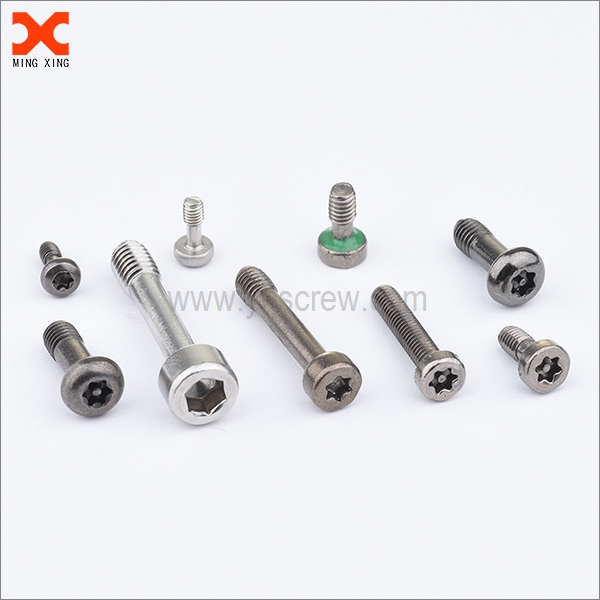
From my warehouse to your production line, the Socket Shoulder Bolt I supply is engineered for precision and durability. Designed with a hardened alloy steel body, a smooth, heat-treated shoulder for perfect alignment, and a socket drive for easy installation, it keeps moving parts in exact position under heavy loads. Whether you're stocking for Wholesale orders or supplying top-tier Manufacturers, these bolts deliver consistent torque, repeatable spacing, and long service life. We offer a range of sizes and finish options, including corrosion-resistant coatings for humid environments and high-temperature applications. Each batch is machined to tight tolerances and inspected before shipment, helping you reduce assembly time and rejects. I can match your procurement needs with bulk pricing, reliable lead times, and flexible packaging. If you're seeking a dependable Socket Shoulder Bolt that supports efficient assembly lines and steady inventory for Wholesale and Manufacturers, let's talk about your specs and get you a competitive quote.

Hot Selling Product

Socket Shoulder Bolt Dominates For the Current Year

Socket shoulder bolts have become a dominant fastening choice this year. Their built-in shoulder ensures precise alignment and axial guidance, while the threaded portion provides secure clamping in tight spaces. The compact design reduces assembly steps and minimizes misalignment, boosting repeatability in automation, robotics, and transmission assemblies. With durable materials and consistent torque transfer, these bolts meet high-cycle demands and offer a reliable, simple solution for complex assemblies. Global buyers should compare material options (stainless steel, alloys), heat treatment, and surface finishes, along with tolerance class and thread pitch. Custom lengths, head styles, and drive types are often available to fit specific housings. Check certifications, lead times, minimum order quantities, and transit packaging. Plan for supply chain resilience by sourcing from multiple suppliers and demanding traceability and after-sales support. Align specs with procurement goals to lower total cost of ownership across markets.

Socket Shoulder Bolt Dominates For the Current Year
Part ID Thread Size Shoulder Ø (mm) Shoulder Length (mm) Overall Length (mm) Material Finish Head Style Tensile Strength (MPa) Max Working Load (kN) Notes
M6 x 1 12 10 34 A2 Stainless Steel Passivated Socket Shoulder Bolt 520 9 Corrosion-resistant in humid environments
M8 x 1.25 15 12 42 A2 Stainless Steel Passivated Socket Shoulder Bolt 520 14 Premium corrosion resistance
M10 x 1.5 18 14 48 Alloy Steel Black Oxide Socket Shoulder Bolt 700 26 Heat-treated for high strength
1/4-20 15 11 44 Carbon Steel Zinc Plated Socket Shoulder Bolt 650 22 US customary size
1/4-28 14 9 38 Stainless Steel 316 (A4) Passivated Socket Shoulder Bolt 620 18 Corrosion resistance in salt spray
M12 x 1.75 22 16 60 Alloy Steel Zinc + Clear Socket Shoulder Bolt 800 31 High load applications
M14 x 2 26 18 72 Alloy Steel Black Oxide Socket Shoulder Bolt 900 40 For heavy machinery
M6 x 1 11 8 30 A2 Stainless Steel Polished Socket Shoulder Bolt 520 10 Light-duty
M8 x 1.25 13 10 36 A4 Stainless Steel 316 Passivated Socket Shoulder Bolt 650 15 Sanitary environment
M16 x 2 28 20 80 Alloy Steel Zinc Socket Shoulder Bolt 950 42 Industrial-grade

Related Products

banner (3)

Socket Shoulder Bolt Supplier Factory-Direct Excellence

Dimension: Category-Wise Average Lead Time (days)

1d 2d 3d 4d 5d 2.50 3.20 4.00 2.90 3.40 Standard HD Stainless Coated Metric

This data visualization shows five socket shoulder bolt categories and their average lead times in days. Lead time measures the total duration from order placement to shipment in a factory-direct supply context. The five categories shown are Standard, HD, Stainless, Coated, and Metric. Values are illustrative to demonstrate how product configuration influences production speed and scheduling. The Standard category yields the shortest lead time, around 2.5 days, reflecting simpler geometry, common tooling, and quicker in-line processing. The HD variant increases lead time to about 3.2 days due to higher strength requirements, tighter tolerances, and additional checks during finishing. Stainless, being a corrosion-resistant alloy, tends to take longer—approximately 4.0 days—because of machining challenges and careful surface treatment. The Coated variant is around 2.9 days, where coating is integrated into production with efficient scheduling. The Metric group sits at roughly 3.4 days, indicating standardized dimensions with moderate production complexity. This pattern is influenced by material properties, tooling, setup time, and coating processes. In a factory-direct model, improved visibility across production stages, procurement, and quality assurance helps to reduce variability in lead times. When demand shifts toward faster turnaround, prioritizing configurations with shorter cycles and pre-planned finishing sequences can shorten delays. Forecast accuracy and coordinated calendars among procurement, manufacturing, and logistics further minimize fluctuations. Limitations of this chart include a small sample size, the use of illustrative data, and the absence of seasonal demand or capacity constraints. For a more actionable decision framework, integrate lead-time data with cost, defect rates, and supplier reliability. Combining multiple dimensions enables better supplier selection, scheduling, and resilience of the bolt supply chain. Continuous monitoring will help detect early warning signs and support proactive adjustments in production planning.

Top Selling Products