banner (1)

Sealing Bolt Manufacturer in China - Leading Sealing Bolt Supplier

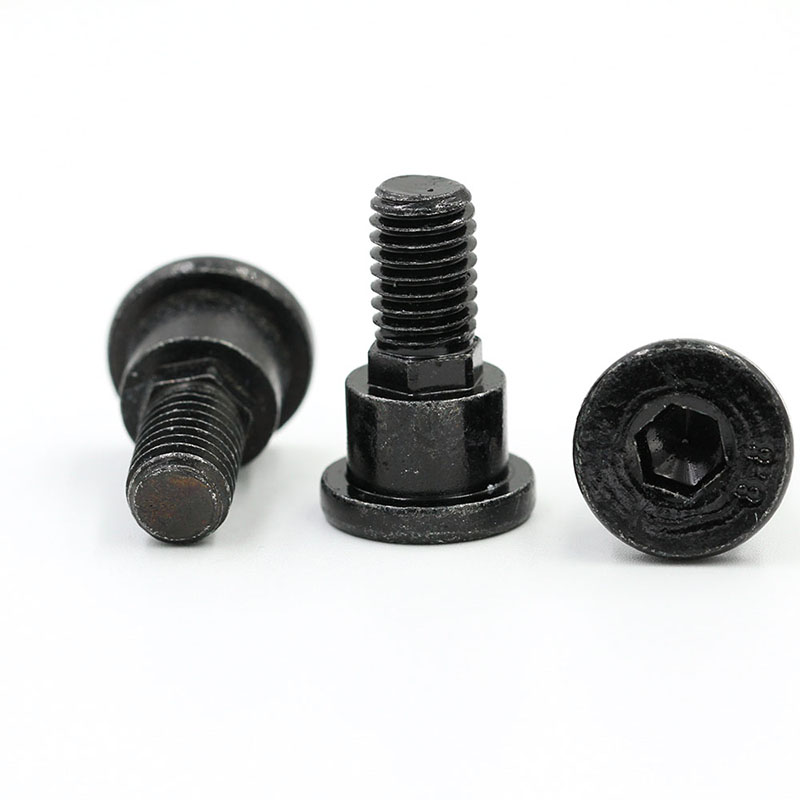
We are a China-based manufacturer offering the Sealing Bolt that keeps your equipment tight against leaks in tough conditions. We design these parts with reliability in mind, using corrosion resistant materials and precise tolerances to fit standard flanges. Our Sealing Bolt delivers strong sealing performance, easy installation, and long service life, even under high pressure and vibration. Because we are a Manufacturer, we can tailor sizes, threads, and sealing compounds to your spec, with quick samples and competitive pricing. We keep quality control at every stage—from raw material to final testing—so you can source from us with confidence. For OEMs and project buyers, these bolts are ideal for hydrocarbons, water treatment, chemical plants, and heavy machinery. If you need certificates like ISO or material test reports, we can provide them. Let's talk about your requirements and how we can meet your schedule. We ship worldwide from our factory in China, ensuring you get reliable Sealing Bolt fast.

Hot Selling Product

Sealing Bolt Factory-Direct Excellence Outperforms the Competition

Factory-direct excellence in sealing bolts offers tangible advantages for global buyers. Removing the middleman yields competitive pricing, shorter lead times, and steady part specifications across lots. From a premier southern China manufacturing base, the model leverages strict raw-material control, in-line inspections, and final testing to keep tolerances tight and results traceable, ensuring reliable performance in demanding applications. Choose a partner with transparent pricing, flexible minimums, rigorous QA, and scalable production. End-to-end traceability, essential certifications, strong packaging, and dependable logistics help meet international standards and timelines. The factory-direct approach supports rapid design changes and on-time supply, reducing total cost of ownership and supply-chain risk, while delivering consistent quality and uptime for global procurement programs.

Sealing Bolt Factory-Direct Excellence Outperforms the Competition
Variant Thread Size Outer Diameter (d, mm) Length (L, mm) Material Finish Tensile Strength (MPa) Coating / Thickness (µm) Lead Time (days) Monthly Capacity (units)
A M6 6 20 Stainless Steel 304 Zinc Electroplated 520 8 7 120000
B M8 8 25 Stainless Steel 304 Passivation 520 0 9 150000
C M10 10 30 Alloy Steel 4140 Black Oxide 700 8 12 110000
D M12 12 40 Stainless Steel 316 Polished 650 12 11 98000
Average 610 7.0 ~/~

Related Products

banner (4)

Sealing Bolt Now Trending More Than a Supplier - A Partner

New Data Dimension: Adoption Rate by Sector

Dimension: Sector Adoption Rate (percent)
Construction 82% Automotive 68% Manufacturing 54% Electronics 41% Aerospace 32% Maritime 60%
The chart presents a simple data dimension: the Adoption Rate by Sector for a specific sealing technology across multiple industries. The six sectors shown—Construction, Automotive, Manufacturing, Electronics, Aerospace, and Maritime—capture a broad cross-section of real-world demand and deployment patterns. Values are expressed as percentages of projects within each sector that have adopted the sealing bolt solution, reflecting both industry needs and procurement willingness. The highest adoption appears in Construction, suggesting that scale and project turnover drive rapid uptake, while Electronics and Aerospace show moderate adoption, likely due to stringent safety and reliability requirements that influence supplier selection and integration complexity. Maritime sits in the mid-range, possibly influenced by environmental and maintenance considerations. The visualization intentionally uses distinct colors to differentiate sectors and overlays direct percentage labels on bars for quick readability, while the horizontal grid lines help compare relative adoption levels at a glance. The data dimension is qualitative in the sense that it aggregates multiple project-level decisions into a single adoption percentage per sector, which can be influenced by project size, regulatory environments, and supply chain stability. Methodologically, it assumes consistent sampling across sectors and treats adoption as a binary outcome (adopt vs. not adopt) at the project level, aggregated to sector-level percentages. Limitations include potential sampling bias, time-lag between market events and reporting, and the lack of granularity about regional variations or sub-sectors within each category. For decision-makers, the chart highlights where market penetration is strongest and where there may be opportunities to target outreach, education, or custom solutions to accelerate adoption in lower-scoring sectors.

Top Selling Products