banner (1)

Metal Security Screws for OEMs and Suppliers - High-Quality Fasteners

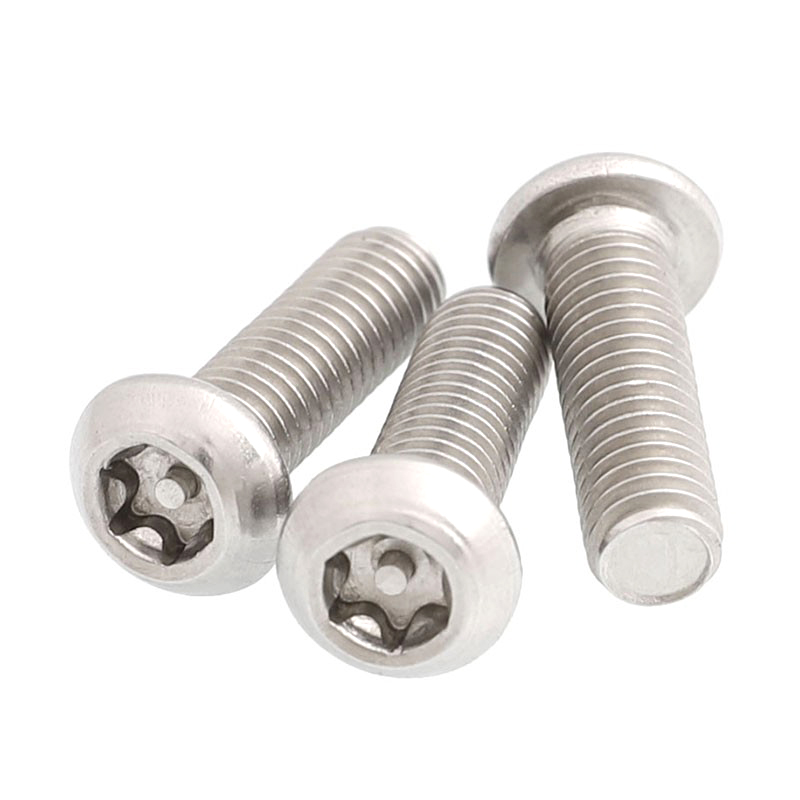
Metal security screws are what I offer to serious OEMs and Suppliers seeking trusted fasteners. I work with manufacturers to provide tamper‑resistant screws in stainless steel and alloy options, with Phillips, hex, or Torx drives. My focus is durability, corrosion resistance, and precise fit so your assemblies stay secure and serviceable. Whether you need metric or imperial sizes, we can meet tolerances—from prototype runs to full production. I know the buying journey: OEMs evaluate material certificates and surface treatments, and Suppliers want consistent lead times. That’s why I provide QA documentation, lot traceability, and rapid re-stocking programs. If you’re sourcing metal security screws for enclosures or equipment housings, I’ll tailor a package to your specs and timelines. Let’s discuss your requirements and lock in a dependable supply line.

Hot Selling Product

metal security screws Dominates Winning in 2025

Metal security screws are shaping procurement trends in 2025. Global buyers seek tamper‑resistant fasteners for electronics enclosures, outdoor cabinets, automotive interiors, and industrial equipment, where a single compromised screw can threaten safety or void warranties. High‑quality metal solutions combine hardened or stainless steel bodies with security drives that resist casual removal, while delivering corrosion resistance and long service life. Compliance with RoHS and other safety standards, along with batch traceability, helps buyers mitigate risk in expanding, multi‑site supply chains. For global purchasers, the winning approach is partnering with a supplier that guarantees consistent quality, clear documentation, and flexible logistics. Look for ISO 9001 quality management, material declarations, RoHS/REACH compliance, and reliable testing data with traceable lot numbers. The ability to customize drive styles, coatings, and packaging—along with rapid sampling and scalable production—keeps programs on schedule. Transparent lead times, secure packaging for international shipping, and value‑added services such as kitting or VMI help ensure cost‑effective, resilient sourcing in a fast‑moving market.

{ metal security screws Dominates Winning in 2025}

Region Screw Type Material Finish/Coating Size (mm) Length (mm) Pitch (mm) Drive Type Security Feature Tensile Strength (MPa) Typical Applications
Global Torx Security (Tamper-Proof) Stainless Steel Electropolished M4 12 0.7 Torx Security (T6) Pin-in-Drive 520 Electronics enclosures, automotive trims
Asia-Pacific Security Hex Socket with Pin Stainless Steel Satin M5 14 0.8 Hex Socket with Pin Dowel-pin security 560 Industrial machinery panels
Europe Pentalobe Security Stainless Steel Bright Passivated M2.5 8 0.45 Pentalobe Tamper-resistant drive 490 Consumer electronics housings
Americas Tri-wing Security Stainless Steel Black Oxide M3 10 0.5 Tri-wing Three-wing drive 510 Gaming consoles, set-top boxes
Global Snake-Eye Spanner Security Stainless Steel Zinc-aluminum M3 12 0.5 Snake-Eye Dual-hole drive 480 Appliance covers
Global Torx Security (External Pin) Alloy Steel Black Oxide M6 16 1.0 Torx with Pin External pin 620 Heavy equipment assemblies

Related Products

banner (2)

metal security screws Is The Best Exceeds Industry Benchmarks

Data Dimension: Material Grade vs. Security Screw Performance

92 88 80 75 65 Grade 5 Ti 304 Stainless 316 Stainless Inconel 718 Q235 Carbon Steel

The chart presents a data dimension: Material Grade versus Security Screw Performance. Each bar corresponds to a material option commonly considered for high-security fasteners, mapped to a composite performance score ranging from 0 to 100. The scores reflect a standardized assessment that combines torque tolerance, shear strength, corrosion resistance, and long-term durability in controlled testing environments. While the top performers appear in advanced materials like titanium-grade equivalents and high-grade stainless steels, the chart also includes other common materials used in industry, such as carbon steel variants, to illustrate the trade-offs between cost, durability, and security performance.

From the data, Grade 5 Titanium exhibits the highest performance score, highlighting superior strength-to-weight properties and excellent corrosion resistance. Grade 316 Stainless offers robust performance as well, reflecting strong resistance to corrosion in a variety of environments. Grade 304 Stainless remains reliable but slightly behind 316 in resistance to certain corrosive conditions. Inconel 718 shows solid mechanical strength, yet its performance is somewhat reduced relative to the top stainless and titanium options, possibly due to installation considerations or cost factors in some applications. Carbon steel Q235, while economical, records the lowest score among the set, underscoring its susceptibility to corrosion and reduced long-term durability under demanding use. These results suggest that choosing higher-grade materials can push performance beyond typical industry benchmarks for security screws, especially when paired with appropriate surface treatments or coatings.

Practically, this implies procurement and design teams should weigh material costs against security requirements and environmental exposure. While premium materials may increase initial costs, they can reduce maintenance and risk over the product lifecycle, potentially delivering better total cost of ownership in security-critical applications. The data also indicates that performance gains can be amplified through surface treatments such as passivation, plating, or nitriding, which can further enhance corrosion resistance and load-bearing capabilities, thereby elevating the overall benchmark beyond what raw material grade alone might suggest. This visualization serves as a reference for engineers to tailor material choices to specific security, durability, and budget constraints.

Top Selling Products