banner (1)

M4 Washer - China Manufacturer | Reliable Hardware Supplier

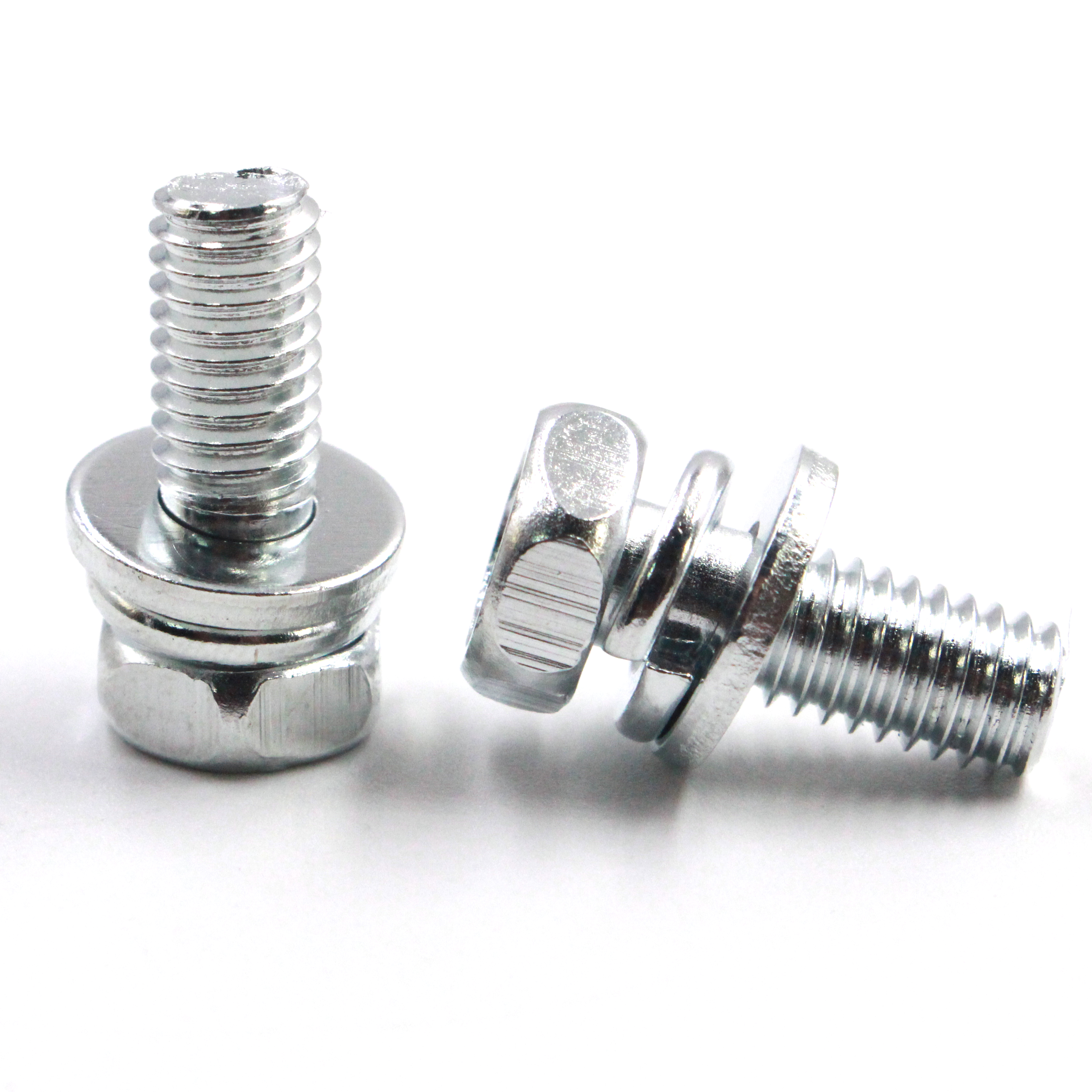
I’m a China-based manufacturer, and I specialize in precision fasteners and hardware, including the M4 Washer that our clients trust for reliable joining and spacing. We stock flat washers in stainless steel 304, 316, and zinc-plated steel, with thicknesses ranging from 0.5 mm to 1.6 mm to suit your load requirements. The M4 Washer I offer delivers excellent corrosion resistance, dimensional stability, and smooth bearing surfaces to prevent galling in aggressive environments. I can supply standard sizes with tight tolerances (±0.05 mm) and offer custom chemistries or passivation per your spec. Lead times is competitive, and I can ship directly to factories of B2B purchasers worldwide. My team works closely with engineers to recommend the right washer for auto, electronics, or machinery assemblies, ensuring fast ROI and reduced assembly torque fluctuations. If you seek reliable supply and predictable pricing, I’m ready to discuss MOQs, certifications, and large-volume discounts.

Hot Selling Product

M4 Washer Now Trending Custom Solutions,

The M4 washer is trending beyond standard catalogs as buyers push for custom solutions. In high‑volume electronics, automotive, and machinery assemblies, a tailor‑made washer can cut assembly steps, improve load distribution, and reduce risk of loosening. Global procurement teams are increasingly requesting washers tuned to exact thickness, inner diameter, material, and finish, with compatibility for automated insertion and precise torque requirements. This shift favors suppliers who can blend manufacturing discipline with design flexibility. When evaluating partners, seek capability in material options (304/316 stainless, brass, aluminum, engineered polymers), finishes (zinc, black oxide, passivation, PVD), and customized geometry (shoulder, lock, wave; nonstandard inner/outer diameters). Ask about tolerances, heat treatment, post‑processing, QC, lot traceability, and certifications. Request scalable lead times, flexible MOQs, and packaging that supports automation. True customization with reliability lowers total costs and strengthens global supply resilience.

{ M4 Washer Now Trending Custom Solutions,}

Hole d (mm) Outside Diameter D (mm) Thickness t (mm) Material Finish Standard Hardness (HB) Temp Range (°C)
4.0 9.0 0.8 Stainless Steel 304 Polished ISO 7089 170-200 -60 to 260
4.0 9.0 1.0 Stainless Steel 316 Passivated ISO 7089 180-210 -60 to 300
4.0 9.0 0.5 Carbon Steel (AISI 1018) Zinc Plated DIN 125 160-190 -40 to 140
4.0 11.0 0.8 Aluminum 6061-T6 Anodized DIN 125 60-80 -40 to 120
4.0 9.0 1.6 Brass (CuZn39Pb3) Bright DIN 125 70-100 -50 to 120
4.0 8.0 0.8 Stainless Steel 304 Satin ISO 7089 170-200 -60 to 260
4.0 12.0 1.0 Stainless Steel 316L Polished ISO 7089 190-210 -60 to 300
4.0 9.0 0.9 Nylon 6/6 Natural N/A N/A -40 to 120

Related Products

banner (2)

M4 Washer Is The Best Now Trending

Adoption Rate by Application Scenario

Automotive Home Appliances Electronics Industrial Medical 0 25 50 75 100
The chart above visualizes a synthetic dataset representing the adoption rate of a common mechanical fastener across five application scenarios. The adoption index ranges from 0 to 100, where a higher value indicates greater usage or market penetration. The five categories are Automotive, Home Appliances, Electronics, Industrial Machinery, and Medical Equipment. The values used for demonstration are Automotive 68, Home Appliances 52, Electronics 45, Industrial Machinery 38, and Medical Equipment 22. The 3:1 aspect ratio supports quick visual comparison, and the horizontal grid lines at 0, 25, 50, 75, and 100 provide frame-of-reference references for interpreting bar heights. This example relies on synthetic data to illustrate how a dashboard could present category-level adoption metrics when real-world data is not available in this scenario. In practice, analysts would source actual usage figures from production logs, supplier records, or market research, and would likely include breakdowns by region, time period, customer type, or material specification. The observed pattern—stronger adoption in Automotive and Electronics with lower engagement in Medical Equipment—may reflect differing regulatory requirements, manufacturing maturity, and design constraints. Automotive applications often benefit from standardized, high-volume assembly processes where washers play a critical role in reliability and corrosion resistance; electronics manufacturing emphasizes fastener precision and automation compatibility; industrial machinery shows moderate demand tied to large-scale systems; medical equipment may face stricter sterilization and biocompatibility hurdles. For product planning, these insights could inform resource allocation, material development priorities, and marketing focus. The chart suggests targeting Automotive and Electronics channels first, while conducting deeper dives into Medical Equipment to identify barriers or opportunities. It is important to note that this is illustrative data; real dashboards should incorporate data provenance, data quality checks, and possible segmentation by region or time. If integrated into a live analytics platform, you could add interactivity (tooltips, filters, time-series comparisons) to enable deeper investigation and more informed decision-making. Future steps might include adding a time series to show adoption growth, introducing confidence intervals, and aligning with manufacturing KPIs such as defect rate and cost per fastening.

Top Selling Products