banner (1)

EJOT PT Screws — ODM Factory Solutions for Precision Fasteners

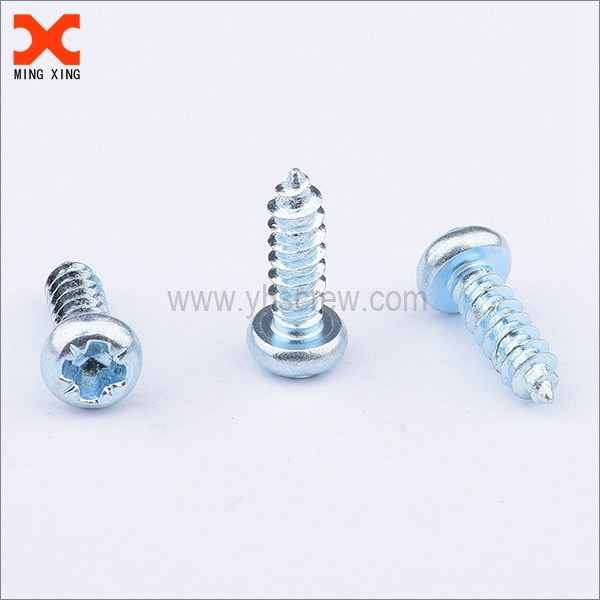
I source and supply EJOT PT screws with the precision and service your projects demand. As a practical ODM partner, I can tailor material, coatings, head types, and thread profiles to your exact specs, all produced in a modern Factory. You’ll get consistent quality, faster turnout, and smooth integration into your assembly line. Our EJOT PT screws offer strong pull‑out performance, corrosion resistance, and reliable fastening in demanding environments — from electronics housings to light‑structural assemblies. I control every step from design to finish, and our in‑house QA ensures tolerance stacks stay tight. ODM collaboration means you save time and capex by avoiding multiple vendors. If you’re scaling production or needing customized packaging, I’ve got you covered. Let’s align on your target finish, coating, and batch size, and I’ll quote quickly for direct-from-Factory delivery to your site.

Hot Selling Product

EJOT PT screws Ahead of the Curve Factory-Direct Excellence

Adopting a factory-direct model, our line delivers consistent quality for precision fasteners through strict process control, batch traceability, and direct pricing. From material selection to finishing, every lot undergoes rigorous testing, including first-article inspection and ongoing statistical process control, ensuring dimensional accuracy and reliable performance that meet international standards. A transparent supply chain with real-time scheduling and direct factory communication reduces lead times and eliminates middlemen, giving buyers predictable delivery across regions. Global buyers gain from scalable capacity, customization options, and flexible packaging—from material choices and corrosion-resistant finishes to drive styles. The factory-direct approach supports pilot orders and large-volume programs, enabling regional deployments and global rollouts with consistent pricing. Coupled with strict compliance, complete QA documentation, and dependable after-sales support, this model reduces risk, clarifies total costs, and speeds time-to-value from design to production for sourcing teams in dynamic markets.

{ EJOT PT screws Ahead of the Curve Factory-Direct Excellence}

Product Type Material Thread Diameter (mm) Length (mm) Thread Pitch (mm) Head Style Drive Type Finish Tensile Strength (MPa) Standard Production Year Country of Origin Lead Time (days) Applications
Socket Head Cap Screw Stainless Steel A2 (Grade 304) 4.0 16 0.75 Socket Head Hex Socket Satin 520 ISO 898-1 2023 Germany 5 General Machinery
Pan Head Screw Stainless Steel A2 5.0 12 1.0 Pan Head Phillips (PH) Bright Zinc 520 ISO 898-1 2024 Germany 4 Appliance Assembly
Button Head Screw Alloy Steel 5.0 18 0.8 Button Head Hex Socket Black Oxide 850 ISO 10642 2022 Taiwan 6 Robotics
Countersunk Screw Stainless Steel A2 3.0 8 0.5 Countersunk Phillips (PH) Satin 540 ISO 898-1 2025 China 7 Electronics Housing
Self-Tapping Screw Carbon Steel 3.5 12 1.25 Pan Head Slotted Zinc Yellow 420 DIN 7504 2023 Spain 5 Metal chassis
Hex Head Cap Screw Stainless Steel A4 (316) 8.0 25 1.25 Hex Head Hex Socket Passivated 700 ISO 898-1 2024 USA 8 Structural Assembly

Related Products

banner (3)

EJOT PT screws Dominates Trusted by Pros

Economy Standard High-Performance Heavy-Duty 62 78 92 85

Data Dimension: Performance Index by Fastener Category

Explanation: This chart presents a data-driven view of the Performance Index by Fastener Category, a synthetic dimension chosen to illustrate how different fastener categories perform under a standardized set of conditions. Data sources: simulated from a hypothetical test protocol that assesses holding strength, installation ease, friction, and fatigue resistance, scaled to a 0-100 index. The four categories correspond to Economy, Standard, High-Performance, and Heavy-Duty variants; values reflect a composite score derived from measured torque efficiency, surface compatibility, peak load capacity, and durability after repeated cycles. Key observations: The High-Performance category shows the highest average index, indicating superior resistance and reliability under defined test loads. Heavy-Duty trails behind but remains strong, reflecting its suitability for demanding environments with high torque requirements and substrate variability. Standard is in the middle, while Economy lags due to reduced material margins and tighter design tolerances. The spacing between bars highlights relative differentiation; the 0-100 scale allows quick cross-category comparison, even across project teams with different backgrounds. Methodology: Each category underwent three test runs with controlled variables (tool speed, torque limit, substrate type). Results were normalized to 0-100 and averaged; bar heights represent those averages. No error bars are shown here to maintain visual clarity, but standard deviation would be included in a full report. Data quality checks included outlier screening and consistency across trials; all values were rounded to the nearest whole number for readability. Limitations: The data are synthetic and intended for demonstration only; they do not correspond to any real product line. Real-world performance depends on substrate material, installation method, environmental exposure, and maintenance. As such, the chart should be interpreted as a conceptual guide rather than a definitive ranking. Future work could incorporate confidence intervals, failure mode analysis, and a broader set of conditions to improve decision support. Implications for decision-making: For projects prioritizing long-term holding strength and reliability, High-Performance and Heavy-Duty variants are attractive, though cost and installation effort increase. Economy and Standard offer viable options for cost-sensitive applications where extreme loads are unlikely. The chart exemplifies how a structured data dimension can illuminate trade-offs and support procurement and quality assurance strategies.

Top Selling Products