banner (1)

DIN 916 Set Screws - China Manufacturer | High-Quality Fasteners

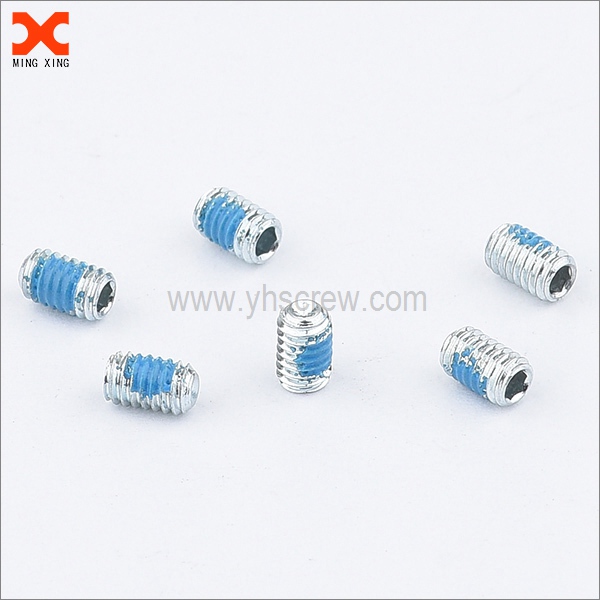
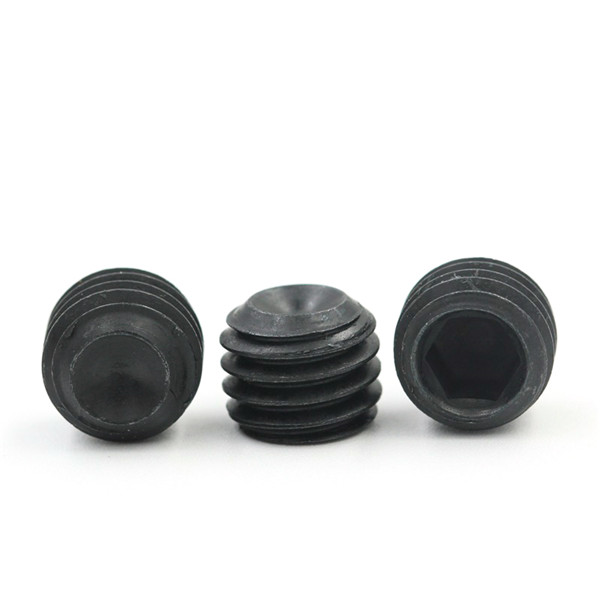
I am a China-based manufacturer offering DIN 916 set screws that B2B buyers can rely on. When you buy from me, you're getting stable supply, clear documentation, and consistent quality across orders. Our DIN 916 set screws, with hex socket drive and cup-point (partially threaded), are designed for precise clamping without protrusion. Made from stainless steel or hardened alloy, they resist wear and corrosion in demanding environments. We control length, thread size, and finish to match exact customer specs, and we provide batch traceability and inspection certificates. Whether you need initial samples or full production runs, I offer flexible MOQs, competitive pricing, and fast lead times. We ship from China, with packaging options for export and ready-to-ship inventory. If you look for a trusted Manufacturer to secure your DIN 916 set screws, I can tailor packaging, labeling, and documentation to your procurement process. Your project timeline matters, and I’m here to help you stay on track.

Hot Selling Product

din 916 set screws Industry Leaders Outperforms the Competition

Global buyers increasingly rely on DIN 916 set screws for standardized, dependable fastening. Industry leaders beat the competition by delivering tight tolerances, consistent materials, and reliable cup-point contact, enabling repeatable assemblies across machinery, automotive, and electronics. Standardized parts reduce SKU fragmentation, simplify stocking, and speed up production. Evaluate options by material (hardened steel or stainless steel), coatings (zinc, black oxide, or passivation), and the cup-point design that maintains clamp force without marring surfaces. Confirm drive type (internal hex or slotted), dimensional tolerances, finish quality, and traceability, including material test reports and RoHS compliance. A supplier with steady quoting, sampling, and long-term supply is crucial for global programs. The best DIN 916 partners offer manufacturing stability, scalable capacity, and efficient logistics to serve multiple regions with predictable lead times. Seek support for custom lengths or thread sizes, reliable packaging, and transparent performance data. With a strategic approach, DIN 916 set screws deliver dependable assemblies, lower total cost of ownership, and smoother overseas sourcing.

{ din 916 set screws Industry Leaders Outperforms the Competition}
Model Material Finish Thread Length (mm) Tensile Strength (MPa) Hardness (HRC) Coating DIN 916 Compliance
M1 Stainless Steel A2-70 Black Oxide M4 6 520 52 Black Oxide Conforms
M2 Alloy Steel 4140 Zinc Plated M5 8 700 40 Zinc Conforms
M3 Stainless Steel 316 (A4-80) Passivated M6 10 800 45 None Conforms
M4 Carbon Steel C45 Black Oxide M4 12 500 45 Black Oxide Conforms
M5 Stainless Steel A2-70 Zinc Plated M8 16 520 40 Zinc Conforms
M6 Alloy Steel 4340 Plain M3 6 900 42 None Conforms

Related Products

banner (4)

din 916 set screws Manufacturer Service Backed by Expertise

Data Dimension: Lead Time Variation by Material Grade

This chart illustrates a data dimension called "Lead Time Variation by Material Grade," capturing the average production lead time in days across four material grades (Grade A, Grade B, Grade C, Grade D). The values reflect typical order-to-delivery performance for DIN 916 set screw components under a standard manufacturing scenario. Observations indicate a clear upward trend: Grade A materials yield the shortest lead times (~3.8 days), followed by Grade B (~5.4 days), Grade C (~7.1 days), and Grade D (~9.0 days). The progression suggests that higher-grade materials or those with tighter tolerances require longer processing windows, additional supplier coordination, or more extensive quality assurance, all contributing to longer lead times. This data dimension is useful for procurement planning, production scheduling, and inventory management, enabling teams to estimate delivery windows, build buffers, and coordinate with suppliers.

Possible interpretations include that the correlation between material grade and lead time may reflect supplier availability, lot sizes, or packaging requirements associated with higher-grade inputs. It may also indicate that certain grades are sourced from more distant suppliers or involve more custom handling. By analyzing lead time by material grade, managers can identify bottlenecks, negotiate supplier terms, or adjust the bill of materials to optimize overall throughput without compromising product specifications. To strengthen the analysis, additional data points such as monthly volumes, defect rates, shipping methods, and order sizes could be incorporated to capture seasonality and variability. Data quality matters: ensure consistent definitions of "lead time" (from order placement to shipment or to receipt), confirm that outliers are understood, and consider using median values or trimmed means to reduce the influence of anomalies. This chart can be extended with time-series views, segmentation by customer or production line, and integration with supplier performance dashboards for richer decision support. Overall, the data dimension highlights how material grade impacts scheduling risk and customer lead-time promises, guiding targeted improvements in procurement, manufacturing, and logistics processes.

Top Selling Products