banner (1)

CNC Lathe Turning Machining Small Size Parts - Wholesale Manufacturers

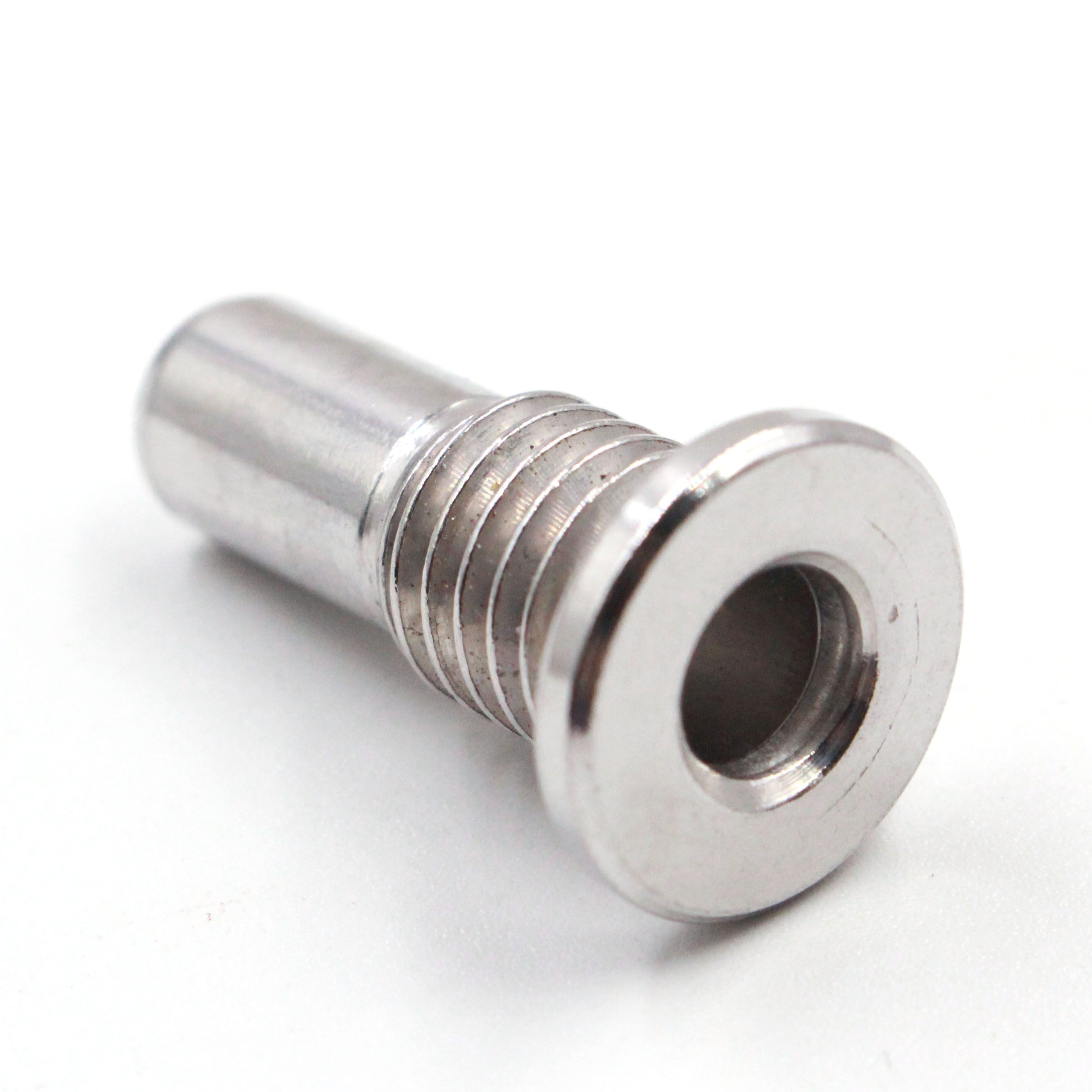
From my precision shop, I deliver cnc lathe turning machining small size parts that meet demanding specs for automotive, electronics, and medical devices. We proudly serve Wholesale customers and Manufacturers alike, offering scalable production—from rapid prototypes to full-volume runs. I work with stainless steel, aluminum, brass, and copper, offering tight tolerances and smooth surface finishes on tiny components. Using state-of-the-art CNC lathes with multiple axis and live tooling, I can handle complex profiles and consistent repeatability. I provide design support, custom fixturing, and first article inspection with CMM reporting to ensure you get exactly what you requested. Quick turnaround times, transparent pricing, and flexible logistics help you streamline your supply chain. Whether you need MOQ-free pilot parts or ongoing manufacturing, I’m ready to match your spec, tolerances, and delivery dates—without compromising quality.

Hot Selling Product

cnc lathe turning machining small size parts Your Trusted OEM Partner Your End-to-End Solution

Global buyers seeking reliable, small-size precision components will find CNC lathe turning a cost-efficient path to scalable production. As a trusted OEM partner, we deploy multi-axis turning centers to deliver consistent roundness and tight tolerances on micro-sized parts, often to ±0.01 mm depending on geometry and material. We process a wide range of materials—from aluminum and stainless steel to brass, copper, and engineering plastics—and support secondary operations such as drilling, tapping, deburring, and surface finishing. Our end-to-end solution spans design for manufacturability and rapid prototyping through process validation, high-volume production, and final inspection. We manage materials sourcing, coatings, packaging, and global logistics, ensuring transparent lead times, scalable capacity, and IP protection. Partnering with a provider that aligns quality, cost, and delivery with your global procurement goals helps you accelerate time-to-market with confidence.

{ cnc lathe turning machining small size parts Your Trusted OEM Partner Your End-to-End Solution}
Part ID Material Diameter (mm) Length (mm) Tolerance Surface Finish (Ra, µm) Machining Type Surface Treatment Processing Time (min) Notes
P-1010 Stainless Steel 304 6.0 20.0 ±0.02 0.8 Turning Passivation 18 Quality-controlled end-to-end production
P-1011 Aluminum 6061-T6 4.5 15.5 ±0.03 0.6 Turning + Chamfer Anodized 15 µm 12 Lightweight, high strength component
P-1012 Brass C360 3.0 9.0 ±0.02 0.4 Turning Nickel Plating 9 Low-friction bearing segment
P-1013 Carbon Steel 1045 5.5 22.0 ±0.03 1.0 Turning + Grooving Heat Treated (HRC ~45) 22 Rock-hard finish for load-bearing part
P-1014 Titanium Ti-6Al-4V 2.0 12.3 ±0.04 0.9 Turning Anodized 20 µm 15 Aerospace-grade lightweight component
P-1015 Copper C110 3.2 18.4 ±0.02 0.7 Turning Polished 11 Corrosion-resistant electrical part
P-1016 Stainless Steel 316L 4.0 10.0 ±0.02 0.5 Turning Passivation 7 Medical device standard part
P-1017 Aluminum 7075 6.5 25.0 ±0.03 0.8 Turning Anodizing 12 µm 25 High-strength aerospace component
P-1018 Stainless Steel 304 7.0 30.0 ±0.01 0.6 Turning + Finishing Polished 28 Fine finish, tight tolerances

Related Products

banner (2)

cnc lathe turning machining small size parts Products Factory-Direct Excellence

Data Dimension: Throughput per Hour (pcs/hr) by Part Type

Explanation: This dataset represents the hourly throughput capacity measured as units produced per hour for five representative small-size parts processed on a CNC lathe turning setup. The numbers are synthetic but designed to reflect common production dynamics in micro-part machining, where geometry and feature count influence cycle time and throughput. The chart uses a vertical axis representing throughput and a horizontal axis listing part types; a higher bar indicates a higher hourly output. The maximum value observed in this sample is 240 pcs/hr, which sets the scale for the visualization, and the bars are normalized to that maximum. Observations from the chart suggest that the “Precision Pin” has the highest throughput, potentially due to shorter cycle times and simpler fixturing, while “Bearing Sleeve” shows the lowest throughput, likely reflecting longer cutting paths or tighter tolerances per piece. The other parts fall in between, illustrating a gradient that mirrors feature complexity. This synthetic dataset is intended for demonstration and capability assessment rather than a production forecast. In real environments, throughput is affected by multiple factors such as spindle speed, feed rate, tool wear, material hardness, coolant effectiveness, and machine maintenance. As such, the chart should be used as a baseline to identify opportunities for improvement. Potential optimization strategies include optimizing tool paths to reduce non-cutting time, adopting higher feed rates within quality constraints, implementing automation for loading/unloading to reduce manual handling, and balancing spindle time across parts to minimize idle periods. To derive actionable insights, this visualization can be extended with additional dimensions like material type, required surface finish, tolerances, and current downtime. Coupling throughput with quality metrics such as defect rate and rework time can provide a more complete picture of cost-per-piece and overall process capability. This approach supports data-driven decision making for small-batch manufacturing, enabling targeted investments that improve capacity, reduce lead times, and sustain consistent quality.

Top Selling Products