banner (1)

Captive Panel Screw - ODM Factory Solutions for Quality Panels

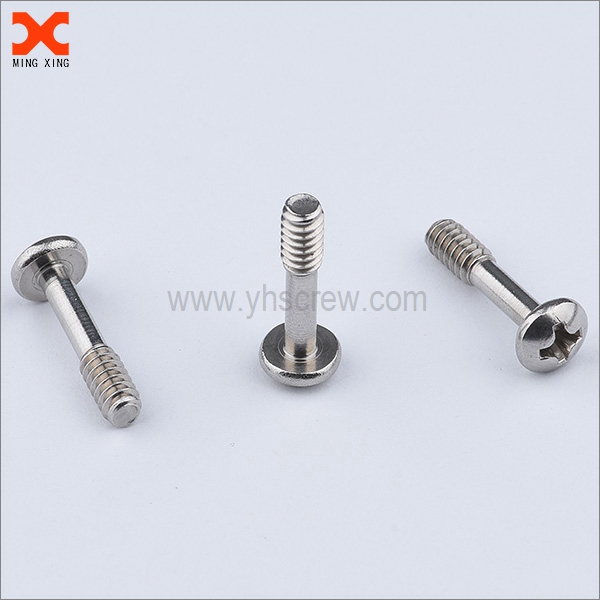
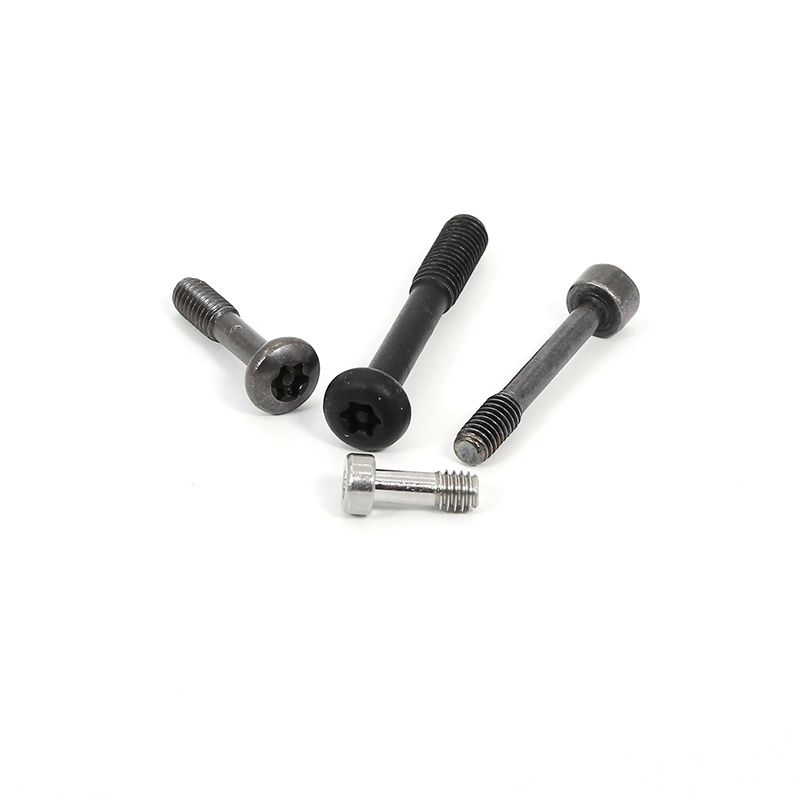
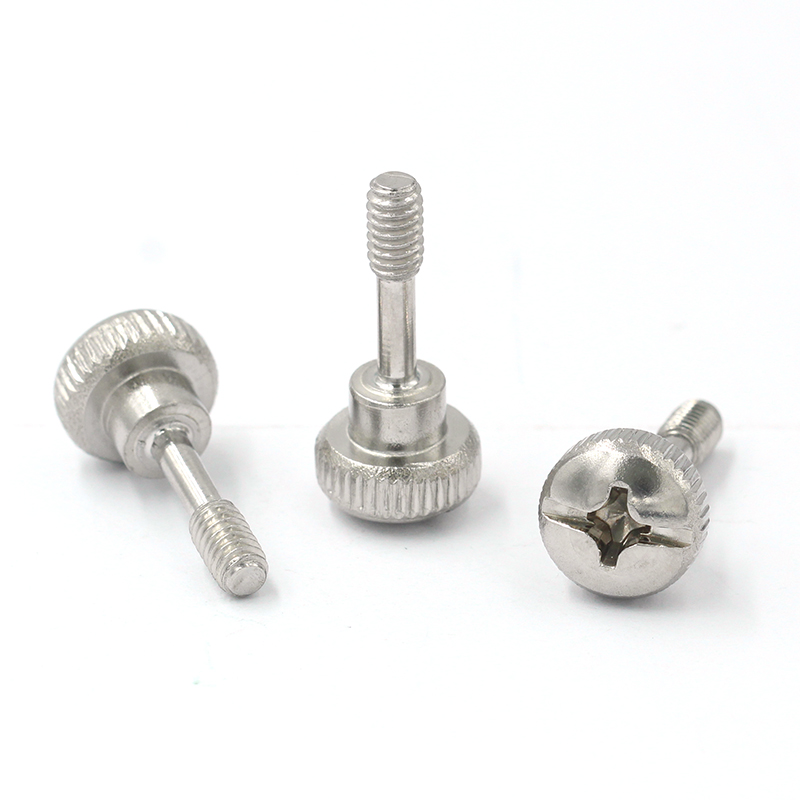
I’m the one who crafts Captive Panel Screw solutions that streamline assembly on our line. This Captive Panel Screw keeps a screw and nut in one piece, so panels snap in and stay secure during vibration. I offer ODM options and can tailor head style, drive, material, and finish to suit your equipment. My screws come in stainless steel, alloy steel, and zinc-plated variants, with corrosion protection for harsh environments. Precision-formed threads deliver consistent preload and easy disassembly, reducing downtime. I provide factory-direct pricing and reliable lead times, plus scalable lots for mass production. I test every batch to ensure torque stability and retention under temperature swings. If you’re designing control panels or enclosures, my ODM capabilities let you specify panel thickness, thread pitch, and coating. Choose me for a partner that blends engineering rigor with practical, cost-conscious manufacturing; I’m ready to support your project from prototype to high-volume production, with quick reorders from the Factory.

Hot Selling Product

Captive Panel Screw Industry Giant Factory-Direct Excellence

Global buyers know that the right captive panel screw solution can streamline assembly, boost enclosure integrity, and reduce field returns. These fasteners provide consistent clamping, vibration resistance, and clean aesthetics for diverse housings. A factory-direct supplier delivers rapid lead times, scalable volume, and direct access to engineered options—from drive styles to thread sizes and head types. With in-house tooling, precision heading, and automated inspection, you can source high-precision captive screws that meet tight tolerances and industry standards without the delays of multiple intermediaries. Manufacturers align materials, finishes, and coatings to your environment—corrosion resistance for coastal electronics, thermal stability for high-heat assemblies, and EMI considerations for sensitive enclosures. End-to-end quality management, strict incoming and final checks, and certifications ensure reliability across regions. Direct-from-factory procurement unlocks competitive pricing, flexible minimums, and steady supply even during spikes. For global teams, this means predictable lead times, unified documentation, and a single point of contact from sourcing to shipment—a practical path to scalable, compliant enclosure assemblies.

{ Captive Panel Screw Industry Giant Factory-Direct Excellence }
Model Material Head Type Diameter (mm) Length (mm) Thread Pitch (mm) Finish Drive Type Insertion Torque (Nm) Pull-out Strength (N) Panel Thickness Range (mm) Coating Thickness (μm) Temperature Range (C) Manufacturing Process
A-100 Stainless Steel A2 Button 3.0 6.0 0.50 Passivated Hex Socket 0.20 180 0.8–2.0 6 -40 to 120 Cold Forming, Passivation
A-200 Stainless Steel A4 (316) Flat 4.0 8.0 0.50 Electropolished Phillips 0.28 260 1.0–2.5 8 -40 to 125 Cold Forging, Passivation
B-110 Stainless Steel A2 Hex Drive 3.5 7.0 0.60 Black Oxide Hex 0.25 210 0.9–1.8 4 -40 to 120 Cold Forming
C-210 Alloy Steel Tamper-proof Torx 5.0 10.0 0.80 Zinc Nickel Torx 0.50 420 1.2–3.0 12 -30 to 120 Cold Forming, Quench and Temper
D-120 Stainless Steel A2 Button 2.5 5.5 0.50 Passivated Slotted 0.18 150 0.8–1.6 5 -40 to 110 Cold Forging
E-300 Stainless Steel A4 (316) Flat 6.0 12.0 0.75 Satin Hex 0.70 520 1.5–3.0 10 -40 to 130 Cold Forming
F-400 Stainless Steel A2 Pan 4.5 9.0 0.60 Bright Zinc Phillips 0.35 310 1.0–2.3 9 -40 to 110 Cold Forming, Surface Treatment

Related Products

banner (2)

Captive Panel Screw Industry Giant Pioneers in the Field

Data Dimension: Time-series Analysis of Output and Price

This chart presents a time-series view of yearly production volume and average unit price for a specialized manufacturing segment, illustrating fundamental market dynamics through a simple, synthetic dataset. The left axis tracks production volume in thousands of units, reflecting changes in capacity, tooling, automation, workforce, and capital investment over a decade. The right axis shows the average price per unit in USD, capturing factors such as raw material costs, supplier pricing, value-added features, and competitive pressure. The labels represent a hypothetical but plausible sequence of events for a captive panel screw market segment, with measured years from 2015 to 2024. Observing the lines together highlights several insights. First, when production grows, price tends to stabilize or increase slightly after initial adjustments, suggesting that capacity expansion supports higher output without immediate price erosion. Second, during periods of rapid output growth, price fluctuations may reflect changes in input costs or supply-chain dynamics rather than demand alone. Third, price tends to be smoother than volume, indicating that manufacturers may adjust pricing more gradually in response to input shocks while pushing capacity to meet demand. Fourth, the divergence and convergence of the two lines across years reveal the balance between supply-side expansion and market demand. The dual-axis approach is helpful but requires caution, as axis scaling can exaggerate perceived relationships; the interpretation should focus on relative movements and lead-lag patterns rather than exact one-to-one correspondences. This visualization supports strategic assessments for product lines, capacity planning, and pricing strategy; it can be extended with more refined data, seasonal components, or scenario overlays. For practitioners, the chart underscores the value of aligning investment timing with market signals and using data-driven forecasts to optimize margins and competitiveness in an evolving manufacturing landscape. Potential enhancements include adding rolling averages, annotating major events, or integrating external indices such as commodity price trends or exchange rates to improve interpretability.

Top Selling Products