banner (1)

High-Quality Stainless Steel Taptite Screws - Trusted Supplier

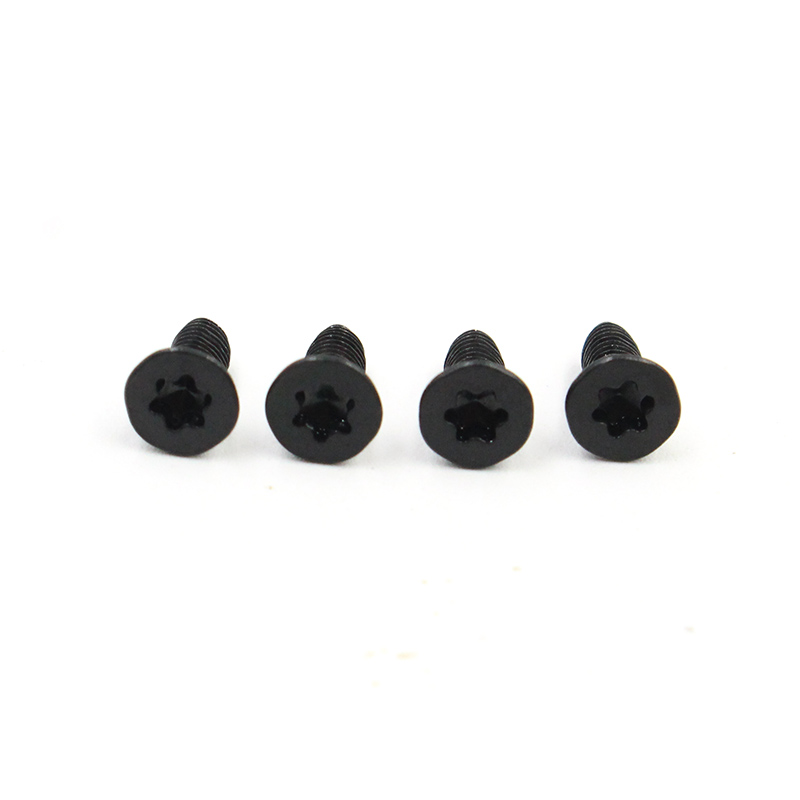
On my factory’s shelf, you’ll find Stainless Steel Taptite screws that you can trust for critical assemblies. I am a Supplier dedicated to High-Quality fasteners, and I know your production line demands consistency, traceability, and on-time delivery. These screws feature self-tapping threads that bite into thin panels with minimal pre-drilling, reducing assembly time and tool wear. Made from corrosion-resistant stainless steel, they resist rust in humid or washdown environments, ideal for automotive, electrical, and equipment enclosures. I offer sizes and finishes to suit both structural and cosmetic needs, with tight tolerances and reliable pull-out strength. Our commitment to a smooth procurement experience means fast quotes, ready-to-ship inventories, and clear documentation for quality control. If you seek a Trusted Supplier for Stainless Steel Taptite screws, I’m here to help you lock in durability and performance on your next batch.

Hot Selling Product

Stainless Steel Taptite screws Dominates Pioneers in the Field

Stainless steel Taptite screws dominate fastener design, combining self-tapping action with corrosion resistance. As thread-forming fasteners, they create mating threads in metals and plastics with minimal torque and reduced cross-threading risk. Stainless grades such as 304 and 316 offer lasting corrosion resistance for electronics enclosures, outdoor equipment, marine components, and automotive parts. This blend of speed, reliability, and durability makes them the preferred choice for pioneers seeking long-term performance. Across global supply chains, these screws set the standard for efficient assemblies in diverse markets. Global buyers should prioritize quality assurance, material traceability, and compliance. Look for certifications, rigorous process controls, and finishing options like passivation or zinc-nickel that suit its application. Flexible packaging, scalable production, and transparent lead times support multi-site programs, while consistent pricing and warranties reduce procurement risk. By choosing a partner with strong QC and the capacity to deliver at scale from a major electronics hub, buyers can optimize cost, speed, and reliability for high-stakes assemblies.

{ Stainless Steel Taptite screws Dominates Pioneers in the Field}

Item_Code Diameter_mm Length_mm Material_Grade Finish Head_Type Drive_Type Taptite_Integrated Tensile_Strength_MPa Yield_Strength_MPa Shear_Strength_kN Standard_Compliance Country_of_Origin Typical_Applications
SS-TPT-01 3.0 6 A2 (304) Passivated Pan Phillips Yes 540 205 1.9 ISO 3506-1:2016 Germany Light electronics enclosures
SS-TPT-02 4.0 8 A2 (304) Zinc-plated Round Torx Yes 550 240 2.3 ISO 3506-1:2016 Italy Automotive interior trims
SS-TPT-03 5.0 12 A2 (304) Passivated Flat Phillips No 560 230 2.8 ISO 3506-1:2016 USA Panel assemblies in consumer appliances
SS-TPT-04 6.0 16 A4 (316) Passivated Countersunk Hex Yes 600 280 3.4 ISO 3506-1:2016 Japan Marine equipment assemblies
SS-TPT-05 3.0 25 A4 (316) Passivated Pan Hex Yes 580 320 2.1 ISO 3506-1:2016 China Industrial equipment in humid environments
SS-TPT-06 8.0 10 A2 (304) Passivated Pan Torx Yes 520 200 3.0 ISO 3506-1:2016 South Korea Electrical cabinet assemblies
SS-TPT-07 6.0 22 A2 (304) Passivated Button Phillips No 530 210 2.9 ISO 3506-1:2016 India Instrumentation panels
SS-TPT-08 5.0 15 A4 (316) Passivated Pan Hex Yes 610 290 3.2 ISO 3506-1:2016 United Kingdom Offshore equipment fasteners

Related Products

banner (3)

Stainless Steel Taptite screws Sets the Industry Standard Guarantees Peak Performance

数据维度标题:材料等级对扭矩稳定性的影响

Material Grade vs Torque Stability: A Performance Benchmark

88 92 78 64 70 Grade 304 Grade 316 Grade 301 Grade 410 Grade 430 0 20 40 60 80 100

Explanation: This benchmark investigates how material grade influences torque stability in stainless steel fasteners across common engagement scenarios. The data represents a performance score on a 0 to 100 scale, integrating factors such as thread engagement reliability, yield strength, surface finish, corrosion resistance, and load retention under cyclic torque. Grade 316 shows the highest observed score due to its superior corrosion resistance and mechanical properties in typical service conditions, followed closely by Grade 304, which offers robust fatigue resistance and strength at a lower cost. Grade 301 and Grade 430 reveal noticeable gaps in stability, with Grade 410 performing the lowest among the set due to alloy composition that reduces ductility and increases work hardening under high torque. The trend indicates that beyond corrosion resistance, the interplay between ductility, friction characteristics, and surface treatment can significantly impact torque retention, especially during repeated fastener cycling. The bars provide a relative ordering: 316 > 304 > 301 > 430 > 410, aligning with expectations that nickel and chromium-rich grades deliver both strength and stability in many stainless applications. However, local design conditions, such as pilot hole tolerances, assembly speed, lubrication, thread pitch, and surface finish, can shift these results in practice. Engineers should treat this data as a directional guide rather than a universal rule; real-world performance must be validated under representative service environments. The chart also highlights the importance of consistent manufacturing processes, heat treatments, passivation, and quality control to ensure that the chosen material grade maintains torque stability across the service life of fasteners. The ultimate selection should balance cost, supply chain considerations, and expected load cycles to achieve reliable performance while minimizing risk of torque loss, galling, fretting, or corrosion-related failures over time. These insights support design decisions in precision assemblies and help communicate expected performance across engineering teams and maintenance planners.

Top Selling Products