banner (1)

Small Self Tapping Screws - Exporter for Purchase

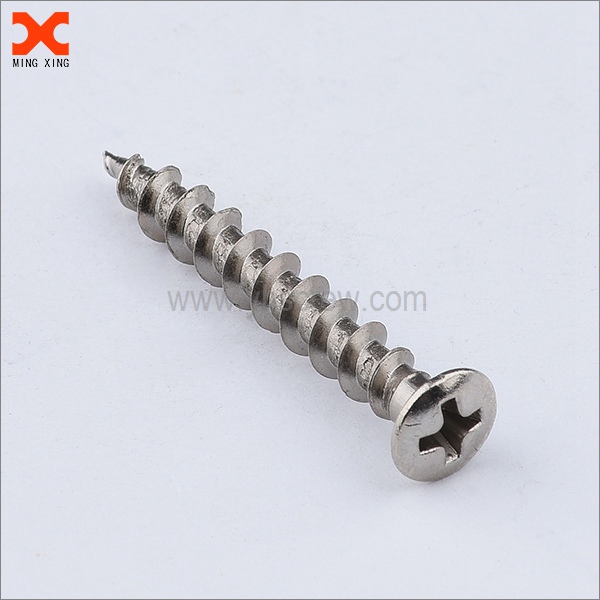
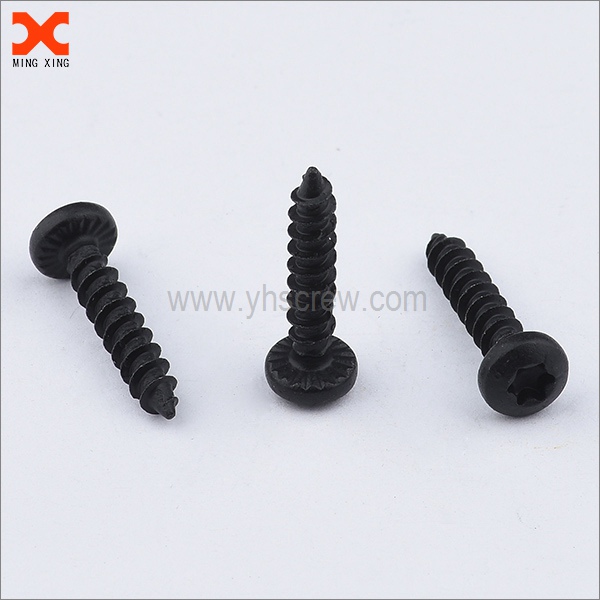
I’m here to help you Buy reliable fasteners. As an Exporter, I supply Small Self Tapping Screws in bulk to meet tight production schedules. Whether you need stainless steel for corrosion resistance or zinc-plated carbon steel for cost efficiency, I have options from small diameters to larger lengths, with self-tapping threads that form tight, secure joints in thin metal. I focus on quality control, fast turnaround, and packaging designed for safe transit. When you partner with me, you’ll get consistent lead times, competitive pricing, and flexible MOQs to match your demand. I arrange worldwide shipping and provide export documentation, so you can trust our service from sample to shipment. If you’re scaling up production or stocking your warehouse, Small Self Tapping Screws from our range will fit your assembly perfectly.

Hot Selling Product

Small Self Tapping Screws Dominates Sets the Industry Standard

Small self-tapping screws have become the standard solution for electronics, appliances, and automotive assemblies. Their versatile thread form and sharp points enable secure, tool-ready joins into metal and plastic, reducing parts and assembly time. This drives lower costs and more consistent quality across markets as manufacturers meet tolerance, coating, and corrosion-resistance expectations. International standards and cross-border compatibility of DIN/ISO/ANSI series reinforce their role as a reliable, scalable fastener for global supply chains. From a Dongguan-based manufacturing hub, a modern plant delivers high-volume, precision fasteners to global buyers. Expect tight tolerances, varied materials (steel, stainless, aluminum), multiple coatings, and flexible packaging for regional logistics. A rigorous quality program—inline checks, third-party audits, and traceability—ensures consistent performance from micro screws to larger variants. Buyers gain shorter lead times, customizable features, and dependable supply even in spikes, while staying aligned with international standards and environmental sustainability.

{ Small Self Tapping Screws Dominates Sets the Industry Standard }

Variant Diameter_mm Length_mm Material Coating Head_Type Drive_Type Point_Type Applications
M3 Self-Tapping Screw 3 6 Carbon Steel Zinc Plating Pan Phillips Self-Tapping General metal sheet up to 0.8 mm
M3.5 Self-Tapping Screw 3.5 8 Stainless Steel (A2) None Pan Torx Drill Point Thin steel and plastics
M4 Self-Tapping Screw 4 10 Carbon Steel Zinc Plating + Passivation Hex Washer Hex Self-Tapping Sheet metal 0.8-1.5 mm
M4.2 Self-Tapping Screw 4.2 12 Stainless Steel (A2) Natural Satin Phillips Phillips Drill Point Electrical enclosures; Polycarbonate plastics
M5 Self-Tapping Screw 5 16 Carbon Steel Black Oxide Button Phillips Self-Tapping Automotive interior panels

Related Products

banner (4)

Small Self Tapping Screws Products Factory

Data Dimension: Self-Tapping Screws Size Distribution (mm)

0 60 120 180 240 4-6 6-8 8-10 10-12 12-14 14-16 Units (in thousands)
The dataset visualized here represents a data dimension called Self-Tapping Screws Size Distribution, with size bins measured in millimeters (mm). Each bar indicates an illustrative production volume for the corresponding screw size, expressed in thousands of units, over a defined period. The six size bins (4-6, 6-8, 8-10, 10-12, 12-14, 14-16) were selected to reflect typical mid-range to larger sizes commonly requested by various applications such as electronics enclosures, metal fabrication, and cabinetry. The relative heights convey the distribution shape: the 6-8 mm bin has the tallest bar, followed by 8-10 mm and 10-12 mm, implying these sizes dominate demand in this synthetic example. Smaller bars for 4-6 mm and 14-16 mm suggest more modest demand, possibly driven by niche applications or supply constraints. This visualization emphasizes relative comparisons rather than exact market volumes. For decision-makers, it supports capacity planning, tooling readiness, and inventory management by size. It can be extended with additional dimensions like coating type (e.g., zinc, black oxide), thread length, material (stainless vs carbon steel), or regional demand to enable multi-dimensional analysis. Important caveats include the stylized nature of the data, absence of seasonality, order timing, and market-side variability. When combined with other charts, the size distribution can inform scenario planning for capacity expansion, procurement strategies, and pricing models. Interactive filtering or animation could further enhance interpretation, allowing users to explore how the distribution shifts under different production plans or market conditions.

Top Selling Products