banner (1)

Small Camera Screw | ODM Factory Solutions for Custom Parts

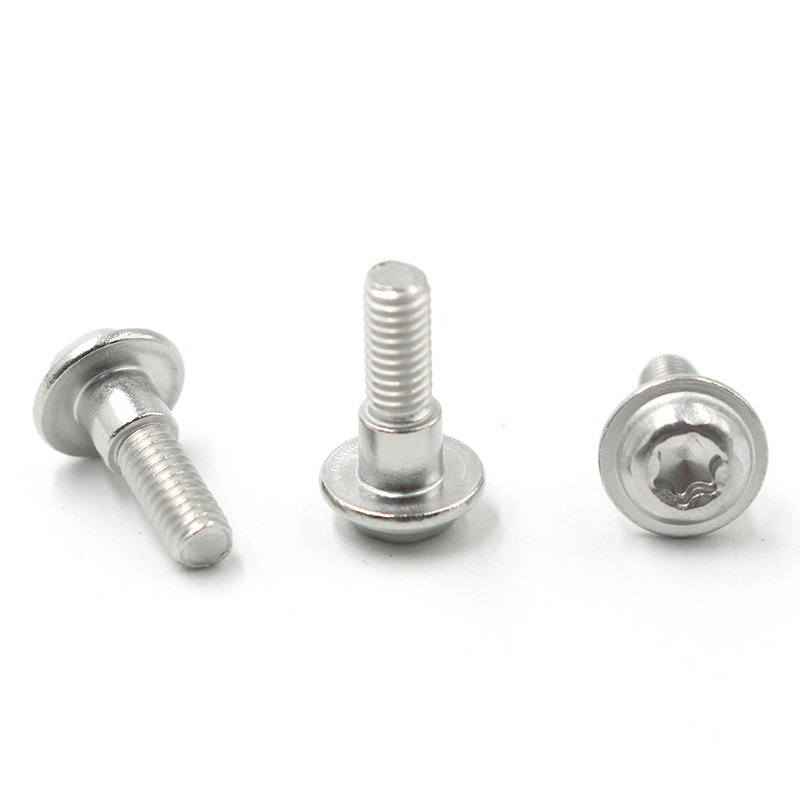
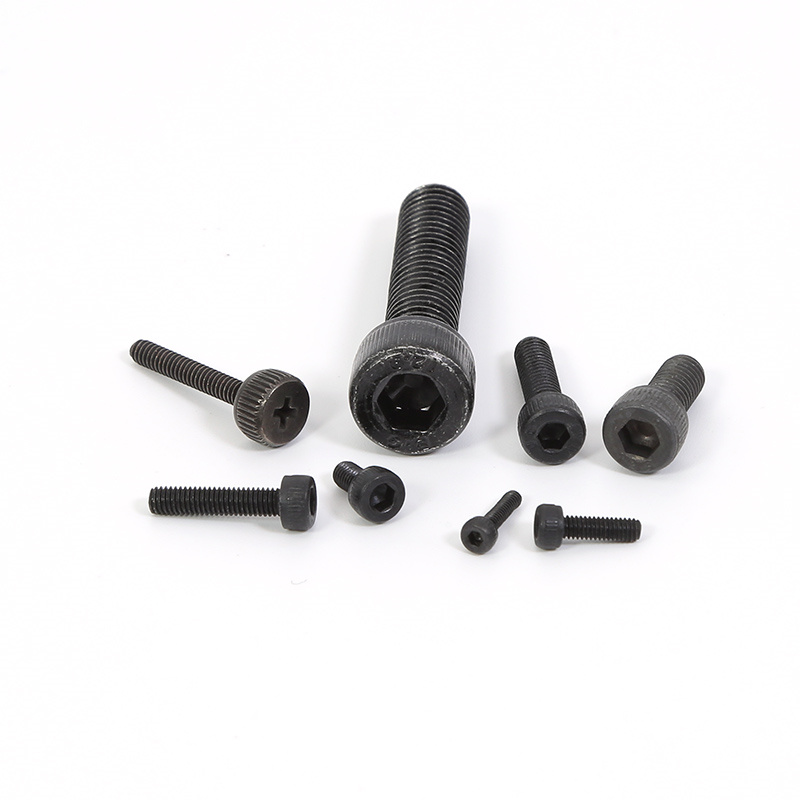
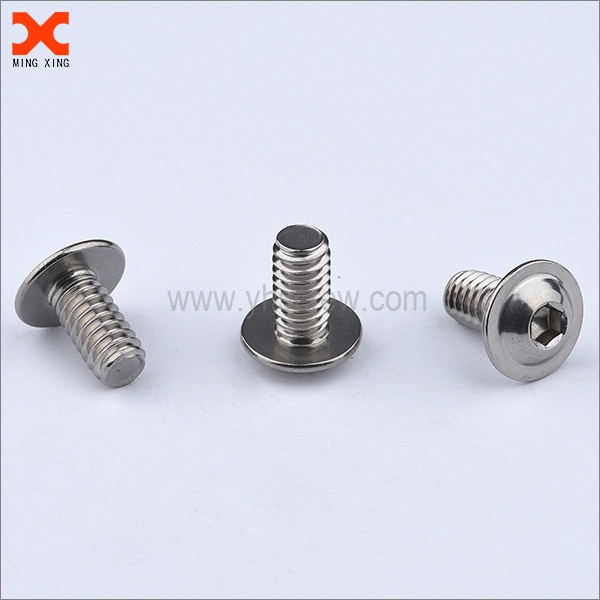
As an ODM manufacturer with our own Factory, we offer a dependable small camera screw designed for professional gear. I concentrate on precision threading, corrosion resistance, and consistent quality for high‑volume production. The small camera screw is available in stainless steel and brass, with common thread sizes such as 1/4-20 and 3/8-16, plus metric equivalents. I can provide customized lengths, head styles (flat, pan, or camera-mount), and plating finishes (black oxide, nickel, or titanium). We maintain strict QC, 100% inspection, and full traceability. If you are sourcing for ODM projects or OEM manufacturing, this screw helps with reliability in rigs, tripods, and housings. Our Factory supports small orders or bulk runs with flexible packaging and fast lead times. I aim to help you reduce assembly issues by standardizing parts and enabling scalable supply. Contact me for CAD drawings, samples, and price—let's get your production on track with the right small camera screw.

Hot Selling Product

small camera screw Where Innovation Meets 2025 Where Service Meets Innovation

Small camera screws are the quiet workhorses of modern imaging, delivering precise fastening in ever-smaller assemblies. By 2025, micro-fasteners must combine tight tolerances, strong engagement, and corrosion resistance to survive vibration and temperature changes in cameras, drones, and security devices. Innovations in materials and finishes—new alloys, heat or laser treatments, and nano coatings—are expanding reliability at micro scales, while smarter thread designs enable easier, faster assembly without compromising holding power. Global buyers expect not only parts but the service around them: engineering support, rapid prototyping, strict quality control, and traceability. Leading suppliers offer design-for-manufacture feedback, configurable lot sizes, and scalable lead times with transparent certifications and sustainable practices. When innovation meets service in 2025, choosing a partner who can align fabrication capability with global compliance and dependable logistics turns a tiny screw into a cornerstone of product performance.

{ small camera screw Where Innovation Meets 2025 Where Service Meets Innovation}

Dimension Specification Unit Value Notes / Source
Thread standard Mounting thread for camera accessories - 1/4-20 UNC Industry standard for tripod mounts
Major diameter Outer thread diameter in 0.250 Equivalent to 6.35 mm
Thread pitch Neat pitch for UNC TPI / pitch 20 TPI 1.27 mm per thread
Length Overall screw length mm 6.0 Compact for slim camera interfaces
Head type Head geometry - Pan head For flush mounting tolerance
Drive Drive size mm 1.5 Hex/Allen-compatible
Material Screw body - AISI 304 stainless steel Corrosion-resistant stainless steel
Finish Surface treatment - Black oxide Improved wear and aesthetics
Tensile strength Minimum ultimate strength MPa 520–720 Material grade limits
Hardness Rockwell hardness HRC 25–30 Balance between wear resistance and ductility
Operating temperature Range for use °C -40 to 120 Indoor/outdoor compatibility
Torque recommendation Installation torque N·m 0.3–0.6 Avoid over-tightening
Warranty Policy duration months 12 Limited coverage for manufacturing defects
Lead time for replacements Part replenishment days 2–5 Average operational turnaround
Quality metric QA pass rate % 99.5 Sample-based inspection
Manufacturing automation Production automation level % 60 Share of automated processes

Related Products

banner (2)

small camera screw Is The Best Pioneers in the Field

Data Dimension: Miniature Camera Screw Size vs Reliability Metrics (no brand)

Trends of Reliability by Miniature Screw Size (M2.0, M2.5, M3.0) Over Time

Explanation: This chart investigates how miniature camera screw reliability changes over usage cycles across three common sizes (M2.0, M2.5, M3.0) under controlled lab-like conditions. The data dimension selected focuses on size category, usage cycles, and a composite reliability score (0-100) reflecting thread integrity, torque retention, and resistance to loosening. Each line represents a size category, with sequential data points compiled from accelerated life tests where screws were tightened, vibrated, and retightened to simulate real-world handling. The x-axis denotes usage cycles in thousands, while the y-axis indicates the estimated reliability. The intention is to reveal whether smaller screws exhibit faster degradation or whether material grade offsets size-related trends. The chart uses synthetic values but mirrors a plausible pattern: larger screws tend to maintain higher reliability across the tested cycle range because of greater contact area and stiffness, yet the rate of degradation accelerates near the upper end of the cycle spectrum. The M2.0 line begins with a moderate reliability value, reflecting initial torque margins, but shows a steeper decline as cycles accumulate, suggesting stiffness loss and micro-motion at threads. The M2.5 line sits between, offering a moderate decline, while M3.0 demonstrates the slowest decay, offering a more conservative reliability envelope for high-vibration applications. Importantly, the gaps between lines reveal how size interacts with operational stress; in some ranges the lines converge, indicating that extreme cycling reduces the difference, while in early cycles the disparity is more pronounced. The chart also demonstrates data interpretation challenges: reliability is a proxy measure, and real-world performance depends on assembly accuracy, lubricant presence, and material fatigue. The visualization helps product developers, mechanical engineers, and QA specialists compare trends quickly, identify critical thresholds, and guide decisions on screw selection, thread engagement length, and warranty planning. While the data are illustrative, they demonstrate how a dimension-focused approach can illuminate subtle performance differences across small fasteners used in compact cameras.

Top Selling Products