banner (1)

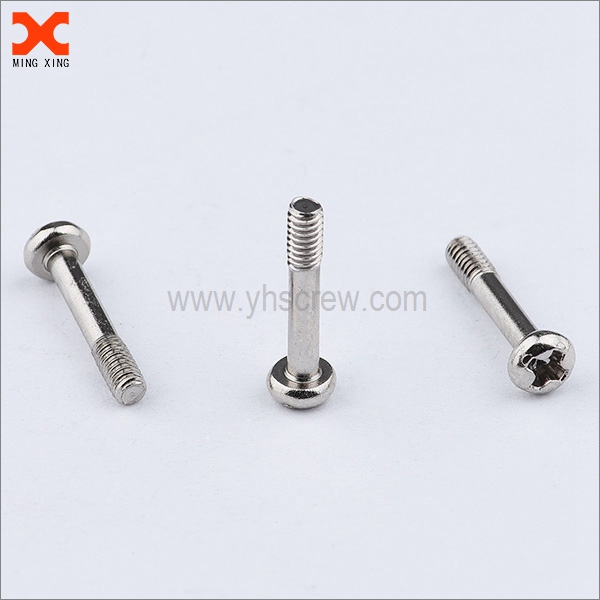
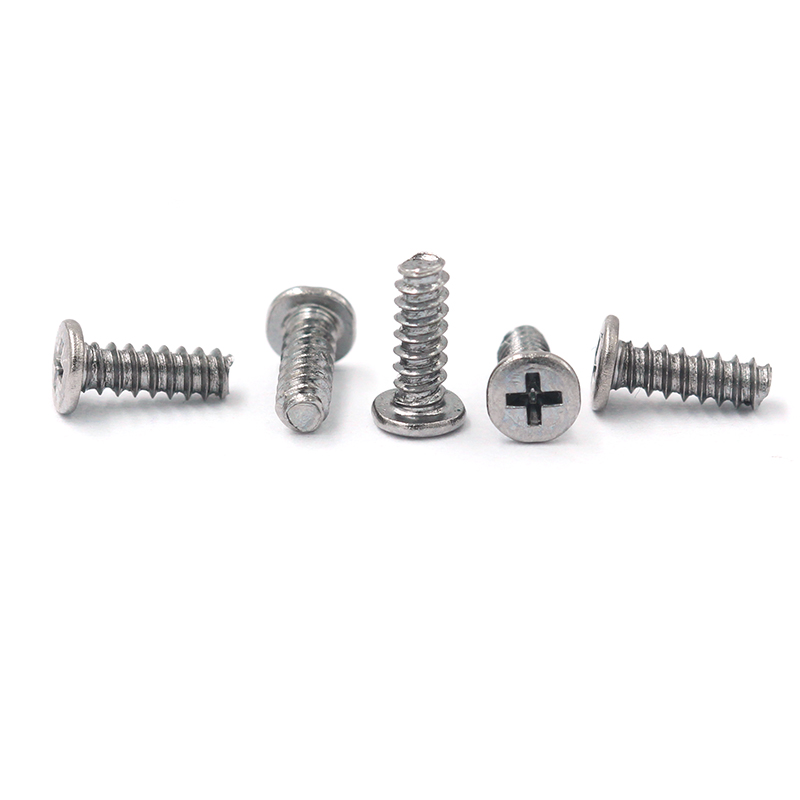
Pan head cross recessed sems machine thread screw for OEM Suppliers

I am a dedicated fastener supplier offering the pan head cross recessed sems machine thread screw, engineered for performance in demanding OEM assemblies. I work with OEM customers and reliable Suppliers to deliver consistent quality, scalable quantities, and clear lead times. Our screws provide durable thread engagement, corrosion resistance, and precise head dimensions for smooth installation. I can customize length, pitch, and coating to fit your design requirements, and I support datasheets, tolerances, and test reports for every batch. Every lot goes through 100% inspection of diameter, head height, slot alignment, and thread form. Packaging is secure for international shipping, with traceability from raw material to final box. If you’re sourcing for OEM production lines or comparing Suppliers, I’ll be your dependable partner with competitive pricing and flexible MOQs. Tell me your material choice (stainless, alloy), finish (zinc, black oxide), and standard (DIN/ISO); I’ll propose a tailored solution that meets your spec.

Hot Selling Product

pan head cross recessed sems machine thread screw Industry Leaders Trusted by Pros

Pan head cross recessed SEMS machine screws are a staple in electronics, enclosures, and precision equipment. The wide, flat bearing surface and Phillips drive ensure secure clamping and fast tool engagement, while the machine-thread segment provides reliable mating with threaded holes or nuts. With material options from stainless steel to zinc-plated steel, these fasteners deliver strength, corrosion resistance, and cost efficiency for high‑volume production. Global buyers should seek partners who combine rigorous quality control with scalable, on‑time delivery. Look for ISO 9001 production, traceable lots, and RoHS-compliant materials. Customization—length, pitch, head size, and plating—enables exact fits across regions. A dependable supplier also offers packaging tailored to automation, flexible quantity options, and logistics support that keeps assembly lines moving worldwide, earning trust from pros across industries.

{ pan head cross recessed sems machine thread screw Industry Leaders Trusted by Pros}
Size Length (mm) Head Diameter (mm) Head Height (mm) Drive Material Finish Thread Pitch (mm) Tensile Strength (MPa) Coating Temperature Range (C) Notes
M3 x 0.50 8 5.0 1.6 Phillips 304 Stainless Steel Bright 0.50 520 None -40 to 120 General electronics assembly
M4 x 0.70 12 6.0 1.9 Phillips 304 Stainless Steel Passivated 0.70 520 Zinc coating -40 to 120 Weatherproof enclosure assembly
M4 x 0.70 16 6.2 2.0 Phillips 316 Stainless Steel Bright 0.70 515 None -50 to 150 Corrosion resistant for marine use
M5 x 0.80 10 7.0 2.0 Phillips Carbon Steel Grade 8.8 Zinc 0.80 700 Zinc plating -40 to 150 General mechanical assembly
M6 x 1.00 20 8.0 2.2 Phillips 316 Stainless Steel Passivated 1.00 515 None -60 to 180 Heavy-duty electronics and chassis
M8 x 1.25 30 9.5 2.3 Phillips Carbon Steel Grade 8.8 Black Oxide 1.25 800 Black Oxide -40 to 120 Industrial machinery assembly

Related Products

banner (2)

pan head cross recessed sems machine thread screw Dominates Industry Leaders

New Data Title: Pan Head Cross Recessed SEMS Production Trend

Data Dimension: Production Trend by Head Type

This study presents a data-driven look at the production trend for pan head cross recessed SEMS machine screws. The dimension chosen is monthly production volume by head type, expressed as thousands of units. The line chart shows a simple, year-long time series with twelve data points, one for each month, allowing a quick assessment of seasonality, momentum, and potential capacity constraints. The numbers used here are synthetic for demonstration; they are designed to illustrate how production can evolve in response to tool changes, maintenance windows, supplier deliveries, and demand signals from downstream industries such as electronics assembly and hardware construction. The chart reveals a generally upward trajectory with a mid-year adjustment; January starts at 120k units and December reaches 220k, with a notable uptick in the second half of the year. Such patterns help planners align shifts, inventory, and equipment investment.

Methodology and interpretation: Data are generated as a monotonic growth with minor fluctuations to reflect real-world noise. The chart uses a Cartesian coordinate system: the x-axis represents months (Jan–Dec) and the y-axis shows production volume in thousands. A consistent grid improves readability, while the line path highlights the overall trend and turning points. Each data point is marked to emphasize exact values. The axes, labels, and colors are chosen to maximize legibility for quick executive review. While synthetic, this dataset captures essential signals such as seasonality, ramp-up effects after maintenance, and end-of-year demand surges. Analysts can extract key insights: when growth accelerates, capacity planning should consider tool wear and maintenance; when dips occur, procurement and supplier scheduling may require adjustment; comparing with other head types or regions would further illuminate constraints. Future enhancements could integrate confidence intervals, forecast models, and interactive features like tooltips to facilitate deeper analysis. Overall, the visual serves as a compact dashboard piece enabling stakeholders to monitor throughput, assess operational health, and support data-driven decision making in manufacturing environments.

Top Selling Products