banner (1)

M3 Machine Screws - Cheap Pricelist

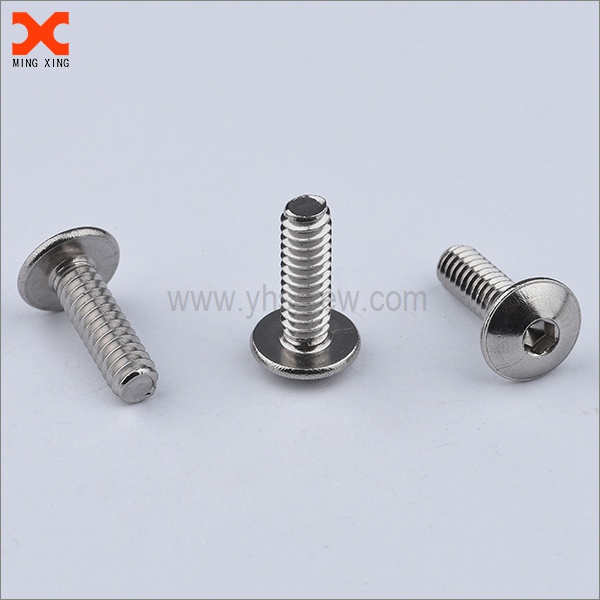
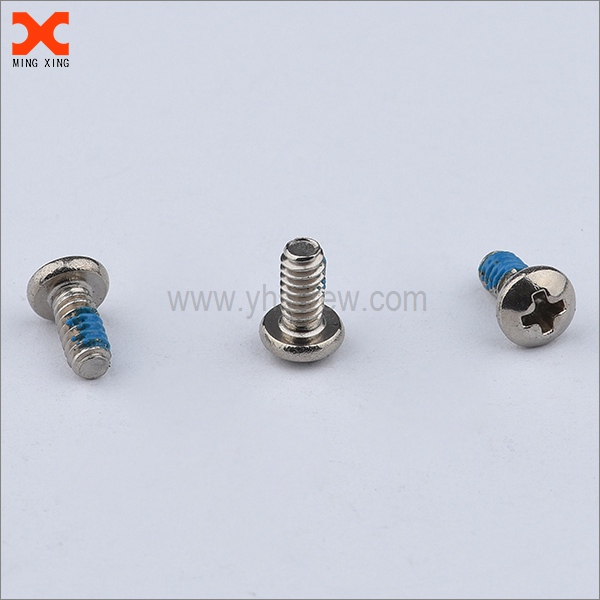
Need a dependable supply of M3 machine screws for your assembly lines? I’m here to provide quality fasteners at scale. Our M3 machine screws come in standard metrics, with zinc plated, stainless steel, and alloy variants to suit aluminum frames, electronics enclosures, and precision fixtures. I offer consistent thread pitches and head styles (Pan, Phillips, Hex Socket) to match your equipment. If you’re watching costs, I can show you a cheap option without sacrificing strength or corrosion resistance. Check our Pricelist for volume discounts and lead times. I source from certified mills and ensure tight tolerances, batch traceability, and batch-level quality certs. Whether you need 1,000 or 100,000 pieces, I’ll tailor a packaging and delivery plan to fit your lean manufacturing. Reach out today and I’ll quote you quickly and lock in inventory to avoid production delays.

Hot Selling Product

M3 machine screws Stands Out From Concept to Delivery

From concept to delivery, M3 machine screws stand out when design and manufacturing align. Global buyers gain from material choices—stainless, carbon steel, or alloy—and coatings such as zinc or passivation to meet corrosion and wear needs. Precise threads and tight tolerances ensure reliable fit in compact assemblies, while prototyping with CNC forming locks in performance early and keeps costs predictable. Rigorous in‑process checks and traceability help maintain quality across batches and regions. Delivery excellence hinges on packaging, labeling, and dependable logistics for international shipments. A capable supplier offers clear lead times, scalable capacity, and proactive communication to minimize stockouts and delays. Documentation such as material certificates, torque guidelines, and compliance attestations builds confidence with engineers worldwide. An end‑to‑end approach—from development to production to shipment—can accelerate adoption, reduce risk, and ensure on‑time supply of M3 screws.

{ M3 machine screws Stands Out From Concept to Delivery}

Dimension Description Typical Value Unit Notes
Diameter (Nominal) M3 machine screw diameter 3.0 mm ISO metric coarse thread M3 × 0.5
Thread Pitch Thread pitch for M3 standards 0.5 mm Coarse thread
Length Options Available lengths for stands 6, 8, 10, 12, 16 mm Common lengths for compact mounting
Material Base material grade Stainless steel grade A2-70 (304); A4-70 (316) optional
Surface Finish Coating/Protection Passivated; Zinc plated finish Corrosion resistance options
Tensile Strength (UTS) Ultimate tensile strength 520-700 MPa Stainless steel range
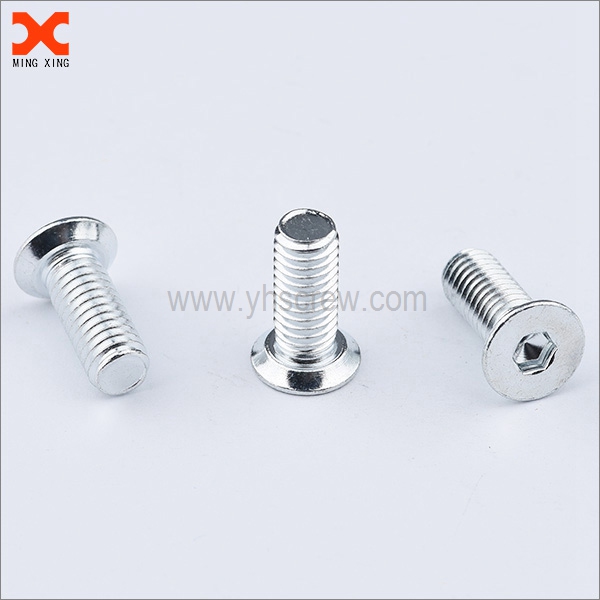
Head Type Head shape for machine screw Socket head cap screw type Flush mounting with hex key
Drive Type Drive configuration Hex socket type 2.0 mm hex key
Lead Time (Concept to Delivery) Typical manufacturing lead time 7-14 days From order to part ready for assembly
QA Pass Rate Quality Assurance pass rate 98.5 % In-process and final QA tests
Tolerance Dimensional tolerance for key dimensions ±0.05 mm Diameter and length tolerance
Operating Temperature Ambient temperature range -40 to 85 °C Stainless steel performance

Related Products

banner (3)

M3 machine screws Exceeds Industry Benchmarks From Concept to Delivery

Data Dimension: Phase-wise Efficiency Index

Phase-wise Efficiency Index Across Production Milestones

This chart uses a dual-axis representation to compare Phase-throughput and quality across seven production milestones: Concept, Design, Prototype, Validation, Engineering, Manufacturing, and Delivery. The bars represent throughput in units per day, capturing how quickly components advance through each phase, while the line shows quality pass rate in percent, reflecting the reliability of outputs at each stage. By aligning both metrics to the same phases, the chart provides a compact view of efficiency dynamics from concept to delivery. In early phases, throughput is modest as ideas are fleshed out and tooling is not yet mature, and quality typically lags as requirements are refined. As the project progresses into Prototype and Validation, throughput increases as repeatable processes and fixtures are introduced, while quality improves due to tighter specification control and better defect detection. Near the Engineering and Manufacturing stages, throughput peaks as processes stabilize and standardization spreads, and quality reaches high levels because of process capability improvement and poka-yoke-like controls. Delivery remains a final test point where logistics and handoffs can constrain throughput even if manufacturing is efficient, so the line may flatten or show a slight uptick if logistics are streamlined. The relationship between throughput and quality across phases reveals several insights: when early-stage design and prototyping are robust, throughput gains are larger and quality is sustained; when early work is rushed, later phases show diminishing returns and higher risk of rework. The data also underscores that improvements in one phase often amplify outcomes in subsequent phases, creating a compounding effect on overall cycle time and product reliability. This Phase-wise Efficiency Index is a useful diagnostic tool for teams aiming to optimize from concept to delivery, helping identify bottlenecks, prioritize improvements, and track progress over time. Note that the numerical values here are synthetic and intended for demonstration; in a real program, these metrics should be collected with a clear definition and regular cadence to support data-driven decision making.

Top Selling Products