banner (1)

m3 countersunk brass screw - China Manufacturer

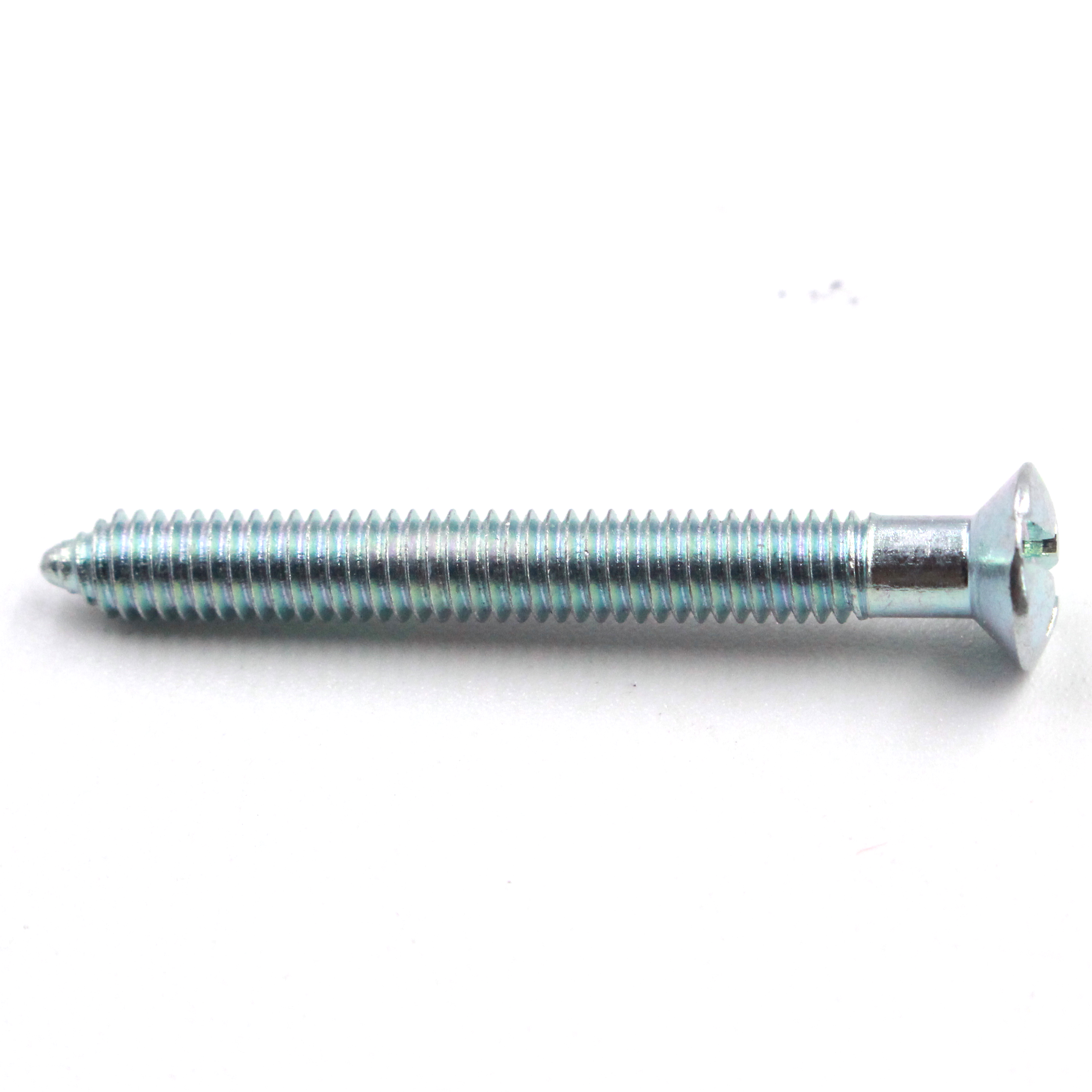
I’m a China-based Manufacturer and I’m offering the m3 countersunk brass screw to proactive buyers. This compact fastener provides a flush, neat finish for electronics, cabinetry, and machinery housings. Brass gives good conductivity and corrosion resistance in gentle environments, and the countersunk head sits evenly so assemblies look clean in the end product. We keep tight tolerances, clean internal threads, and consistent head height for reliable driving with standard drivers. Available in standard lengths, with optional nickel or zinc plating, and you can request custom lengths, thread pitches, or head styles to fit your line. We support bulk orders, quick response times, and strict QC to minimize rejects. If you’re sourcing from China, this m3 countersunk brass screw is a dependable choice for OEMs and distributors looking to scale up.

Hot Selling Product

m3 countersunk brass screw Application Industry Giant

M3 countersunk brass screws offer a compact, flush-fastening solution ideal for precise assemblies where aesthetics, electrical properties, and corrosion resistance matter. Brass provides good machinability, gentle material interaction with plastics and light metals, and non-sparking conductivity—beneficial for electronics housings, chassis, and decorative hardware. The countersunk head enables a smooth surface finish, while the M3 size supports many standard components and enclosures. Global buyers spanning electronics, consumer appliances, lighting, furniture, automotive interiors, and medical devices rely on these fasteners for secure, clean joins. When sourcing, prioritize ISO metric M3 threads with suitable plating (nickel, tin) and RoHS compliance, and verify tight tolerances. Consider plastic compatibility, pilot hole requirements, thread length, and head depth to ensure reliable assembly in high-volume production and consistent regional supply.

{ m3 countersunk brass screw Application Industry Giant}
Size (M x length) Material Head Type Finish Thread Pitch (mm) Coating Typical Applications Notes
M3 x 6 Brass CuZn39Pb3 Countersunk flat head Plain 0.50 None Electronics enclosures, PCB mounting Lightweight, indoor use
M3 x 8 Brass CuZn39Pb3 Countersunk flat head Tin plated 0.50 Tin plating Home appliances, small PCBs Improved corrosion resistance
M3 x 10 Brass CuZn39Pb3 Countersunk flat head Nickel plated 0.50 Nickel plating Consumer electronics, chassis assembly Moderate wear resistance
M3 x 12 Brass CuZn39Pb3 Countersunk flat head Plain 0.50 None Lighting fixtures, fixture mounting Longer through-hole fits
M3 x 14 Brass CuZn39Pb3 Countersunk flat head Nickel plated 0.50 Ni plating Automotive interior trim Vibration resistant
M3 x 16 Brass CuZn39Pb3 Countersunk flat head Tin plated 0.50 Tin plating Chassis and telecom equipment Longer reach for through-holes
M3 x 20 Brass CuZn39Pb3 Countersunk flat head Plain 0.50 None Small appliance assembly Through-hole mounting considerations

Related Products

banner (4)

m3 countersunk brass screw Pioneers in the Field Custom Solutions,

数据维度:加工参数与材料属性对螺丝性能的时间序列分析(单位:N·m、μm、°C)

New Data Perspective: Manufacturing Parameters and Screw Performance Over Time

Explanation: This chart presents a synthetic time-series analysis of manufacturing parameters and screw performance for m3 countersunk brass screws. The left axis shows torque consistency measured in Newton-meters across twelve production days, reflecting variability in screw seating torque during assembly. The right axis shows dimensional accuracy expressed as a percentage of specification. The data illustrate how process variables, such as cutting temperature, feed rate, and lubrication, influence both mechanical performance and precision. The two series are plotted to highlight potential correlations: as torque consistency improves toward higher values (around 3.2 N·m), accuracy also trends toward the upper specification (close to 100%). Across the observed period, minor fluctuations in torque align with small shifts in accuracy, suggesting that tighter torque control can be associated with more consistent thread engagement and fewer deviations in length and head seating. The analysis underlines the importance of controlling friction at the screw-lubrication interface. In days 3-4 and 9-10, both metrics show concurrent improvements, indicating a potential maintenance window or lubricant reapplication cycle. The vertical grid and daily ticks enable quick visual comparisons, while the dual-axis design maintains clarity for readers focusing on either metric. While the data here are synthetic, the pattern matches expected manufacturing behavior: stable tooling conditions and proper lubrication promote both mechanical consistency and dimensional accuracy. The chart invites deeper investigation, including correlating these trends with material batch data, heat-treatment status, or packaging conditions. Future work could include regression analysis to quantify the strength of relationship and experimental design to identify the most impactful parameters. This view supports decision-making in custom solutions by aligning quality metrics with production controls, helping engineers optimize screw performance while controlling costs. Overall, the visualization demonstrates how time-series insights can drive improvements in field-ready, precision fasteners for custom applications.

Top Selling Products