banner (1)

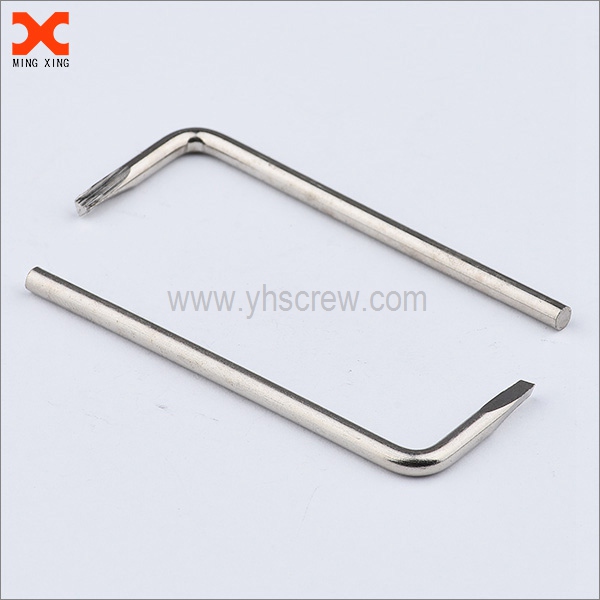
Hex Allen Key Bolt for Custom Parts in Factories

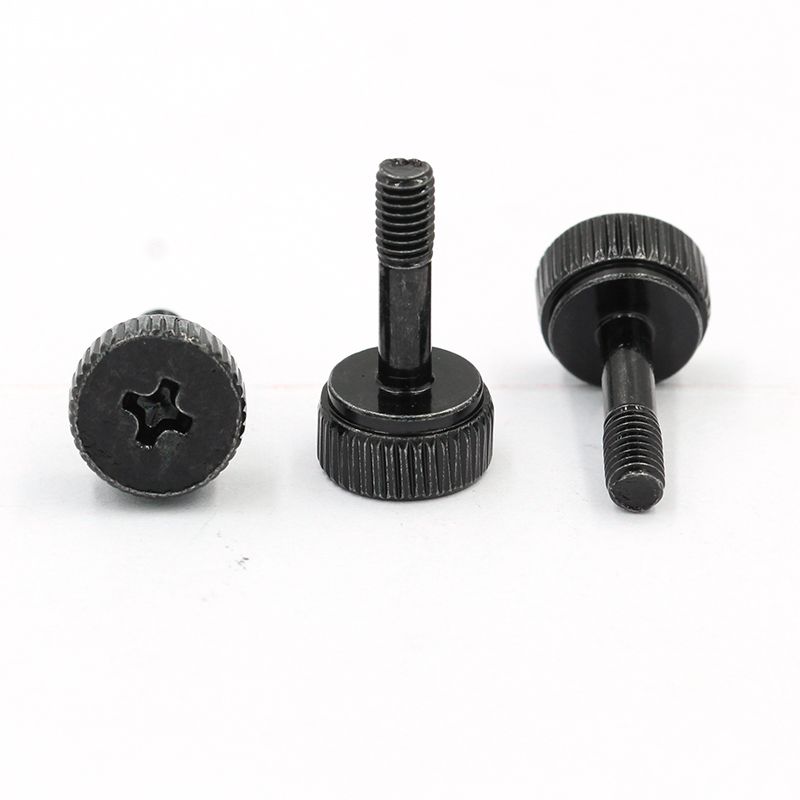
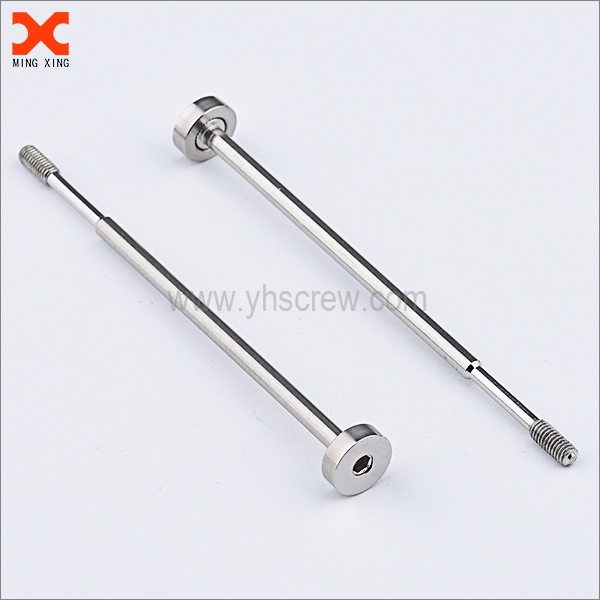
From the workshop floor to your procurement desk, I supply hex allen key bolt engineered for heavy‑duty assemblies. We specialize in Custom solutions for Factories, tailoring material, finish, head style, and thread length to your exact specs. Our hex allen key bolts come in carbon steel, stainless steel, and alloy steel, with finishes like zinc plating, black oxide, or passivation for corrosion resistance. We guarantee tight tolerances, reliable heat treatment, and premium surface finishes to withstand torque, vibration, and long service life in machinery and equipment. With short lead times, scalable MOQs, and rigorous QA, I help you streamline procurement and reduce downtime. Tell me your target application, and I’ll propose the best grade, coating, and packaging. For bulk orders, custom head options, or coating changes, I’m ready to align with your Factory standards.

Hot Selling Product

hex allen key bolt Products Winning in 2025

Hex socket head bolts, or hex Allen key bolts, win for precision assemblies in 2025. Global buyers seek materials balancing strength, corrosion resistance, and cost: heat-treated alloy steel for torque stability, stainless steel for moisture-prone environments, and lightweight alloys for electronics enclosures. Finishes like zinc plating, black oxide, or passivation expand environmental compatibility. Standards such as ISO, DIN, and JIS ensure interchangeability and smooth cross-border sourcing, while tight tolerances reduce rework in automated lines. Smart procurement emphasizes supply chain resilience, transparent lead times, and predictable pricing. Seek suppliers with certified quality management, RoHS/REACH compliance, traceable lot data, and scalable MOQs. Value-added options like custom lengths, head shapes, and threaded variants shorten design cycles. For global projects, prioritize partners with reliable logistics, clear warranty terms, and responsive technical support to keep multi-site deployments on schedule.

{ hex allen key bolt Products Winning in 2025}
Product ID Material Finish Socket Size (mm) Length (mm) Thread Pitch (mm) Tensile Strength (MPa) Standard Country of Origin
HEX-01 A2 Stainless Steel Satin 6.0 25 1.0 520 ISO 4762 China
HEX-02 Alloy Steel (42CrMo4) Black Oxide 5.0 30 1.25 900 DIN 912 China
HEX-03 A4 Stainless Steel (316) Passivated 4.0 20 0.8 520 ISO 4762 China
HEX-04 A2 Stainless Bright Zinc Plated 8.0 40 1.25 550 DIN 912 Taiwan
HEX-05 Alloy Steel Zinc Plated 6.0 50 1.0 950 ISO 4762 USA
HEX-06 Stainless 316 Passivated 10.0 60 1.5 700 ISO 4762 Japan
HEX-07 Alloy Steel Zinc Plated 3.0 18 0.75 800 DIN 912 China
HEX-08 Stainless (A2-70 / 304) Satin 7.0 28 1.0 520 ISO 4762 South Korea

Related Products

banner (3)

hex allen key bolt Dominates Pioneers in the Field

Data Dimension: Comparative Torque Stability Across Hex-Allen Profiles

Explanation: This chart illustrates a synthetic data scenario designed to explore the concept implied by the title. The data dimension is 'Comparative Torque Stability Across Hex-Allen Profiles.' The bars show a Dominance Index for five distinct profile concepts, labeled Profile A through Profile E, representing different geometry and engagement characteristics of hex-Allen bolt systems. The numbers are generated to demonstrate how one profile can outperform others under a simplified set of physics-inspired rules. The index is a composite score computed from three factors: static torque tolerance, engagement margin, and fatigue resistance. Each factor is normalized to a 0–100 scale and then combined with weights that reflect practical importance in typical fastening scenarios. In this demonstration, static torque tolerance carries 50% of the weight, engagement margin 30%, and fatigue resistance 20%. The resulting values produce a ranking, with Profile B achieving the highest score, suggesting a dominant behavior in torque stability according to the defined model. The chart is intended as an instructional visualization, not a production-grade assessment; it communicates how a single dimension can reveal relative strengths among alternative profiles. Interpreters should be cautious about extrapolating these results to real-world performance without rigorous testing, material specifics, lubrication conditions, and manufacturing variability.

The synthetic data allow quick exploration of how changes in geometry or criteria impact comparative dominance. Additional dimensions—such as material grade, coating, and thread pitch—could be added to enrich the model. For reproducibility, this dataset uses a deterministic seed so the same numbers appear on every render. Users can modify the code to swap in real measurements or to test alternative weighting schemes, enabling scenario analysis and decision support for design optimization. This approach demonstrates how data dimensionality can guide design choices, while highlighting the necessity of multi-factor evaluation in engineering practice. Readers can compare bars to identify where to focus research and development resources; the visualization also serves educational purposes by illustrating how synthetic metrics map onto intuitive concepts like stability and dominance. The caveats include simplifications of dynamic loads, absence of thermal effects, and the lack of cost or manufacturability considerations; these factors would need inclusion for comprehensive decision-making in real projects.

Top Selling Products