banner (1)

Custom Double Thread Screw for Factories - Precision Fasteners

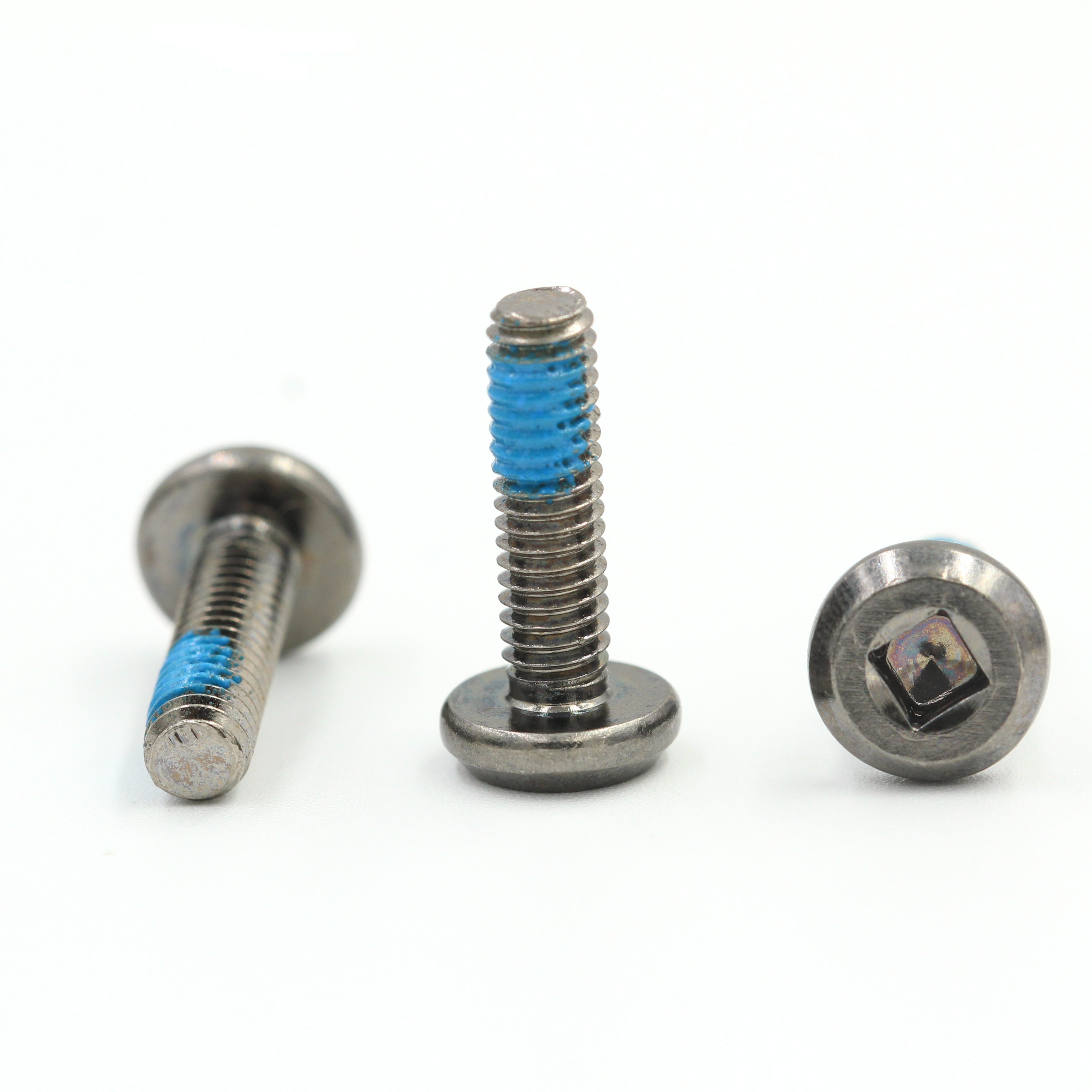
From the moment I started sourcing hardware, I knew the demand for dependable fasteners. Our team offers a durable double thread screw designed for high-load assemblies in various industries. I serve Custom manufacturers and Factories alike, delivering components that cut assembly time and reduce warranty risk. The double thread screw provides better alignment and quicker seat, thanks to its two-start thread, with strong pull-out resistance. We offer precise machining, metric and imperial options, corrosion-resistant coatings, and custom lengths to fit your unique specs. When you order, I ensure tight tolerances, strict QA, and scalable production so you won't run outages during peak seasons. I can tailor threading, head style, drive type, and finish to match your design. For durability and cost efficiency, our screw integrates smoothly with standard nuts and plates, minimizing need for rework. If you want a supplier who understands your production flow and can adapt to Custom needs and Factories schedules, let's talk.

Hot Selling Product

double thread screw Service Factory

Global buyers now rely on a service-driven partner for high-precision fasteners. A double-thread screw specialist combines design, manufacturing, and logistics in one flow, delivering prototypes, pilot runs, and full production with minimal handoffs. The two-start thread enables faster assembly and steadier alignment in compact housings and devices. Materials such as stainless steel, alloy steel, or brass are paired with thread-rolling or cold-forming to deliver strong, burr-free threads, then finished with zinc, nickel, or black oxide. Modern lines combine precision CNCs, thread-rolling mills, and coating equipment to meet tight tolerances and ensure repeatability. A transparent QA system with first-article checks and lot traceability guards quality across batches. To source effectively, specify exact double-thread dimensions, material, finish, tolerance, and preload; request samples and a clear lead time; align packaging and origin documentation with logistics. Seek suppliers offering flexible MOQs, scalable capacity, and transparent QA data. A true service factory guides you from design and rapid prototyping to stable production, controlled shipping, and reliable after-sales support, reducing risk and accelerating time-to-market.

{ double thread screw Service Factory}
Facility ID Location Product Type Material Diameter (mm) Thread Pitch (mm) Length (mm) Head Type Surface Treatment Tolerance (mm) Annual Capacity (k units) Lead Time (days) Certifications
FID-01-DT Asia-Pacific Region Double Thread Screw Stainless Steel 304 6.0 1.25 50 Pan Head Electro-polished +/-0.10 2.4 5 ISO 9001; ISO 14001
FID-02-DT East Asia Double Thread Screw Alloy Steel 4140 8.0 1.0 60 Hex Socket Black Oxide +/-0.12 2.2 6 ISO 9001; IATF 16949
FID-03-DT Europe Double Thread Screw AISI 1045 Carbon Steel 5.0 1.5 40 Phillips Head Zinc Plated +/-0.15 1.8 8 ISO 9001
FID-04-DT North America Double Thread Screw Stainless Steel 316 10.0 1.25 80 Hex Head Passivated +/-0.08 3.0 7 ISO 9001; AS9100
FID-05-DT Middle East Double Thread Screw Stainless Steel 410 4.0 1.0 30 Pan Head Electro-Coated +/-0.15 1.2 9 ISO 9001
FID-06-DT South America Double Thread Screw Titanium Grade 5 (Ti-6Al-4V) 3.5 0.75 25 Integral Head Anodized +/-0.05 0.9 12 ISO 9001
FID-07-DT Africa Double Thread Screw Brass 2.5 0.8 20 Flat Head Nickel Plated +/-0.12 0.7 14 ISO 9001

Related Products

banner (4)

double thread screw Manufacturer Ahead of the Curve

Data Dimension Title: Process Throughput and Quality Index Over Time

This visualization presents a data-based view of how a double-thread screw manufacturing line performs on two key metrics: production throughput and quality index. The dataset covers 2018 through 2025 and is designed to resemble a realistic trajectory as a facility implements incremental automation, better process control, and line balancing. Throughput increases from about 110 units per day in 2018 to around 230 units per day in 2025, illustrating gains from parallel threading operations, improved spindle synchronization, and reduced changeover times. The Quality Index climbs from roughly 60 to 90, reflecting tighter tolerances, improved surface finish, and more reliable in-line inspection. Displaying both series on a single chart with dual axes allows a compact view of how capacity expansion aligns with quality outcomes despite the challenges of higher line speed. A key takeaway is the observed positive relationship between throughput growth and quality performance in this synthetic scenario, suggesting that process improvements tend to benefit both yield and pace when properly managed. The dual-axis design helps avoid scale distortion and communicates that different units (units/day and percentage) can be meaningfully compared over the same period. The title “Data Dimension: Process Throughput and Quality Index Over Time” emphasizes that the chart is about measuring operational velocity alongside product integrity, rather than a single performance metric. In practice, this kind of visualization supports operational decision-making by informing capacity planning, investment in automation, maintenance scheduling, and workforce training. It can guide forecast scenarios, alert managers to potential diminishing returns, and help align production targets with quality goals. While the data here are illustrative, a real-world implementation would incorporate more granular data, uncertainty intervals, and causal indicators for events such as tooling upgrades or supplier interruptions. By tracking these two metrics together, managers gain a clearer view of whether the factory is genuinely advancing “ahead of the curve” or simply ramping speed without sustainable quality.

Top Selling Products