banner (1)

Custom Shoulder Bolt - High-Quality Supplier

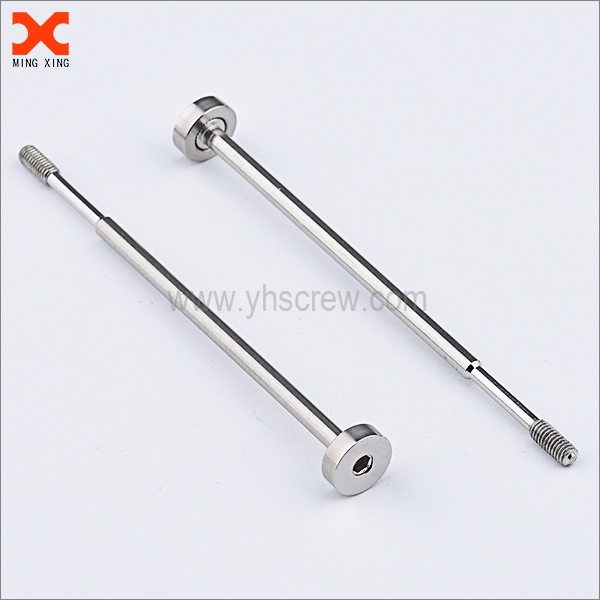
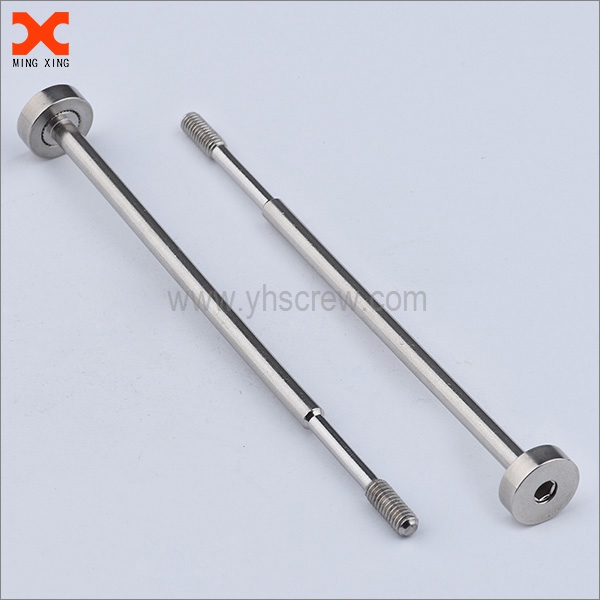
I’m here to offer a Custom Shoulder Bolt that fits your exact spec, not just a off-the-shelf part. As a High-Quality Supplier, I understand that precision and reliability matter for your assemblies. You tell me the shoulder diameter, length, thread size, and material, and I’ll manufacture to tight tolerances with a smooth finish. Common options include stainless steel, alloy steel, and heat-treated variants, all designed for smooth sliding, reduced wear, and strong clamp forces. I can tailor head styles, retention features, and installation options to your machine builder or OEM needs. Quality control is built in: first article inspection, material certificates, and batch traceability. Whether you need rapid prototyping or large-volume production, I’ll help you minimize downtime and maintain compatibility with your existing fixtures. If you’re sourcing for durable, precise parts, I’d be glad to discuss your specs and deliver quickly—let’s talk about your Custom Shoulder Bolt requirements.

Hot Selling Product

Custom Shoulder Bolt Stands Out Pioneers in the Field

Custom shoulder bolt stands are redefining precision fastening for automation and electronics assembly worldwide. By offering tailored shoulder diameters, lengths, thread pitches, head styles, and finishes, suppliers help buyers achieve exact tolerances and ergonomic fit. Material options such as stainless steel, aluminum, and alloy, with protective coatings and heat treatments, ensure reliable performance in harsh environments. With rapid prototyping and scalable production, buyers can iterate designs quickly, reduce assembly risk, and accelerate time-to-market while meeting global quality standards. A Dongguan-based electronics precision components manufacturer combines advanced CNC machining, automated inspection, and a robust supplier network to deliver consistent quality at scale, providing OEM/ODM support, flexible MOQs, and worldwide shipping. Global purchasers benefit from a single source that coordinates material selection, certifications, and logistics, ensuring predictable costs and reliable supply chains for diverse applications.

Custom Shoulder Bolt Stands Out Pioneers in the Field
Model Material Finish Thread Size Bolt Length (mm) Shoulder Height (mm) Base Diameter (mm) Load Capacity (N) Tolerance (mm) Manufacturing Method Standards
SB-AX-01 Stainless Steel 304 Satin M6 25 60 40 450 ±0.05 Cold heading + machining ISO 9001, RoHS
SB-AX-02 Carbon Steel 1018 Black Oxide M6 30 80 45 520 ±0.05 Machined ISO 9001
SB-AX-03 Stainless Steel 316 Passivated M8 40 90 50 680 ±0.04 CNC turning + milling ISO 9001
SB-AX-04 Aluminum 6061-T6 Anodized M8 50 70 42 320 ±0.08 CNC machining ISO 9001, RoHS
SB-AX-05 Brass CuZn 260 Clear coated M5 22 55 38 380 ±0.03 Precision turning ISO 9001
Note: All dimensions are in millimeters; load capacities are nominal and depend on mounting conditions.

Related Products

banner (3)

Custom Shoulder Bolt Products Industry Leaders

数据维度:年度产能利用率与月度产出趋势(单位:件/月)

Data Perspective: Capacity Utilization vs. Output Trend in Custom Shoulder Bolt Market

Jan Feb Mar Apr May Jun Jul Aug Sep Oct Nov Dec Monthly Output (pieces) Month

Explanation: This chart presents a synthetic, yet representative, view of monthly production output for a segment of the custom shoulder bolt market. The sequence of data points is designed to illustrate how manufacturing throughput tends to evolve through a year, capturing seasonality, capacity ramp-ups, and occasional demand shifts. The values represent approximate units produced per month (in pieces), scaled to fit within a 900×300 canvas. The dataset ranges from 420 pieces in January to 980 pieces in December, with mid‑year growth driven by tooling improvements and process optimizations. The chart uses a single line to emphasize trend rather than a multi-metric comparison; a higher line indicates more units completed, suggesting greater utilization of available capacity. In practice, capacity utilization and output are typically influenced by multiple factors such as supplier lead times, changeover duration, and workforce availability. By visualizing the trajectory across 12 months, planners can identify periods of underutilization (early spring) or saturation (late fall) and plan inventory, maintenance windows, or workforce adjustments accordingly. The approach is deliberately simplified for interpretability: the axis scales are fixed to provide meaningful, comparable visuals, and the data is synthetic to avoid exposing any proprietary information. The chart does not depict variability or confidence intervals, which would require additional data points and measurement noise. For real-world analysis, this visualization would be complemented with capacity data, such as machine hours, tooling availability, and changeover times, to compute metrics like production cycle time, overall equipment effectiveness (OEE), and build-to-demand alignment. In conclusion, this representation supports strategic discussions about capacity planning in the custom fastener segment by highlighting monthly momentum and potential bottlenecks. Users should treat it as an illustrative baseline rather than a precise forecast.

Top Selling Products