banner (1)

CNC Machined Shaft - China Manufacturer for Engineering

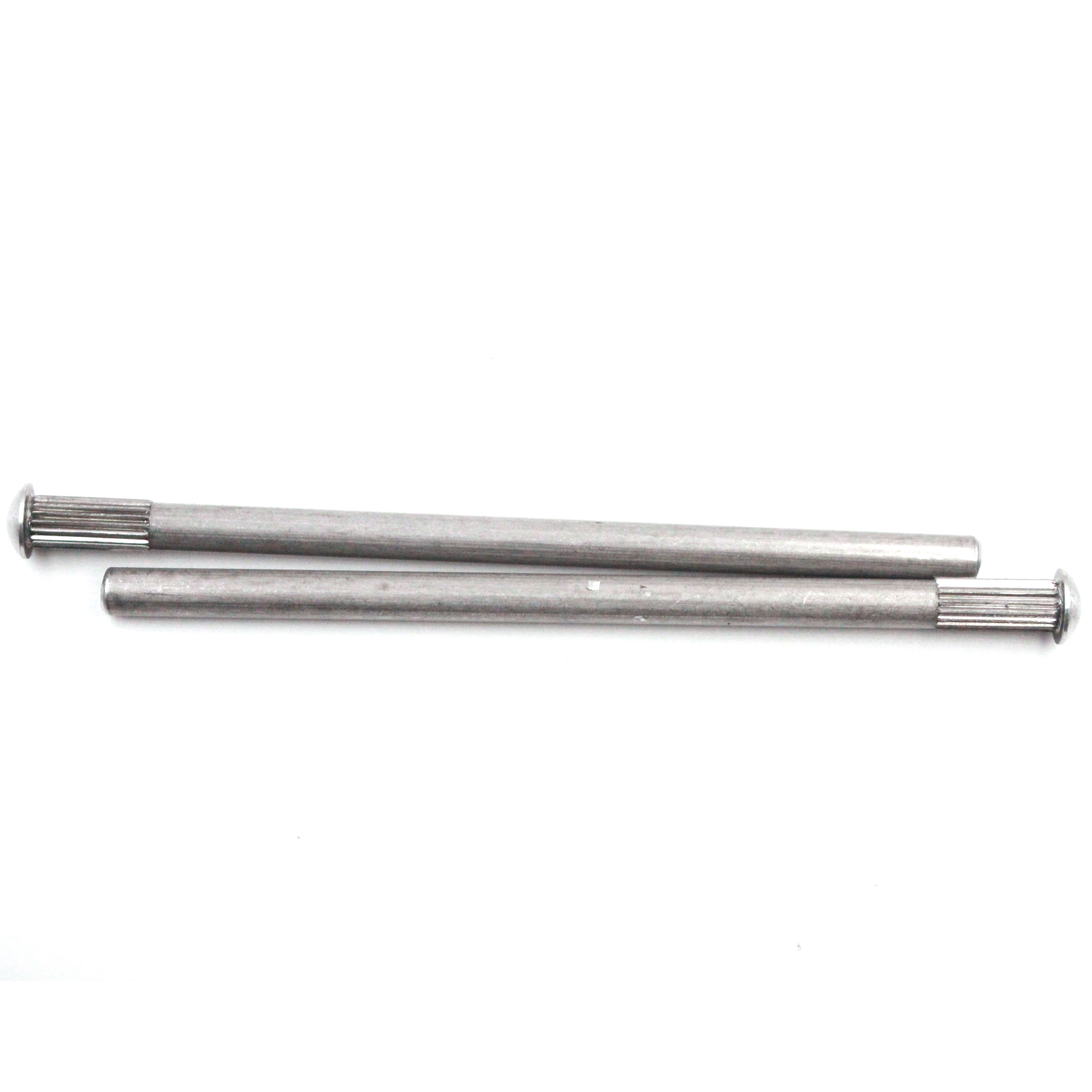
We stand behind every CNC Machined Shaft we produce, blending precision, performance, and value for demanding applications. As a China-based Manufacturer, I offer consistent capability to deliver custom shafts in small batches or mass production to support OEMs and tier suppliers. Our CNC Machined Shaft features tight tolerances, straightness, and surface finishes tailored to your spec, with materials from alloy steel to stainless options. I coordinate design, programming, and on-time manufacturing to reduce your assembly risk. We handle keyways, splines, shoulders, and collaborative tolerancing, with deburring and finish options like ground, polished, or coated surfaces. Lead times are competitive, with transparent pricing and strict QC to ensure interchangeability across lots. Communication is direct: we respond quickly, share process capability data, and provide documentation you need for procurement. If you need a reliable supplier to scale, I am here to partner and ship your CNC Machined Shaft to your door.

Hot Selling Product

CNC Machined Shaft Stands Out Your Trusted OEM Partner

CNC machined shaft stands are more than precision parts; they’re strategic enablers for OEMs pursuing global competitiveness. Tight tolerances, durable materials, and thoughtful geometries ensure smooth fits, reliable operation, and reduced assembly rework in drives, conveyors, robotics, and automation. A capable supplier brings precision turning and milling, rigorous inspection, and a design-for-manufacturing mindset to deliver exact bore sizes, shaft seats, and mounting faces every time, from prototypes to high-volume runs, with predictable lead times. Based in a leading electronics manufacturing hub, a capable Dongguan-area partner offers end-to-end support: engineering collaboration, material choice, turnkey manufacturing, and transparent QA documentation. With scalable capacity, flexible scheduling, and robust supply-chain management, global buyers gain on-time delivery, consistent quality, and competitive pricing across regions. Choose a partner that protects IP, meets international standards, and aligns with your logistics and compliance needs, so your shaft stands become a reliable backbone for worldwide assemblies and long-term growth.

CNC Machined Shaft Stands Out Your Trusted OEM Partner

Spec ID Material Nominal Diameter (mm) Length (mm) Tolerance (mm) Surface Finish (Ra) Machining Process End Geometry Runout Tolerance (mm) Heat Treatment Hardness (HRC) Certification Lead Time (days) Weight (kg)
SHA-101 Alloy Steel 4140 25 120 ±0.05 Ra 0.8 CNC Turning, CNC Milling Keyway + Grooves 0.03 Quenched & Tempered 45 ISO 9001 6 0.78
SHA-102 Stainless Steel 304 18 80 ±0.04 Ra 0.6 CNC Turning Threaded M6 0.02 None 30 ISO 9001 4 0.22
SHA-103 Aluminum 6061-T6 12 60 ±0.03 Ra 1.0 CNC Turning, Milling Dowel + Keyway 0.01 Anodized 12 ISO 9001 3 0.05
SHA-104 Carbon Steel 1035 32 200 ±0.06 Ra 0.9 CNC Turning Grooved 0.04 Carburized 42 ISO 9001 7 1.25
SHA-105 Alloy Steel 4340 40 150 ±0.04 Ra 0.8 Precision CNC Turning, Milling Keyway 0.025 Quenched & Tempered 46 ISO 9001 8 2.10
SHA-106 Brass C360 10 50 ±0.02 Ra 0.4 CNC Turning Dowel 0.015 None 22 ISO 9001 2 0.03
SHA-107 Steel 52100 28 110 ±0.03 Ra 0.6 CNC Turning + Grinding Threaded 1/4"-20 0.02 Induction Hardened 60 ISO 9001 5 0.95
SHA-108 Stainless Steel 17-4PH 16 70 ±0.03 Ra 0.5 CNC Turning + Polishing Keyway 0.01 Age Hardened 34 ISO 9001 6 0.15

注:以上数据用于示例展示,具体参数以实际生产为准。

Related Products

banner (2)

CNC Machined Shaft Application Supplies the World\u2019s Top Brands

Global CNC Shaft Size Distribution and Demand (mm)

Dimension: Shaft Size (mm)

This data snapshot provides a focused view of the distribution of CNC machined shaft sizes and the corresponding annual production volumes in a hypothetical global supply network. The x-axis categorizes shaft diameter sizes in millimeters, while the y-axis shows production volume in thousands of units. The observed pattern highlights that the most common sizes are in the 20–30 mm range, followed by 40–60 mm, with a tapering demand as sizes exceed 60 mm. Several market factors drive these trends: many applications in automotive, robotics, and general machinery consistently require smaller, lightweight shafts; mid-size shafts are used across gearboxes, pumps, and control systems which creates steady demand; large diameters are specialized and less volumetric, therefore present higher lead times and lower yearly volumes but can command higher unit margins.

From a manufacturing perspective, the distribution informs capacity planning for CNC milling machines, tooling changes, and fixturing requirements. Short cycle times and high throughput are typical for smaller diameters, but larger shafts demand heavier fixtures, longer cutting times, and more robust balancing and finishing processes. This mix implies that production planning should optimize for the peak volumes around 20–40 mm while maintaining flexibility to meet lower-volume, high-tolerance orders in larger sizes. The supply chain implications are also meaningful: procurement of raw materials such as alloys and bars should align with the expected size distribution and seasonal demand shifts. Inventory policies can be refined by stocking common sizes in higher quantities, while keeping a lean approach for niche diameters to reduce carrying costs. Quality considerations—such as surface finish, tolerance, and straightness—vary with diameter and influence process parameters and inspection time. By monitoring this distribution over time, manufacturers can detect shifts in specification requests, adjust automation levels, and plan for capacity expansions or redeployments. This data-driven view supports strategic decisions about tooling investments, supplier negotiation, and service levels for a diversified portfolio of CNC shaft products.

Top Selling Products