banner (1)

captive panel screw m2.5 - ODM Factory Solutions

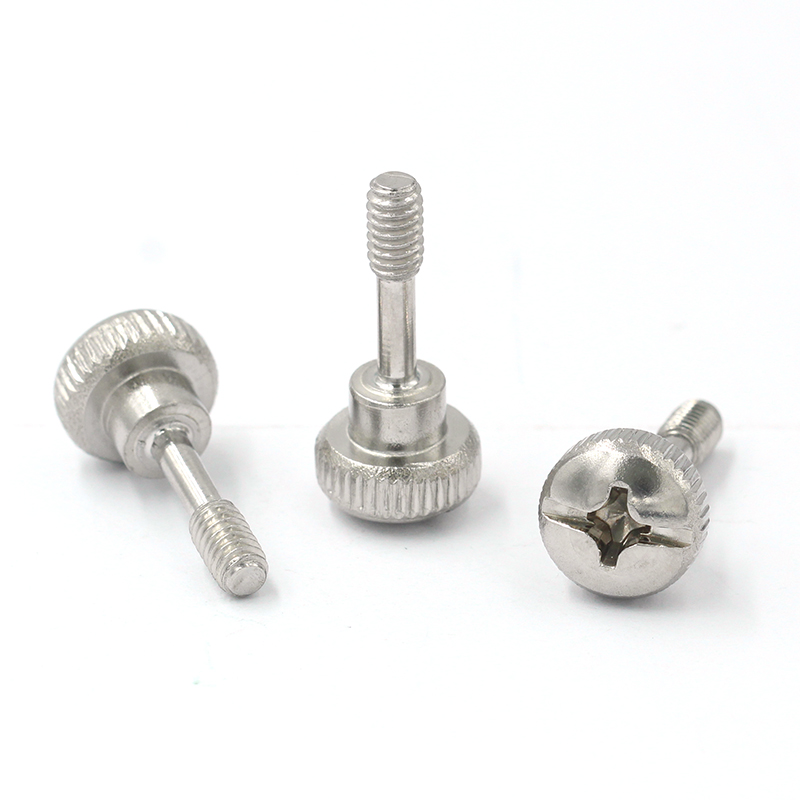
From my workshop to your production line, the captive panel screw m2.5 is built for reliable panel mounting in tight spaces. Its captive head keeps the screw and washer together, reducing lost hardware and speeding on-site assembly. The precise M2.5 thread and corrosion‑resistant finish stand up to vibration and daily wear. For ODM needs, I offer design support and customization so the screw fits your panel thickness and mating parts. For Factory buyers, you get direct pricing, scalable production, and short lead times. With in-house QA and traceable materials, you can count on consistent quality across batches. If you want to streamline assembly, cut SKU counts, and improve line uptime, this captive panel screw m2.5 is ready. Share your batch size, finish, and tolerance, and I’ll tailor the solution to your project.

Hot Selling Product

captive panel screw m2.5 Stands Out Factory-Direct Excellence

Global buyers seeking captives for panel assemblies will value the M2.5 captive panel screw for its compact size, steady clamping, and loss-free retention. The captive design keeps screws attached to the panel, boosting assembly speed and maintenance efficiency. With precise M2.5 threads, uniform head height, and corrosion-resistant finishes, these fasteners deliver reliable performance across electronics enclosures, control panels, and modular racks. Factory-direct sourcing offers a clear edge: transparent pricing, flexible lot sizes, and shorter lead times. In-line inspection and traceable records ensure quality for global orders, while standardized packaging and scalable supply guard against shortages. Access to technical data and customization options helps procurement teams minimize risk and total cost of ownership.

{ captive panel screw m2.5 Stands Out Factory-Direct Excellence }

Part ID Material Finish Head Style Drive Type Thread Length (mm) Tolerance (mm) Coating Surface Finish Tensile Strength (MPa) Operating Temp (C) Applications
CPS-M2.5-03 Stainless Steel 304 Passivated Pan Hex Socket M2.5 x 3 3 ±0.05 None Plain 520 -40 to 150 Electronics chassis
CPS-M2.5-04 Stainless Steel 304 Passivated Button Torx T6 M2.5 x 4 4 ±0.05 None Polished 520 -40 to 150 Enclosures, dashboards
CPS-M2.5-05 Stainless Steel 316 Black Oxide Button Hex Socket M2.5 x 5 5 ±0.05 Black Oxide Satin 515 -70 to 250 Automotive interior
CPS-M2.5-06 Alloy Steel Zinc-Nickel Flat Phillips PH0 M2.5 x 6 6 ±0.04 Zinc-Nickel Bright 900 -40 to 150 Machinery assembly
CPS-M2.5-08 Brass Electropolished Pan Hex Socket M2.5 x 8 8 ±0.04 Electropolish Bright 480 -20 to 150 Panel finishing
CPS-M2.5-10 Stainless Steel 304 Passivated Button Torx T6 M2.5 x 10 10 ±0.05 None Matte 520 -40 to 150 Computer chassis
CPS-M2.5-12 Stainless Steel 316 Satin Cap Hex Socket M2.5 x 12 12 ±0.05 None Satin 520 -60 to 200 Outdoor electronics
CPS-M2.5-03-EP Stainless Steel 304 Electropolished Pan Torx T5 M2.5 x 3 3 ±0.05 Electropolish Shiny 520 -40 to 120 Medical devices (enclosures)
CPS-M2.5-07 Alloy Steel Black Zinc Button Hex Socket M2.5 x 7 7 ±0.04 Black Zinc Matte 750 -40 to 180 Industrial equipment

Related Products

banner (4)

captive panel screw m2.5 Industry Giant Guarantees Peak Performance

环境温度对扭矩保持率的影响

New Data Dimension: Temperature-Driven Torque Retention Profile

This chart visualizes a simplified data dimension to study how ambient temperature influences the torque retention of a captive panel screw sized M2.5 in a representative panel assembly. The x-axis records temperature in degrees Celsius from -20 to 60, while the y-axis shows the percent of initial tightening force that remains after exposure to the given temperature. The data points are synthetic and intended to illustrate general trends rather than a specific real-world measurement. In this example, torque retention peaks near normal room temperature and declines as temperature moves away from that point, reflecting the combined effects of metal and polymer expansion, surface friction, and potential lubricant behavior under thermal stress. The purpose is to provide an intuitive visualization of how environmental temperature can influence fastener performance. Practically, engineers would pair this with material properties data, including coefficients of thermal expansion, yield strength, and creep characteristics, to predict service envelopes. The plotted curve suggests a modest improvement at low temperatures up to around 0–10°C, followed by a gradual decline with higher temperatures. This pattern may arise from the panel and screw both expanding as heat is applied, reducing clamping force, while lubricants or surface microstructure changes alter friction. The straight-line section near mid-range temperature implies moderate stability where preload and contact area remain favorable. However, beyond 40°C, the retention declines more rapidly, indicating that tightening torque could relax more quickly in hot environments or after thermal cycling. This demonstration uses nine data points to convey the concept. While informative, it does not capture dynamic effects such as time-dependent relaxation, humidity, vibration, or repeated thermal cycling. For robust design decisions, real measurements across the full service temperature window, multiple samples, and confidence intervals are essential. In practice, such data support risk assessments, maintenance planning, and design improvements for assemblies subject to environmental fluctuations. The overarching goal is to reveal, in a compact format, how a single environmental variable—temperature—can measurably alter fastener performance and guide engineering judgment.

Top Selling Products