banner (1)

Brass Slotted Cheese Head Machine Screws - China Manufacturer

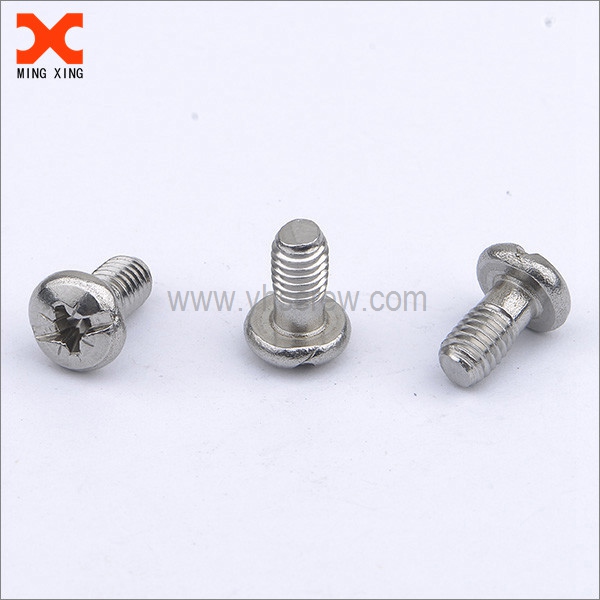
As a China-based Manufacturer, I bring you Brass Slotted Cheese Head Machine Screws that meet the demanding needs of OEMs and distributors. These screws combine excellent corrosion resistance with precise driving fit, ideal for equipment, electrical enclosures, and decorative panels. The brass alloy delivers good conductivity and anti-galling properties, while the slotted cheese head gives a clean look and easy recessing in thin sheets. Each batch is manufactured to tight tolerances, ensuring uniform head height and thread engagement across long runs. I offer a range of sizes, length and thread pitch options, with plating and finish choices to fit your product design. Our supply chain prioritizes on-time delivery and flexible MOQs for China-based buyers and overseas partners. I am proudly a Manufacturer that stands behind quality and consistency, and I can customize packaging, labeling, and documentation to meet your procurement standards. If you need reliable brass fasteners for high-speed assembly, this is it.

Hot Selling Product

Brass Slotted Cheese Head Machine Screws Supplier Ahead of the Curve

Brass slotted cheese head machine screws are trusted for secure assemblies in electronics and precision equipment. The slotted head provides a low-profile, wide bearing surface that distributes load, while brass offers excellent machinability and corrosion resistance in indoor environments. Made from copper-zinc alloys, these screws excel for enclosures, panel fittings, and interfaces with aluminum or stainless steel. For global buyers, steady supply reduces downtime and ensures consistent performance across regions. An ahead-of-the-curve supplier offers more than parts: traceable materials, tight tolerances, and flexible MOQs for prototypes and mass production. Look for ISO 9001, RoHS/REACH compliance, and clear QC data such as hardness, finish, and thread form. Strong regional logistics, reliable lead times, and options for anti-tarnish finishes or tin/nickel plating keep performance steady in diverse climates. To partner effectively, request datasheets, material certificates, and sample screws for fit checks. Confirm packaging that prevents oxidation, clear labeling for cross-border shipments, and whether customized lengths, thread pitches, or head sizes can be accommodated. A proactive supplier offers risk management, supplier audits, and transparent pricing that scales with your procurement plans.

Brass Slotted Cheese Head Machine Screws Supplier Ahead of the Curve

SKU Diameter (mm) Thread Pitch (mm) Length (mm) Head Diameter (mm) Head Height (mm) Drive Type Material Finish Standard
BRASS-SLO-M3x6 3 0.50 6 5.0 2.0 Slotted Brass Satin DIN 84
BRASS-SLO-M3x8 3 0.50 8 5.0 2.0 Slotted Brass Bright DIN 84
BRASS-SLO-M4x8 4 0.70 8 7.0 2.5 Slotted Brass Satin DIN 84
BRASS-SLO-M4x12 4 0.70 12 7.0 3.0 Slotted Brass Satin DIN 84
BRASS-SLO-M5x6 5 0.80 6 8.0 2.8 Slotted Brass Bright DIN 84
BRASS-SLO-M5x10 5 0.80 10 8.0 3.0 Slotted Brass Satin DIN 84
BRASS-SLO-M6x12 6 1.00 12 9.0 3.2 Slotted Brass Bright DIN 84
BRASS-SLO-M6x20 6 1.00 20 9.0 3.6 Slotted Brass Satin DIN 84

Related Products

banner (2)

Brass Slotted Cheese Head Machine Screws Industry Giant Market Leader

Data Dimension: Monthly Volume and Price Dynamics

This dataset illustrates how production volume and unit price evolve over a year for a typical brass fastener category. The left axis tracks volume in thousands of units, while the right axis shows price in USD per unit. The horizontal axis marks monthly intervals. The two lines reveal several insights: first, volume climbs steadily from January to December, reflecting capacity expansion or growing demand. Price shows a more modest movement, with a slight dip early in the year followed by a gradual upward trend in the second half. This pattern can indicate shifting market dynamics, where early-year promotions or inventory restocking suppress prices, and sustained demand or higher costs push prices upward. The divergence between volume growth and price changes can also reflect changes in input costs, material availability, or supplier market conditions for brass components.

Stakeholders can use such a chart to inform pricing, capacity planning, and procurement strategies. The chart suggests seasonality, with accelerated production in late spring and fall aligning with project cycles in manufacturing. The dimension captured here enables cross-sectional comparison with other screw sizes, alloys, or head types, enabling scenario analysis: as demand continues to rise, prices may stabilize at a higher plateau as volume benefits accrue; if supply constraints worsen, prices could rise more quickly or display greater volatility. The visualization supports forecasting and budgeting by summarizing operational performance and market response in a single view, without tying to any specific company identity or contacts.

Limitations: The dataset is illustrative and simplified. In practice, price can be affected by currency fluctuations, tariffs, and procurement terms; volume should be interpreted in the context of capacity and demand drivers. The dual-axis representation helps compare two metrics but can be misleading if their scales diverge significantly; readers should read the axes carefully and consider normalizing data or presenting separate panels for clarity. Extensions could include adding margins, production costs, or external indices (e.g., commodity brass prices) to explain price movements more comprehensively.

Top Selling Products