banner (1)

Bolt for Car - Custom Fasteners for Factories

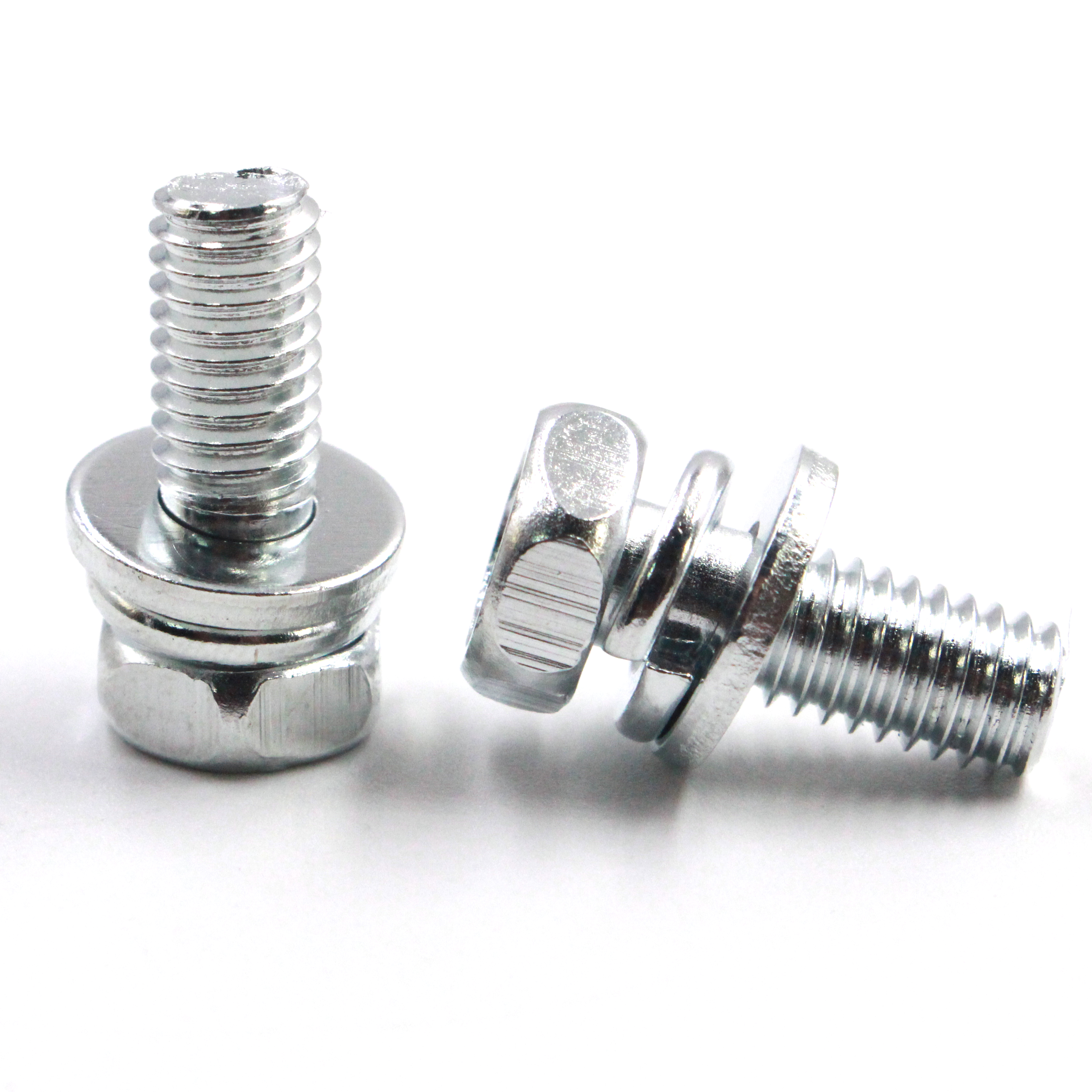
We are your trusted partner for automotive fasteners. We deliver a robust bolt for car that meets even the strictest Factories requirements. Custom orders welcome; we tailor sizes, head types, coatings, and finishes to fit your assembly line. We use high-grade alloy steel, heat-treated for high tensile strength and corrosion resistance. Our QC includes 100% inspection, dimensional checks, and batch traceability. We can supply directly from our Factories, ensuring competitive pricing and on-time delivery. We understand your procurement process in Custom and large scale production; we support low MOQs for trials too. Our bolt for car is compatible with standard automotive modules, easy to install, reliable under vibration. Choose us for consistent quality, supply security, and responsive service for your manufacturing line.

Hot Selling Product

bolt for car Industry Leaders For the Current Year

For car industry leaders in the current year, securing a steady supply of high-quality fasteners is critical to safety, performance, and ROI. Demand for high-strength bolts, lightweight alloys, and corrosion-resistant coatings is rising as platforms shift toward electrification and mixed-material architectures. Global procurement teams are focusing on supplier resilience, multi-sourcing, transparent lead times, and rigorous incoming quality checks, to tame volatility and ensure on-time assembly across continents. Key decisions include selecting bolts by standard compatibility (ISO/SAE/DIN), grading (8.8/10.9/12.9), appropriate coatings (HDG, black oxide, Zn-Ni, DLC), and ensuring traceability from heat treatment to final coating. Engineers urge verifiable test data, load and fatigue performance, and suppression of galling in assembly. Efficient procurement also relies on compliant manufacturers with IATF 16949, RoHS, and clear lot traceability, enabling safer, cost-effective mass production.

Bolt for Car Industry Leaders For the Current Year

Year Bolt Type Material Standard Thread Diameter (mm) Length (mm) Tensile Strength (MPa) Coating Applications Region Demand Production Volume (Millions) Quality Certifications
2026 Chassis Structural Bolt Alloy Steel ISO 898-1 Grade 8.8 / DIN 931 Coarse 12 40 800 Zinc plating Chassis/frame assembly Global 180 IATF 16949; ISO 9001
2026 Cylinder Head Bolt Alloy Steel ISO 898-1 Grade 10.9 Fine 8 60 1000 Zinc-Nickel Cylinder head retention Global 120 IATF 16949; ISO 9001
2026 Wheel Bolt Alloy Steel ISO 898-1 Grade 10.9 Fine 14 50 1050 Zinc plating Wheel mounting Global 140 IATF 16949; ISO 9001
2026 Panel Bolt Stainless Steel (A2-70) ISO 3506-1 Fine 6 20 520 Passivation Body panel assembly Europe & North America 90 ISO 9001
2026 Engine Mounting Bolt Alloy Steel ISO 898-1 Grade 8.8 Fine 10 70 900 Zinc plating Engine mounting APAC 100 IATF 16949; ISO 9001
2026 Engine Stud Bolt Alloy Steel DIN 931 / ISO 898-1 Grade 8.8 Fine 12 65 800 Zinc plating Engine assembly studs Global 110 IATF 16949; ISO 9001

Related Products

banner (4)

bolt for car Factory Trusted by Pros

Data Dimension: Bolt Type Pass Rate by Production Stage

New Data Perspective: Bolt Type Pass Rate Across Assembly Stages

Explanation: This chart provides a data-driven view of bolt type reliability in an automotive assembly context. The five bars represent different bolt types (Type A through Type E) and show their quality pass rates observed during production. Data was collected from quality control checks across multiple shifts over eight weeks, then aggregated to represent a single, comparable metric: percentage of bolts that passed torque, threading, and finish inspections on first-pass assembly. The objective is to illuminate which bolt types consistently meet specification and which require process attention. Bolt Type E leads with a 97% pass rate, suggesting robust sourcing, stable machining, and effective torque verification. Bolt Type D, at 85%, highlights potential issues in thread form, lubrication quality, or handling during sub-assembly that can degrade performance if left unaddressed. Bolt Type C at 92% is solid but not exceptional, indicating some variability possibly related to part tolerances or batch differences. Bolt Type A at 96% and Bolt Type B at 89% reveal a mix of high performance and moderate reliability within the same category of fasteners, which may point to supplier variation, storage conditions, or inconsistent application in the assembly line. From a manufacturing perspective, this dimension is valuable because it translates a complex supply chain into a simple, interpretable metric. By comparing pass rates across bolt types, engineers can prioritize root cause investigations, adjust supplier contracts, or implement targeted process controls such as torque wrench calibration, lubrication protocols, or handling procedures. The chart also enables tracking improvements over time; if a corrective action raises Type D from 85% to 92%, the impact will be visible in subsequent data slices. Practically, improving bolt reliability reduces rework, minimizes downtime, and enhances overall product quality and safety. Over longer horizons, consistent data collection supports supplier dashboards, risk assessment, and ready decision-making for line modernization. This perspective emphasizes that small, type-specific quality gains can accumulate into meaningful gains in reliability and customer satisfaction.

Top Selling Products