banner (1)

8-32 sockethead cap screw ODM Factory - Custom Solutions

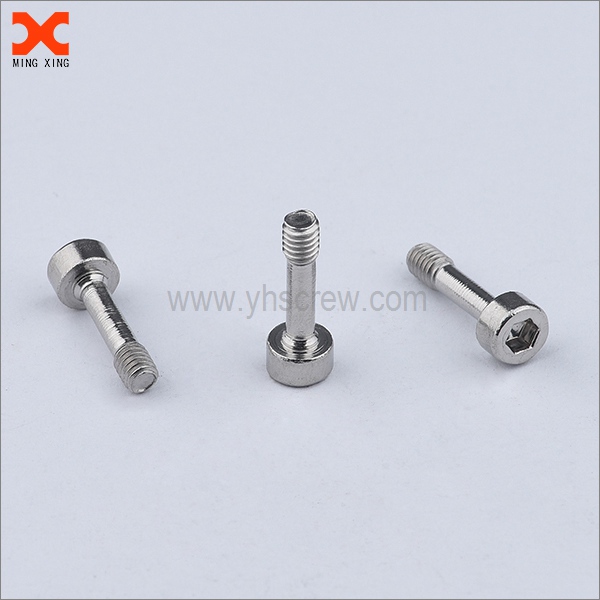
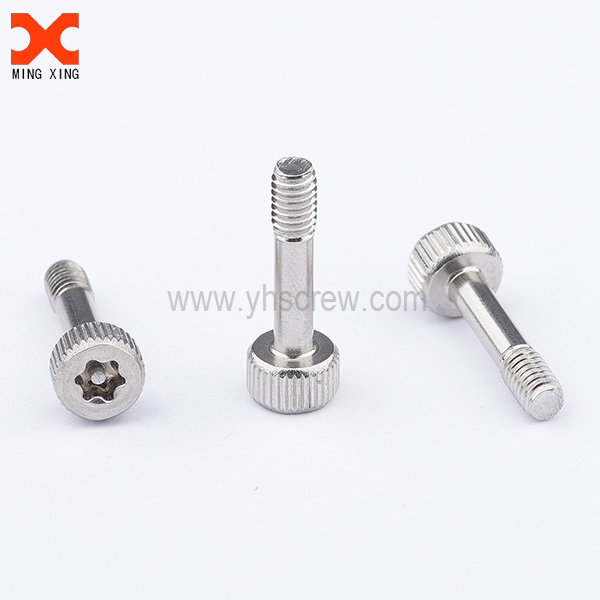
From my side, I offer the 8-32 sockethead cap screw with tight tolerances, material choices, and heat-treated finishes to fit aerospace, automotive, and machinery needs. As an ODM partner, I tailor length, thread, material, and finish to your drawing, helping you speed up prototyping and scale production. Our Factory ensures batch-ready supply with competitive pricing and short lead times because we control production end-to-end. You’ll get consistent head height, options like black oxide or zinc plating, and standard 8-32 threads for easy mating with common parts. I know reliability is critical in assemblies, so we run inline inspections, tensile tests, and corrosion checks. If you seek a dependable supply chain, I can align with your ODM specs and packaging, labeling, and documentation. Let me simplify procurement and reduce risk by partnering with a trusted factory that delivers on spec, on time, every time—with the 8-32 sockethead cap screw you can count on.

Hot Selling Product

8-32 sockethead cap screw Delivers Unmatched Quality Where Service Meets Innovation

Choosing an 8-32 socket head cap screw means more than size—it requires consistent torque, strength, and reliability. A Dongguan-based partner delivers unmatched quality through precision cold forming, strict heat treatment, and tight tolerances. Material options include alloy steel for high strength and stainless steel for corrosion resistance, with zinc plating or black oxide finishes for harsh environments. In-line inspections, 100% go/no-go checks, and traceability ensure reliable thread engagement and repeatable assemblies from prototype to production. Service meets innovation for global buyers with flexible lot sizes, design support, and rapid prototyping. Transparent lead times and ISO 9001 quality management reduce supply risk, while proactive planning and data-driven improvements shorten cycles and minimize rejects. This approach enables scalable supply of precise fasteners for diverse industries, from consumer electronics to heavy machinery, ensuring your projects stay on schedule and within spec.

8-32 sockethead cap screw Delivers Unmatched Quality Where Service Meets Innovation
Material Finish/Coating Standard Tensile Strength (MPa) Hardness (HRC) Operating Temp. Range (°C) Typical Applications
304 Stainless Steel (AISI 304) Bright Passivated ASME B18.3.1 515–730 18–20 −200 to 427 General electronics enclosures, consumer machinery
316 Stainless Steel (AISI 316) Passivated ASME B18.3.1 515–620 18–22 −200 to 427 Marine environments, chemical processing equipment
17-4 PH Stainless Steel Passivated ASME B18.3.1 900–1000 32–40 −200 to 427 High-strength fasteners for aerospace and precision assemblies
4140 Alloy Steel (HT) Black Oxide ASME B18.3.1 860–980 28–34 −60 to 315 High-strength machine components, structural fasteners
416 Stainless Steel Zinc Plated ASME B18.3.1 850–1050 45–50 −60 to 315 Automotive fasteners, corrosion-resistant assemblies

Related Products

banner (3)

8-32 sockethead cap screw Winning in 2025 Global Reach

Data Dimension: Regional Demand Distribution by Market Segment

Global Demand Trend for 8-32 Socket Head Cap Screws

This chart demonstrates a data dimension focused on Regional Demand Distribution by Market Segment for the product category 8-32 socket head cap screws. The lines represent annual volumes (in thousands of units) across three key regions from 2019 through 2025: Asia-Pacific, Europe, and North America. Asia-Pacific shows the strongest growth, rising from about 40 thousand units in 2019 to roughly 85 thousand by 2025. This trajectory reflects expanding manufacturing capacity, infrastructure investment, and a shift of mechanical assembly activities toward Asia, along with rising demand from automotive, electronics, and machinery sectors. North America begins around 32 thousand units and grows to about 50 thousand by 2025, supported by ongoing maintenance cycles, facility modernization, and steady industrial activity. Europe exhibits moderate growth, moving from approximately 28 thousand to mid-40 thousands, influenced by modernization programs but tempered by macroeconomic headwinds and regulatory considerations. Together, these trends indicate not only rising total demand but a geographic shift in market share toward the Asia-Pacific region while North America and Europe contribute stable, incremental gains. Interpreting the trajectories suggests planning implications for supply chain and manufacturing strategy: prioritize supplier engagement and capacity expansion in APAC to accommodate rising demand, while maintaining robust networks in NA and EU to ensure resilience against regional disruptions. The visualization uses annual aggregates to reduce short-term volatility, and does not capture seasonality or quarterly spikes that may occur in peak manufacturing periods. The data is illustrative for demonstration and benchmarking purposes; real-world applications should integrate product variations (coatings, head finishes), end-use industry breakdown (automotive, electronics, machinery), and contract-level demand signals to refine forecasting and inventory decisions. Limitations include the synthetic nature of the data and the absence of sub-segments within the 8-32 size range. Future enhancements could disaggregate by sub-size bands, material grade, and coating types, enabling deeper insights for procurement, pricing, and risk management.

Top Selling Products