banner (1)

Torx Head Security Screw - China Manufacturer for Reliable Fastening

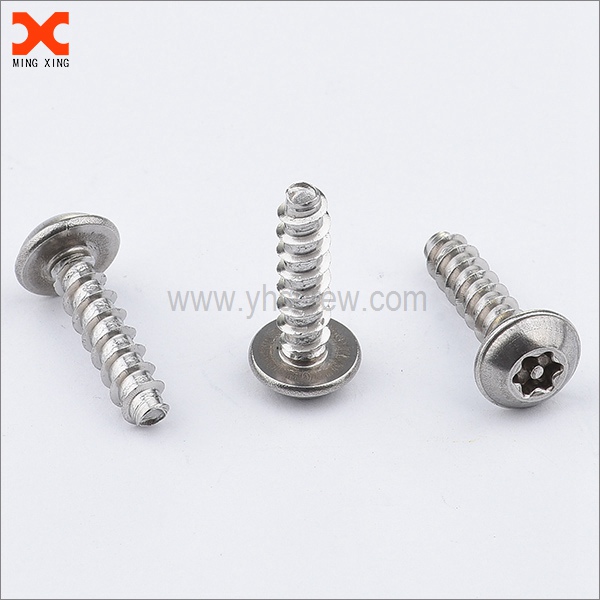
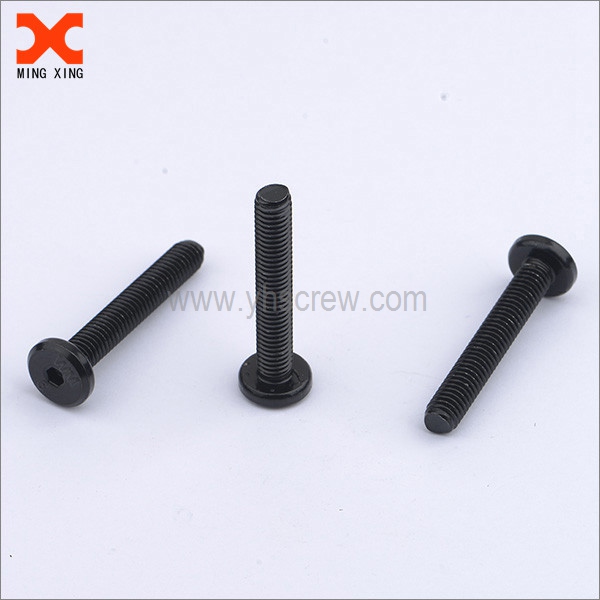
On your shortlist of reliable components, the torx head security screw is my go-to for secure assemblies. We are a China Manufacturer delivering consistent quality to global buyers. Our torx head security screw combines tamper-resistant security with high torque transfer, reducing unauthorized access and loosening risks in critical equipment. Manufactured from grade 8.8 or stainless steel, it resists corrosion and fatigue in harsh environments. We offer precise thread pitches, heat treatment options, and customized lengths to fit your design. Bulk pricing, flexible packaging, and fast lead times keep your production line running smoothly. Whether you’re outfitting electrical enclosures, public safety gear, or industrial machinery, our solution scales to your project size. I stand behind strict QC, with first article inspection and batch traceability. If you’re a manufacturer in need of a dependable supplier in China, I’ll work with you to tailor the torque specs, coating, and packaging to your exact needs.

Hot Selling Product

torx head security screw Manufacturer Ahead of the Curve

Torx head security screws are increasingly the preferred choice for deterring tampering and safeguarding assemblies in electronics, appliances, automotive, and outdoor equipment. A forward-thinking supplier combines durable materials with precise machining to deliver repeatable torque, clean threads, and robust security features across a broad size range. From standard security Torx to deeper profiles, modern processes include heat treatment and corrosion-resistant finishes for long-lasting performance in harsh environments. Global buyers should assess suppliers by capability and reliability, not just price. Seek material options (stainless steel, alloy steel) and finishes (zinc, black oxide, passivation) that fit your application. Confirm process controls such as precision heading, thread rolling, heat treatment, and rigorous surface finishing. Request QA data (3D metrology, torque testing, corrosion tests) and certifications (ISO 9001, RoHS). Ensure scalable production, clear lead times, sensible MOQs, and packaging that aligns with your assembly lines. A proactive partner streamlines procurement with consistent quality and on-time delivery.

{ torx head security screw Manufacturer Ahead of the Curve}
Part_ID Size Length_mm Drive_Size Security_Pin Material Finish Tensile_Strength_MPa Coating_Thickness_microns Origin_Country Production_Year Notes
TORX-SEC-01 M3 6 T8 Yes Stainless Steel 304 Black Oxide 520 8 China 2022 General purpose security
TORX-SEC-02 M4 8 T15 Yes Stainless Steel 316 Zinc Plated 550 6 Taiwan 2023 Corrosion resistant
TORX-SEC-03 M4 10 T25 Yes Alloy Steel SAE 4140 Passivated 680 5 Germany 2021 Heat treated
TORX-SEC-04 M5 12 T20 Yes Stainless Steel 304 Black Zinc 500 4 USA 2020 Electroplated
TORX-SEC-05 M6 14 T30 Yes Stainless Steel 316 Bright Zinc 720 7 Japan 2019 High strength
TORX-SEC-06 M3 5 T7 Yes Alloy Steel 1018 Passivated 460 6 Sweden 2022 Low-profile head
TORX-SEC-07 M3.5 7 T9 Yes Alloy Steel 1045 Black Oxide 540 5 Korea 2024 Precision machined
TORX-SEC-08 M4 16 T9 Yes Stainless Steel 316 TiN Coating 760 4 China 2025 Hard coat

Related Products

banner (3)

torx head security screw Ahead of the Curve Exceeds Industry Benchmarks

Data Dimension: Torque Uniformity Across Production Batches

The chart presents a bar-based view of torque uniformity across six production batches. Each bar represents a batch and shows the percentage of assemblies that meet the defined torque tolerance range. By using a uniform scale from 0 to 100, the visualization allows for quick cross-batch comparison of tightening consistency. The data indicate that most batches perform strongly, with uniformity values ranging from 92% to 99%. The highest value is Batch D at 99%, suggesting exceptionally stable tightening conditions or stringent controls during that run. Batch A at 98% and Batch F at 97% also demonstrate strong consistency, while Batch C shows a notable dip at 92%, which, although still high in absolute terms, is lower than the top performers. The remaining batches—Batch B at 96% and Batch E at 95%—fall between these extremes. From a process perspective, these results imply that the torque tightening system is largely robust and well-controlled, yet there is room for improvement in the lower-performing batch. The 7-percentage-point gap between the best and worst batches is meaningful when considering long-term reliability, potential field performance, and warranty considerations. The stability observed in most batches can be attributed to well-calibrated torque tools, standardized operator procedures, and consistent material quality. The variability seen in Batch C may stem from transient factors such as tool wear within that shift, calibration drift, or operator technique. Investigating such discrepancies could yield actionable improvements, for example implementing more frequent calibration checks, stronger measurement traceability, and predictive maintenance for tightening equipment. To sustain an ahead-of-the-curve position, the organization could set a target closer to the top performers, for example aiming for 98% uniformity across all batches, and implement a plan to elevate the lower-performing batches. This would involve enhanced training, stricter process controls, and rapid feedback loops from inspection data. The data illustrate that the production line already performs above typical industry norms in most cases, and with focused interventions it could approach uniform excellence across all batches. Maintaining this data-driven approach supports secure assemblies, drives reliability, and reinforces competitive advantage through ongoing optimization.

Top Selling Products