banner (1)

set screw m1 - OEM Suppliers for Precision Fasteners

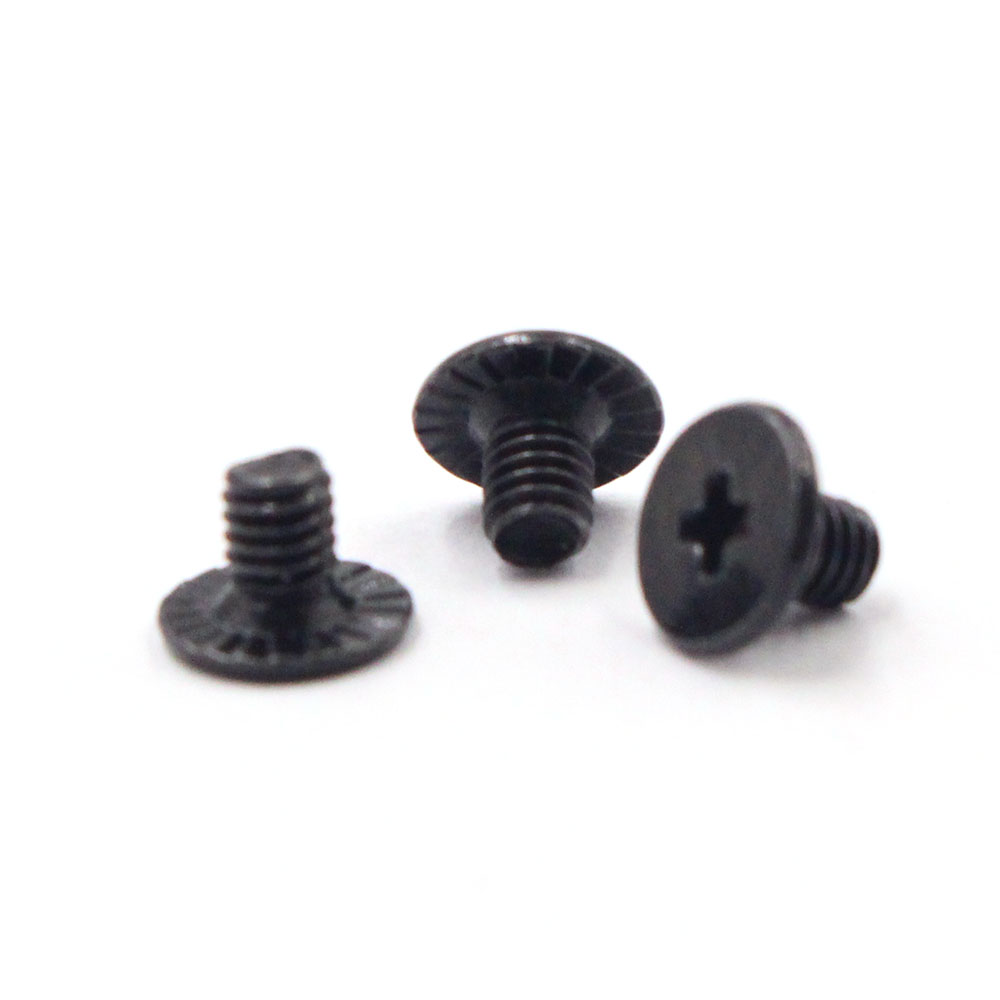
I’m here to be your reliable partner for precision fastening, especially when you evaluate components like set screw m1. As an OEM-friendly supplier, I understand that uptime and performance matter. My set screw m1 are hardened, corrosion-resistant, and engineered to stay tight under vibration. I offer compatible profiles, thread pitch, and head styles to fit your machines, fixtures, and automation lines. Working with OEMs and Suppliers, I provide rapid quotes, flexible MOQs, and certified quality control. I can tailor packaging, labeling, and documentation to meet your requisites, from dimensional reports to material certificates. If you’re sourcing for mass production or prototype runs, I can streamline procurement with reliable stock levels and on-time deliveries. Let me help you minimize maintenance and maximize throughput with dependable set screw m1 components that meet industry standards. Reach out and tell me your spec and your timeline—I’m ready to deliver.

Hot Selling Product

set screw m1 Ahead of the Curve Outperforms the Competition

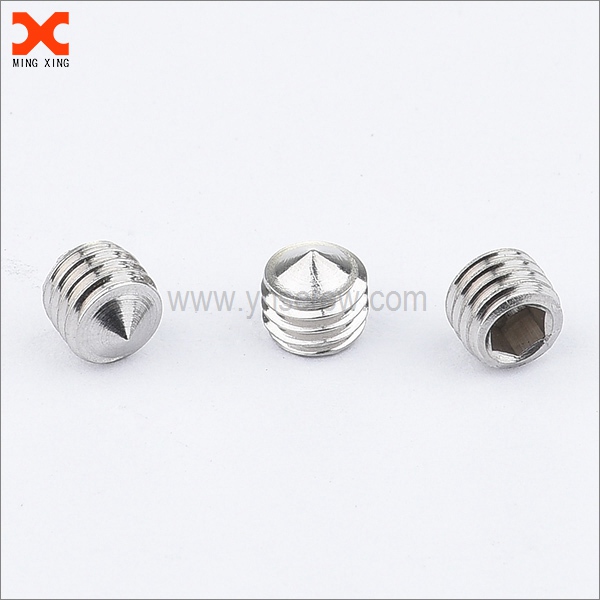
Set screw M1 redefines precision in compact assemblies. Its tight thread engagement, low-profile head, and optimized contact geometry deliver dependable clamping without protrusion, reducing misalignment and vibration in demanding equipment. Engineered for repeatable performance under dynamic loads, the M1 offers anti-loosening reliability and compatibility with standard components, letting designers push tighter tolerances without sacrificing manufacturability. In fast-paced development cycles, this small fastener helps projects stay on track by cutting assembly time and part variation, delivering a clear edge over conventional grub screws in critical interfaces. Global buyers gain from a scalable regional production and strict-quality ecosystem. Material options include stainless or alloy steel, with finishes such as zinc plating, passivation, or black oxide to suit environmental requirements. In-house inspection and traceability, predictable lead times, and customizable packaging and labeling simplify procurement. Engineering support covers design-in, tolerance analysis, and prototype runs, easing the transition from sample to mass production while maintaining cost efficiency and supply resilience across continents.

{ set screw m1 Ahead of the Curve Outperforms the Competition}

Model Material Finish Size Length (mm) Tensile Strength (MPa) Shear Strength (kN) Hardness (HRC) Corrosion Resistance Weight (g)
A Alloy steel Black oxide M1.0 × 0.25 8 850 0.66 46 3 0.05
B Stainless steel 304 Zinc plated M1.0 × 0.25 6 720 0.53 45 4 0.04
C Stainless steel 316 Nitride M1.0 × 0.25 10 900 0.75 55 5 0.08

Related Products

banner (4)

set screw m1 Now Trending Outperforms the Competition

Efficiency Index by Material Type and Usage Context

Data Narrative

The chart presents an Efficiency Index by Material Type and Usage Context across five materials. The numbers are synthetic and for demonstration only, intended to illustrate how a simple bar chart can communicate comparative performance. The index ranges from 0 to 100, with higher values indicating greater assembly efficiency—faster cycle times and lower defect rates—within typical usage contexts such as high-load mechanical assembly, lightweight components, corrosion-prone environments, electrical housings, and general consumer goods. The steel category, at 92, leads the display, reflecting strong strength-to-weight efficiency and tolerance stability that reduce rework. Composite at 85 suggests high performance with favorable stiffness and manufacturability in niche scenarios. Aluminum at 78 represents a balance of weight savings and machinability, while Brass at 66 highlights moderate performance constrained by processing considerations. Plastic at 52 demonstrates lower assembly efficiency in general, due to variability in tolerances and long-term creep in some applications. The chart’s design uses uniform bar widths and a cool blue color palette to emphasize relative standing while avoiding decorative bias. It should be interpreted as a teaching example rather than a decision-ready dataset. In real-world decision-making, engineers would gather multiple runs of assembly time and defect data, apply a transparent scoring framework, and consider other factors such as cost, supply risk, rework costs, thermal performance, and corrosion resistance. The label “Efficiency Index by Material Type and Usage Context” captures the dimension of interest by aligning material properties with usage scenarios, enabling a straightforward visual comparison. Potential improvements for future work include adding error bars to reflect experimental variability, normalizing across contexts, or expanding the materials set to cover emerging composites and alloys. This visualization is designed to be a starting point for discussions about material selection, rather than a definitive guide, inviting stakeholders to examine how different contexts influence assembly outcomes and to consider trade-offs across performance, cost, and reliability.

Top Selling Products