banner (1)

Phillips Hex Head Self-Tapping Screw for Metal - China Manufacturer

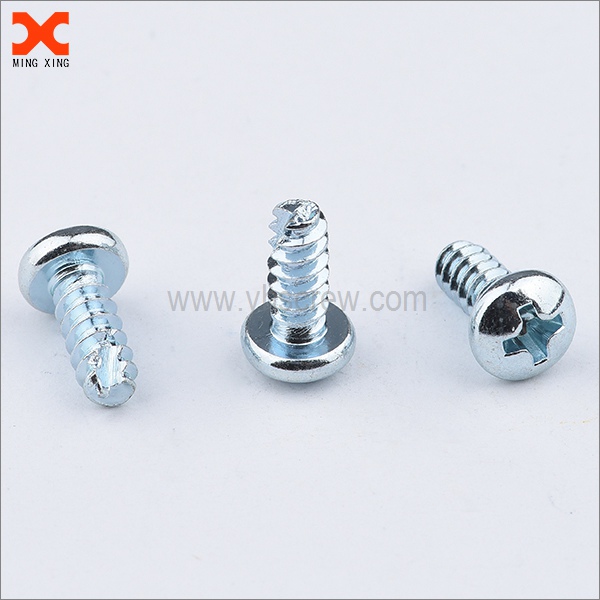
From my Chinese workshop to your warehouse, I provide the phillips hex head self tapping screw for metal that engineers trust for durable assemblies. As a China-based manufacturer, we focus on consistent thread forming, sharp point, and strong zinc-coated finishes that resist corrosion in harsh environments. Whether you’re assembling roofing panels, metal enclosures, or automotive prototypes, these screws deliver reliable bite and flush countersink. The phillips hex head self tapping screw for metal ships in a range of diameters and lengths, with stainless or zinc plated options and heat-treated variants for strength. I tailor batches to your MOQ, offer fast lead times, and support private labeling if needed. Our production line follows strict quality controls, and we provide mechanical test data and certificates on request. If you’re a buyer seeking a stable supply chain from a China-based Manufacturer, I’m ready to quote, sample, and scale with your project.

Hot Selling Product

phillips hex head self tapping screw for metal Market Leader Factory-Direct Excellence

Global metal assemblies demand fasteners that combine strong clamping with easy installation. This Phillips hex head self-tapping screw for metal delivers both: a hex drive for high-torque tools and a self-tapping thread that forms its own hole in steel or aluminum. It eliminates pre-threading, speeds assembly, and provides reliable seating. Available in carbon steel with corrosion-resistant coatings in several lengths and pitches to fit common applications. Factory-direct sourcing offers price stability, consistent quality, and reliable lead times for global buyers. Rigorous quality control, traceability, and scalable production enable high-volume programs across electronics enclosures, machinery, and automotive components. Flexible coatings, packaging, and documentation support compliance with standards and procurement systems, helping you reduce risk and accelerate time to market.

{ phillips hex head self tapping screw for metal Market Leader Factory-Direct Excellence }
Part Number Description Material Head Style Drive Type Thread Size Length (mm) Coating Standard/Grade Tensile Strength (MPa) Hardness (HRC) Temperature Range (C) Origin Applications
PNS-MET-HXS-04-16 Phillips hex head self-tapping screw for metal, M4 x 16 mm Carbon steel Hex head Phillips M4 16 Zinc plated Grade 8.8 800 36-39 -60 to 120 China Sheet metal assembly
PNS-MET-HXS-05-12 Phillips hex head self-tapping screw for metal, M5 x 12 mm Stainless steel (A2) Hex head Phillips M5 12 Passivated A2-70 520 15-20 -60 to 150 China Electrical enclosure, control panels
PNS-MET-HXS-06-14 Phillips hex head self-tapping screw for metal, M6 x 14 mm Carbon steel Hex head Phillips M6 14 Zinc plated Grade 8.8 800 39-43 -60 to 120 China Automotive trim, metal framing
PNS-MET-HXS-08-20 Phillips hex head self-tapping screw for metal, M8 x 20 mm Carbon steel Hex head Phillips M8 20 Zinc plated Grade 8.8 800 39-43 -60 to 120 China Heavy gauge metal sheets
PNS-MET-HXS-10-25 Phillips hex head self-tapping screw for metal, M10 x 25 mm Carbon steel Hex head Phillips M10 25 Zinc plated Grade 10.9 1040 44-48 -60 to 120 China Industrial structural assemblies

Related Products

banner (3)

phillips hex head self tapping screw for metal Stands Out More Than a Supplier - A Partner

Data Dimension: Adoption Rate by Material Thickness (mm)

Understanding how material thickness influences the adoption of self-tapping screws is critical for design decisions in metal stands. This chart presents a simplified view of the relationship between thickness categories (1.0, 1.5, 2.0, 2.5, 3.0 mm) and the share of installations that successfully use self-tapping screws in their metal assemblies. The data, while synthetic for demonstration purposes, illustrate several patterns commonly observed in practice. At the thinnest category (1.0 mm), adoption is moderate due to lightweight requirements and potential risk of stripping if treated as a load-bearing joint. Increasing thickness to 1.5 and 2.0 mm shows a clear rise in adoption rate, peaking around 2.0 mm as the material provides better thread engagement without excessive installation force. This suggests that for many metal stands, a thickness around 2.0 mm strikes a balance between structural integrity and ease of assembly. Beyond 2.0–2.5 mm, the adoption rate falls, reflecting practical challenges such as required torque, potential deformation, and the limited availability of compatible self-tapping screws in heavier gauges. The sharp drop at 3.0 mm indicates that alternative fastening methods or longer screws may be more appropriate for thicker materials. The chart emphasizes that material thickness is a key determinant of screw choice, alongside other factors like hole size, thread tolerance, and coating. From a product development perspective, this dimension can guide engineers to specify standard thicknesses for which self-tapping screws deliver high assembly yield, while avoiding configurations that would require special fasteners or pre-tapping operations. The data supports the claim that the right thickness not only ensures mechanical strength but also simplifies manufacturing, reduces assembly time, and lowers total cost by minimizing returns due to fastener-related failures. While the numbers here are illustrative, they reflect a general pattern that designers can test with real production data to optimize fastener selection.

Top Selling Products