banner (1)

M5 Thumb Screws - Discounts & Quotes

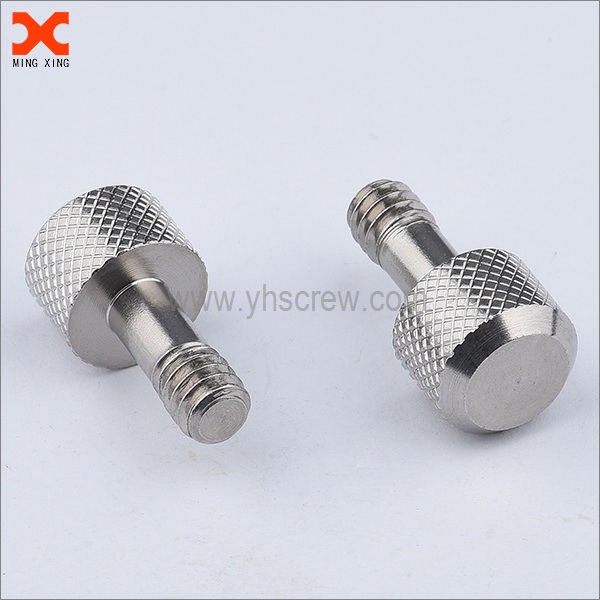
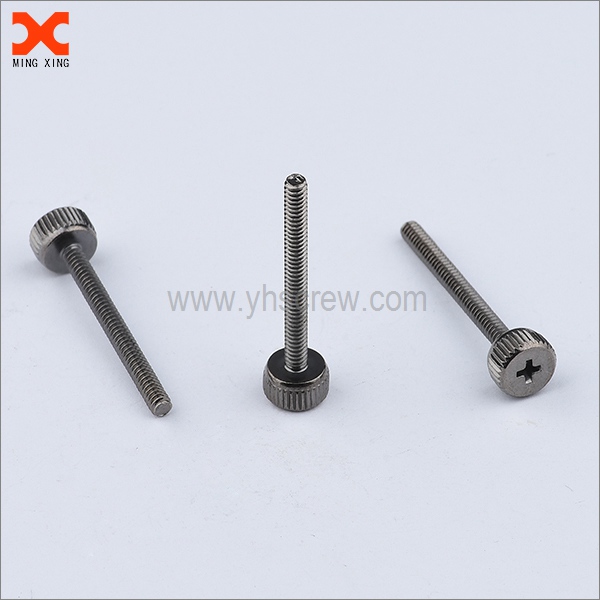
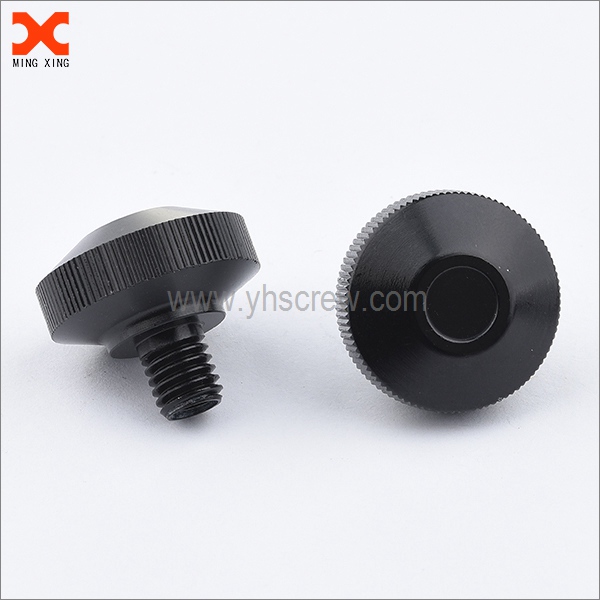
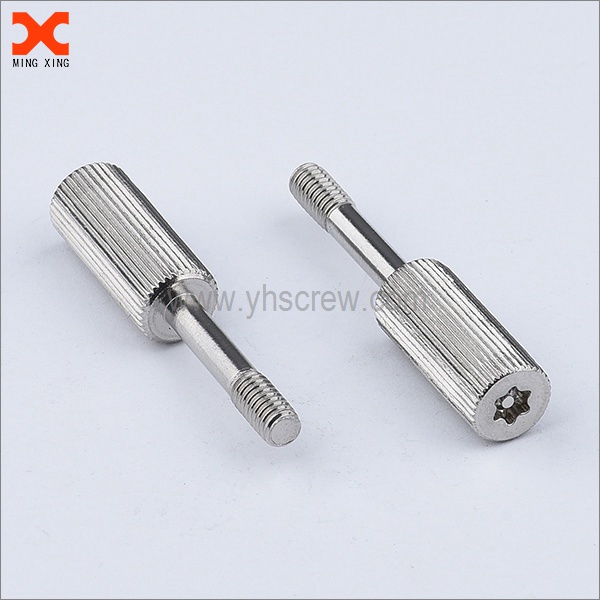
I’m here to help you streamline assembly with M5 thumb screws that deliver fast, secure finger-tightening for enclosures and fixtures. These M5 thumb screws let your team work without tools, yet stay solid under vibration. I offer options in stainless steel for corrosion resistance or treated steel for cost efficiency, with knurled heads for grip even when wearing gloves. The standard M5 thread matches most existing hardware, so changeovers are painless. In high-mix lines, this means less downtime and more uptime. For you as a buyer, Discount on bulk orders and fast Quotes are always possible. I can tailor lengths and finishes to fit your design, and can send a formal quote with exact counts and delivery times within one business day. Reliability you can trust—M5 thumb screws made for demanding manufacturing.

Hot Selling Product

m5 thumb screws Is The Best Where Innovation Meets 2025

Among fasteners, M5 thumb screws show how design meets function in 2025. Their knurled heads enable tool-free adjustments in compact assemblies, while standard M5 threads ensure broad compatibility with equipment, enclosures, and robotic subsystems. Buyers now prioritise corrosion resistance, precise threading, and tight tolerances to support automated lines, rapid prototyping, and field service. When innovation accelerates, the right thumb screw keeps pace. Global buyers should seek suppliers offering traceable quality, scalable MOQs, and reliable lead times, plus material options such as stainless steel, brass, or titanium and coatings like PVD or black oxide. Clear certifications, batch testing, and flexible packaging simplify cross-border procurement for diverse markets. As 2025 ushers in modular, upgradeable systems and smart manufacturing, reliable M5 thumb screws that blend durability, customization, and sustainable production become a strategic fit for design-in projects and long-term deployments.

{ m5 thumb screws Is The Best Where Innovation Meets 2025}

Attribute Description Typical Value Material / Finish Notes
Thread Size Metric coarse thread used for thumb screws M5 x 0.80 Stainless Steel 304 (A2); Passivated Standard size for general purpose assemblies
Head Type Knurled thumb screw head designed for hand tightening Knurled round head Stainless Steel 304 (A2) Non-marring grip for tool-free adjustments
Head Diameter Outer diameter of the head ≈ 9.5 mm Stainless Steel 304 (A2) Depends on knurling design
Head Height Thickness of the head ≈ 3.5 mm Stainless Steel 304 (A2) Affects grip and torque feel
Shank Length Options Thread portion length past the head 6, 8, 12, 16, 20, 25 Stainless Steel 304 (A2) Allows different through-hole depths
Material / Finish Base material and surface treatment 304 (A2) or 316 (A4) variants Passivated, electro-polished options Higher corrosion resistance variants available
Hardness Surface hardness range HRC 20–34 Stainless steel (304/316) Suitable for finger-tightness and light mouting
Torque Range Recommended tightening torque 0.25–0.65 Nm Depends on length and material; use finger-tight to avoid damage
Standards / Compliance Environmental and quality standards RoHS, REACH commonly supported Ensures safe and compliant use in assemblies
Typical Applications Where thumb screws are used Furniture, electronics enclosures, cabinetry Stainless variants General purpose manual fastening

Related Products

banner (4)

m5 thumb screws Custom Solutions, From Concept to Delivery

Delivery Lead Time Across Iteration Phases

This chart tracks delivery lead time (in days) across twelve iteration phases in the M5 thumb screws customization project. The objective is to illustrate how lead time evolves as design stabilization, tooling readiness, and process improvements occur. Each data point corresponds to a major iteration: concept development, design freeze, tooling setup, pilot production, and successive production ramp. The x-axis represents iterations from 1 to 12; the y-axis shows the estimated delivery lead time in days, ranging from 7.0 down to 3.8. Observations show a general downward trend, with the most substantial reductions occurring early (iterations 1–5) as initial design optimization and setup changes reduce rework and changeovers. In later iterations (6–12), the curve flattens as the process approaches a stable state, indicating diminishing returns from incremental tweaks alone. The visualization aligns with common manufacturing learning curves: early phases involve higher variability and longer lead times that gradually contract as standard work, fixtures, and supplier coordination mature. The data helps communicate performance to stakeholders and supports capacity planning and delivery commitments. It also highlights risk: a single abnormal iteration could temporarily increase lead time if design changes or tooling challenges occur. The limitations here include synthetic data that may not reflect real-world volatility such as supply delays, tooling wear, or batch effects. For robust decision-making, this chart should be complemented by metrics like throughput, defect density, and cost per unit, and ideally by a multi-series chart comparing lead time with other KPIs. In future analyses, adding control charts or time-based seasonality, and segmenting by component family or supplier could provide deeper insights. Overall, the trend line demonstrates that with disciplined iteration and manufacturing discipline, delivery promises become more reliable, informing planning, quoting, and customer communication.

Top Selling Products