banner (1)

M3 Shoulder Screws - Custom Solutions from Leading Factories

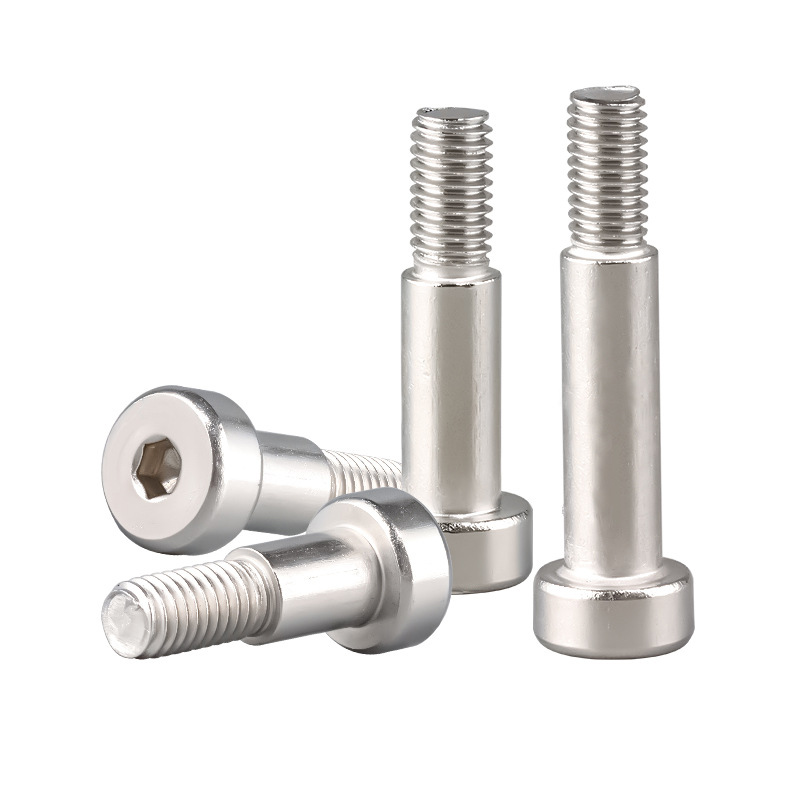
We source and manufacture M3 shoulder screws to fit tight tolerances and demanding environments. I know that in everyday assembly, the shoulder collar must align parts precisely, and that's why our M3 shoulder screws deliver accurate shoulder diameters and smooth threads. We offer Custom options—lengths, shoulder widths, head styles, and materials (stainless steel, alloy, aluminum)—so you can tailor them to your application. For Factories and OEMs, we provide consistent batch quality, ISO-driven processes, and reliable lead times. Our screws feature corrosion resistant finishes like zinc plated, black oxide, or passivation, with guaranteed hardness and thread engagement. Whether you need standard inventory or bespoke combos, we support small MOQ and scalable production. I ship worldwide and can integrate with existing supply chains. With M3 shoulder screws you’ll reduce assembly time and improve alignment in precision jigs, fixtures, or automation modules.

Hot Selling Product

M3 shoulder screws Custom Solutions, Service Backed by Expertise

M3 shoulder screws offer compact, precision machined fasteners that fit a range of assemblies from small motors to equipment housings. We customize essentials: shoulder height and diameter, overall length and thread length, material options (stainless, alloy, aluminum), and finishes (zinc, black oxide, passivation). From design support and drawings to samples and rapid prototyping, we tailor solutions to your fit, function, and tolerance requirements for high-volume production. With deep machining expertise behind every order, we ensure end-to-end quality and reliable supply. Our QA spans incoming inspection, in-process checks, and final tests aligned to international standards. Global buyers benefit from scalable production, flexible lead times, competitive pricing, and secure logistics with traceability and careful packaging. Whether you need small runs or full-scale programs, you gain knowledge-driven support and on-time delivery you can depend on.

{ M3 shoulder screws Custom Solutions, Service Backed by Expertise}
Product ID Description Material Finish Head Style Drive Thread Size Total Length (mm) Shoulder Length (mm) Shoulder Diameter (mm) Tolerance Static Load Rating (N)
M3S-B304-SS-6 M3 Shoulder Bolt, 6 mm total length, 4 mm shoulder AISI 304 Stainless Steel Plain / Passivated Socket Head Cap Hex Socket M3 x 0.5 6 4 3.0 6g / 6H 520
M3S-B316-SS-8 M3 Shoulder Bolt, 8 mm total length, 4 mm shoulder AISI 316 Stainless Steel Passivated Socket Head Cap Hex Socket M3 x 0.5 8 4 3.0 6g / 6H 800
M3S-4140-AL-12 M3 Shoulder Bolt, Alloy Steel 4140, 12 mm length Alloy Steel 4140 Black Oxide Socket Head Cap Hex Socket M3 x 0.5 12 7 3.0 6g / 6H 1200
M3S-6061-AL-10 M3 Shoulder Bolt, Aluminum 6061-T6, 10 mm length Aluminum 6061-T6 Clear Anodized Button Head Hex Socket M3 x 0.5 10 5 3.0 6g / 6H 420

Related Products

banner (4)

M3 shoulder screws Factory Sets the Industry Standard

Data Dimension: Process Capability Index over Time (Cp/Cpk)

Process Capability Trends for High-Precision Shoulder Screws

Explanation: The data below shows how process capability indexes Cp and Cpk evolve over time for a high-precision production line producing shoulder screws. Cp reflects potential capability given the spread of the process relative to specification width, while Cpk accounts for actual centering of the process around the target. A Cp value around 1.0 or higher indicates an acceptably tight spread; a Cpk above 1.0 indicates the process is well-centered and capable in practice. The chart presents twelve quarterly data points, illustrating initial modest capability in early periods and marked improvement over time as process improvements are implemented. In the first two to three periods, Cp remains near 1.05–1.12 and Cpk stays below or near 1.0, which flags that although the spread fits within tolerance, centering needs adjustment. As the quarter progresses, Cp increases more steadily (to ~1.25–1.30 by Q4-2026), while Cpk rises to roughly 1.18–1.28, suggesting the machine setup and measurement systems are becoming more stable and better aligned with target dimensions. The observed gap between Cp and Cpk in several periods indicates residual process drift or occasional misalignment between tool wear, fixture performance, and the nominal target; this is a key signal for maintenance actions such as re-calibration, fixture redesign, or tooling replacement. The concurrent rise of both metrics demonstrates that both spread and centering are improving, supporting tighter production control and lower defect rates. When Cp and Cpk are both above 1.2 in the latest periods, the process is nearing a mature state that could be considered a benchmark for industry-standard performance in precision shoulder screw manufacturing. The figures also emphasize the value of ongoing data monitoring: small quarterly fluctuations may be early warning signs of wear or calibration fatigue, enabling preventive actions before defect rates rise. Using Cp and Cpk in parallel provides a balanced view of capability potential versus actual performance and supports data-driven decisions for process optimization, supplier qualification, and quality assurance strategy across the manufacturing floor.

Top Selling Products