banner (1)

Lathe CNC Machining Brass Parts Service in China - Manufacturer

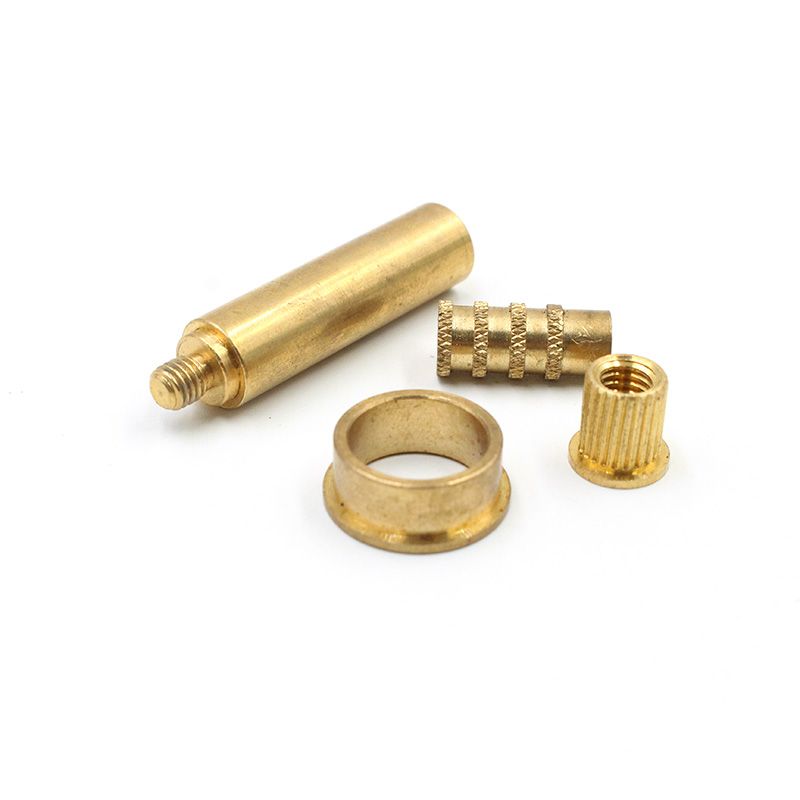
I’m a China-based manufacturer offering precise lathe cnc machining brass parts service for demanding industrial applications. I work with turning and CNC milling to produce tight-tolerance brass components that meet your drawings and specs. Whether you need prototyping or high-volume production, I can scale fast while maintaining quality, surface finish, and dimensional stability. My capability covers custom geometries, threaded features, knurls, and precise bore tolerances, with options for plating, passivation, or decorative finishes. I manage every step from sourcing to inspection, using CMM checks and documented quality records for traceability. Short lead times and flexible shipping arrangements help you stay competitive in global markets. Being a China-based Manufacturer, I understand the importance of consistent supply chains, and I work closely with you to optimize cost and reliability. If you share your brass alloy, tolerance, order quantity, and required finish, I’ll prepare a tailored quote now.

Hot Selling Product

lathe cnc machining brass parts service in 2025 Your Trusted OEM Partner

Global buyers seeking reliable brass parts in 2025 can benefit from the seamless integration of lathe turning and CNC machining. Brass components produced this way offer excellent machinability, tight tolerances, and repeatable quality for everything from small bushings to complex housings. With advanced tooling, precision control, and rigorous process monitoring, manufacturers can deliver customized features, consistent performance, and scalable production to meet evolving demand. Choosing the right OEM partner means access to design-for-manufacturing support, material options, and rigorous QA. A trusted partner provides upfront feasibility input, rapid prototyping, traceable inspection data, and dependable logistics to support global procurement. By aligning engineering, manufacturing, and quality with your supply chain, brass lathe and CNC parts can streamline assemblies, reduce total cost, and accelerate time-to-market in today’s competitive landscape.

{ lathe cnc machining brass parts service in 2025 Your Trusted OEM Partner}

Part Category Brass Alloy Machining Capabilities Tolerance (mm) Surface Finish (Ra µm) Lead Time (days) Weekly Capacity (units) Inspection Method Certifications Notes
Hydraulic Fittings C26000 (Cartridge Brass) Turning, Milling, Drilling ±0.05 Ra 0.8-1.2 5-8 4,000-6,000 CMM + 3D scanning ISO 9001:2015; MTR Grease-free, dimensionally stable; thread quality ensured
Electrical Connectors C27200 (Yellow Brass) Turning, Milling, Post-assembly ±0.04 Ra 0.8-1.0 6-9 3,500-5,500 2D measurement, visual ISO 9001:2015; RoHS Bead-blasted finish optional; plating available
Marine Hardware C26000 Turning, Milling, Drilling, Surfacing ±0.05 Ra 1.0-1.6 7-12 2,800-4,200 CMM, salt spray test ISO 9001:2015; MTR Corrosion resistant coating on request
Plumbing Fittings C27200 (Yellow Brass) Turning, Milling, Threading ±0.07 Ra 0.8-1.2 6-9 2,500-4,000 CMM + 2D inspection ISO 9001:2015; MTR Custom thread profiles; plating optional
Automotive Trim Components C26000 Turning, Milling, Post-assembly ±0.05 Ra 0.6-1.0 5-8 3,000-5,000 3D scanning + visual ISO 9001:2015; MTR; PPAP ready Consistent cosmetic finish; plating optional
Instrumentation Gears C27200 Turning, Milling, Gear Hobbing ±0.04 Ra 0.6-1.2 8-12 3,000-5,000 3D scanning + pin gauge ISO 9001:2015; MTR; Traceability Precision gear fit with validated tolerances
Valve Components C27000 (Lead Brass) Turning, Drilling, Broaching ±0.04 Ra 0.8-1.3 5-8 2,300-3,800 CMM + leak test ISO 9001:2015; MTR High-precision tolerance control; corrosion-resistant finish
Precision Pins C26000 Swiss-type turning, Drilling ±0.03 Ra 0.6-0.9 4-7 4,000-6,000 Optical measurement + X-ray if needed ISO 9001:2015; MTR Flash-free processing; tight clearance

Related Products

banner (2)

lathe cnc machining brass parts service Stands Out in 2025

Data Dimension: Throughput by Brass Alloy Type in 2025

Explanation

This chart examines throughput (parts per day) across five brass alloy categories (Alloy A–E) machined on a lathe CNC under standardized conditions in 2025. Throughput is a practical proxy for manufacturing efficiency, combining material behavior, tool life, and process stability. The data are synthetic and intended to illustrate relative performance among alloys with different copper-zinc compositions and trace elements, not to replace real production measurements. The values shown are: Alloy A 420, Alloy B 560, Alloy C 480, Alloy D 600, Alloy E 540 parts per day. The pattern suggests that certain alloys facilitate faster material removal due to softer structures or better chip formation, while others may require more conservative feeds to maintain tool integrity and surface consistency. Several factors contribute to the observed differences: material hardness, thermal conductivity, lubricity of the alloy, and the tendency to work-harden under cutting; these influence cutting forces, temperature at the cutting interface, and consequently the pace of production. In practice, the operator may adjust spindle speed, feed rate, and depth of cut to optimize throughput while preserving part accuracy. The chart is designed to prompt discussion about material-specific process optimization strategies in 2025 for brass parts produced by CNC lathes. It emphasizes the need for reliable process data collection, regular tool condition monitoring, and calibration of machining parameters for each alloy type. Businesses may leverage such analyses to schedule maintenance, plan batch runs, and allocate resources effectively. For instance, alloys closer to Alloy D in performance could justify higher daily targets, whereas those resembling Alloy A may require more conservative planning or tool wear compensation. Overall, the visualization highlights the correlation between material properties and machining efficiency and serves as a prompt for continuous improvement in brass parts service and precision turning operations in a modern manufacturing environment. Future work includes expanding the dataset to include different speeds, feeds, and depth of cut, plus reliability metrics.

Top Selling Products