banner (1)

Knurled Head Captive Panel Screw - China Manufacturer

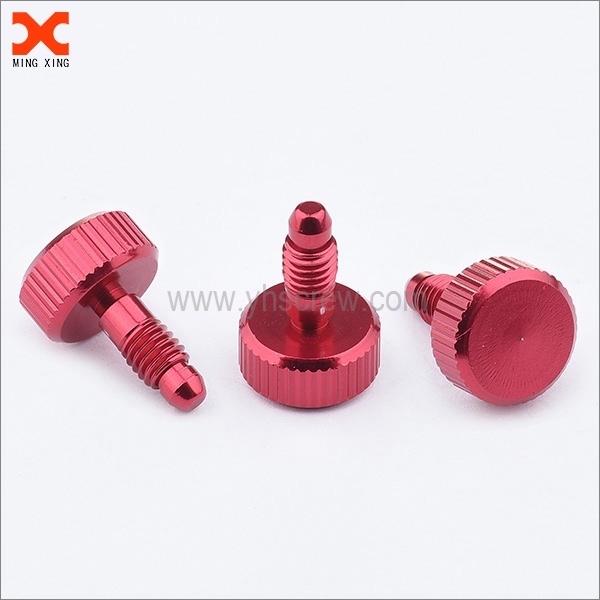
As a China-based Manufacturer, I know B2B buyers want reliability and quick, tool-free assembly. My knurled head captive panel screw blends ergonomic grip with a built-in captive feature to stop parts from getting lost during disassembly. It’s perfect for control panels, enclosures, and modular furniture where fast, repeatable mounting matters. This screw can be ordered in stainless steel or zinc-plated steel, delivering corrosion resistance and good thread engagement across common panel thicknesses. The knurled head provides confident hand-tightening, while the captive design keeps the screw aligned on the panel even when you remove it. Direct from a Manufacturer in China, I offer competitive pricing, flexible MOQ, and reliable lead times, backed by QA checks to ensure consistent performance. If you need OEM/ODM options or custom finishes, I’m ready to tailor the knurled head captive panel screw to your specification.

Hot Selling Product

knurled head captive panel screw Application Now Trending

Knurled head captive panel screws are now trending as a practical fastening solution for electronic enclosures, control panels, and equipment housings. The knurled grip enables tool-free, hand-tightened assembly, while the captive design keeps the screw at hand during maintenance. They pair with captive nuts for secure, repeatable performance across cycles. Available in stainless steel or brass with corrosion-resistant finishes, they fit a wide range of panel thicknesses and environments. Global buyers are adopting this trend to shorten assembly times and reduce tool wear in IT racks, telecom cabinets, medical devices, and automotive interiors. When selecting a supplier, verify material compliance (RoHS/REACH), standard threads, and traceability. Define your panel thickness, grip diameter, and screw length, and choose an appropriate finish. A reliable supplier will provide lead times, datasheets, and samples to validate fit before large orders.

{ knurled head captive panel screw Application Now Trending}
Variant Material Head Style Captive Mechanism Thread Size Length (mm) Finish Tolerance Typical Application Trend
KV-01 Stainless Steel A2 Knurled Captive shank M4x0.7 12 Passivated +0 / -0.2 Enclosures, electronics 4
KV-02 Zinc Alloy Flanged Knurled Captive plunger #6-32 UNC 10 Black Oxide +0.0 / -0.2 Server racks, control panels 5
KV-03 Stainless Steel A4 Knurled Detent capture M5x0.8 16 Passivated +0 / -0.15 Industrial equipment 4
KV-04 Brass Knurled Rigid captive 1/4-20 UNC 20 Clear Zinc +0.0 / -0.3 Medical devices enclosures 3
KV-05 Stainless Steel A2 Low-profile Knurled Anti-vibration captive M4x0.7 8 Black Oxide +0.0 / -0.25 Consumer electronics 5
KV-06 Aluminum 6061 Knurled Head Spring-loaded M3x0.5 9 Anodized +0.0 / -0.15 Housings, dashboards 3
KV-07 Stainless Steel A4 Button knurled Detent #8-32 UNC 14 Passivated +0 / -0.2 Aerospace panels 4
KV-08 Stainless Steel A2 Hex-knurled Captive flat M6x1.0 22 Black Oxide +0 / -0.2 Industrial control panels 3

Related Products

banner (3)

knurled head captive panel screw Stands Out Trusted by Pros

Data Dimension: Size-based Demand Distribution for Knurled Head Captive Panel Screws

This dataset summarizes simulated market demand for knurled head captive panel screws across common metric sizes, presented here as a size-based demand distribution in thousands of units per quarter. The tallest bar corresponds to M5, indicating that this size currently accounts for the largest share of usage in typical panel assemblies. M4 and M6 follow, reflecting a strong but narrower demand for mid-range sizes used in electronics enclosures and equipment housings. The M3 segment, while smaller, remains significant for compact devices where space is constrained and for fine adjustment components. Larger sizes like M8 and M10 show comparatively lower demand in this snapshot, which matches common practice where heavier panels or higher torque requirements call for fewer units but potentially higher torque-rated variants. The overall pattern suggests a core inventory focus around M4–M6, with M5 as the anchor size for standard configurations. For procurement, this implies stocking targets that minimize stockouts while optimizing holding costs, especially for the leading M5 and M4 sizes. From a design perspective, engineers can use this distribution to anticipate fastening needs when planning enclosures, bays, or faceplates, ensuring the chosen hole patterns align with standard screws. The data could be extended by including material variants (stainless steel, zinc-coated), thread pitch, and head diameter, which influence corrosion resistance and torque tolerance in real-world service. In practical terms, dashboards built on this kind of data help teams compare supplier lead times, track usage over time, and support quick decision-making during new product introductions or component redesigns. The visualization emphasizes how a modest shift in the mix—say, a larger share of M5 or an introduction of M3 in a new line—can impact procurement planning, inventory turnover, and production throughput. Clear labeling and consistent units ensure stakeholders across engineering, procurement, and operations interpret the chart the same way, enabling smoother collaboration and more reliable panel assembly outcomes.

Top Selling Products