banner (1)

Hex L Type Key Wrench - ODM Factory Custom Tools

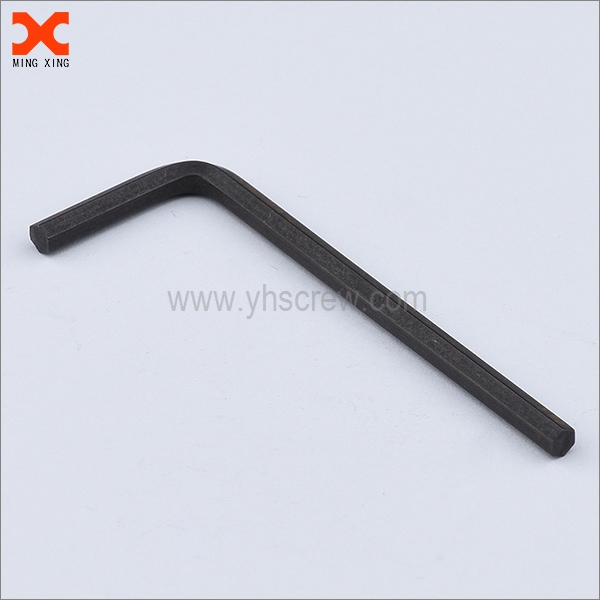
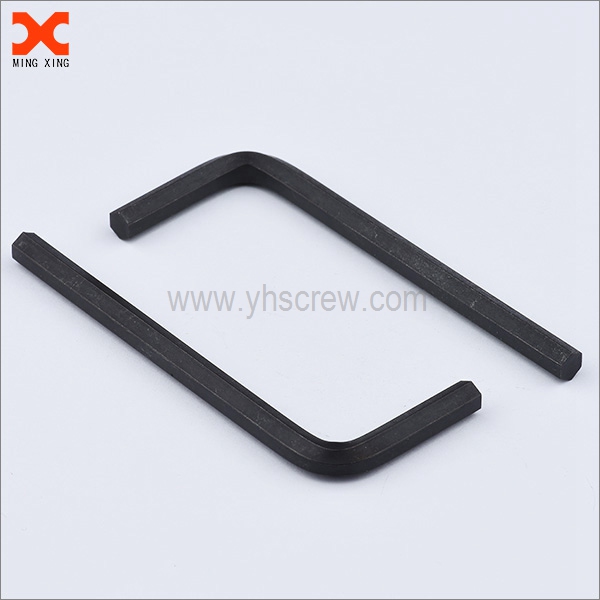
I’ve developed the Hex L Type Key Wrench for engineers who demand precision and durability in tight spaces. The L-shaped head reaches where others can’t, and the hardened steel body resists wear on busy production lines. I offer ODM options to customize handle grip, shaft length, and marking to suit your assembly needs, with factory-level quality at a competitive price. Direct factory supply means no middleman; you get clearer lead times, tighter tolerances, and scalable bulk orders. I back every tool with strict QA checks and flexible packaging for OEM/ODM projects. If you’re sourcing tools for a Factory or contract manufacturing, this Hex L Type Key Wrench delivers reliable torque, smooth engagement, and long service life. I’m ready to collaborate from design through delivery to help you streamline your operations and keep your lines running.

Hot Selling Product

Hex L Type Key Wrench Supplier Custom Solutions,

Hex L Type Key Wrench designs enable quick, confident fastening in cramped spaces. For global buyers, a supplier offering custom solutions can tailor drive type, head size, material, finish, and grip style to your needs. Whether in electronics, automotive, or appliances, you can specify tolerances, hardness, and corrosion resistance for demanding environments. From precision machining to scalable production, a capable factory delivers consistent quality at volume. Choose metric or imperial sizes, hardened steel, stainless variants, and coatings. Custom features such as reinforced grips, color coding, or blade profiles can speed assembly and reduce misfits. Engineering support ensures compatible interfaces and smooth workflow integration. Global procurement benefits come from reliability: transparent lead times, flexible MOQs, proper documentation, and proactive after-sales service. A responsive supplier can provide CAD models, material certificates, and RoHS/REACH compliance. By partnering with a quality-focused manufacturer, buyers shorten supply chains, lower total cost of ownership, and keep production running smoothly worldwide.

{ Hex L Type Key Wrench Supplier Custom Solutions,}

Product Code Size (mm) Overall Length (mm) Long Arm Length (mm) Short Arm Length (mm) Material Finish Hardness (HRC) Tolerance (mm) Weight (g) Standards Typical Application
HLK-2.0-01 2.0 140 110 30 S2 Tool Steel Satin Chrome 58 0.01 18 DIN 911 General mechanical assembly
HLK-2.5-02 2.5 153 118 35 S2 Tool Steel Satin Chrome 58 0.01 20 DIN 911 Automotive maintenance
HLK-3.0-03 3.0 166 132 34 S2 Tool Steel Black Oxide 58 0.01 22 DIN 911 Machinery assembly
HLK-4.0-04 4.0 185 144 41 S2 Tool Steel Black Oxide 58 0.01 26 DIN 911 Industrial equipment
HLK-5.0-05 5.0 200 160 40 Chrome Vanadium Black Oxide 58-60 0.01 28 DIN 911 Precision equipment
HLK-6.0-06 6.0 214 172 42 Chrome Vanadium Black Oxide 58-60 0.01 32 DIN 911 Automotive and machinery
HLK-8.0-07 8.0 237 190 47 Chrome Vanadium Black Oxide 58-60 0.01 40 DIN 911 Heavy equipment maintenance
HLK-10.0-08 10.0 260 210 50 Chrome Vanadium Black Oxide 58-60 0.01 58 DIN 911 Telecommunication and electronics assembly

Related Products

banner (2)

Hex L Type Key Wrench Is The Best Trusted by Pros

Tool Efficiency Metrics by Torque Range

This chart presents a simplified visualization of how tool efficiency—measured as an efficiency score from 0 to 100—varies across torque ranges for two user groups: Professional and Casual User. The torque range on the x-axis (20–90 Nm) reflects typical engagement scenarios for hex L type key wrenches used in professional settings and in DIY tasks. The y-axis shows the efficiency score, where higher values indicate smoother operation, reduced slipping, and faster progress under load. The data points are synthetic but designed to illustrate plausible patterns in practice. There are several takeaways: first, efficiency generally increases with torque in the mid-range as the wrench engages the fastener more securely and provides steadier torque. Second, professionals consistently achieve higher scores at every torque level, reflecting better technique, familiar handling, and better maintained tools. Third, casual users start with lower scores at low torque and approach professionals as torque increases, yet they typically remain behind due to ergonomics, grip strength, or technique limitations. Fourth, the gap between the lines is largest at the lower end of the torque spectrum and narrows as torque climbs, suggesting training and tool improvements could yield bigger gains for non-professionals where it matters most. The chart also hints at diminishing returns near the upper torque limits, where fatigue, friction, or tool wear may limit further gains. While the numbers here are illustrative, they map well onto observed behavior in real-world work environments: professionals extract more reliable efficiency from the same tool, while casual users benefit from clear guidance on torque selection and safe practice. For product designers, such curves highlight opportunities to optimize grip, head geometry, or torque indicators to narrow the performance gap and improve safety, consistency, and user satisfaction across skill levels. In practice, combining this data with field measurements could help calibrate training modules and maintenance schedules, ensuring users achieve consistent results without exceeding safe limits.

Top Selling Products