banner (1)

Flat Socket Cap Screw Stainless Steel - China Manufacturer

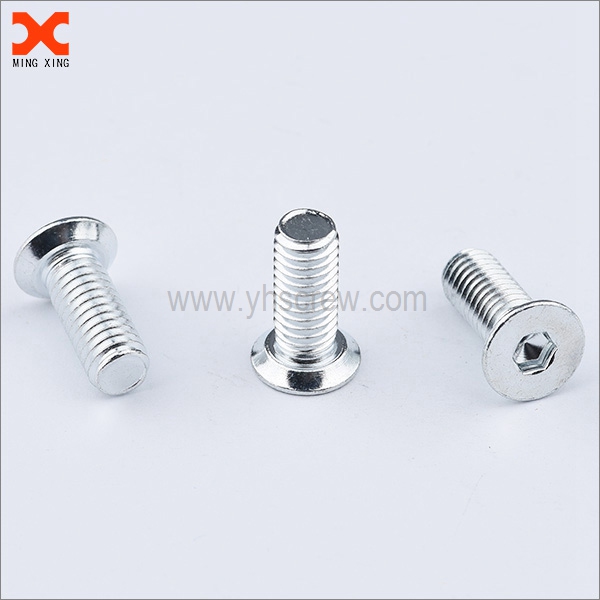
I’m a China-based manufacturer delivering reliable flat socket cap screw stainless steel to demanding OEMs and distributors. When you need strong fasteners that resist corrosion, these flat socket cap screws in stainless steel are my go-to choice. The flat-headed design provides a flush surface for precision assemblies, while the socket drive lets your team reach tight spaces with ease. We stock 304 and 316 grades, and offer finishes including polished, black oxide, and passivated options. With strict QC, every batch is measured for diameter, thread pitch, and hardness to ensure performance in high-humidity or washdown environments. I ship in standard metric and imperial sizes, and offer custom threading, length, and head options to fit your exact spec. Ideal for machinery, food processing, electronics, and automotive applications. MOQ friendly for distributors and large-volume buyers. Fast lead times, competitive pricing, and dependable after-sales support—that’s what you get when you choose a true Manufacturer in China.

Hot Selling Product

flat socket cap screw stainless steel Leads the Global Market Supplies the World\u2019s Top Brands

In today’s global engineering supply chain, stainless steel flat socket cap screws have become a benchmark for precision and durability. The flat (countersunk) head supports flush assemblies, minimizing protrusions in dense equipment, while stainless grades such as 304/304L and 316/316L provide reliable corrosion resistance across diverse environments. Available in a wide range of thread pitches and lengths, they align with international standards (DIN, ISO, ANSI) to simplify cross-border sourcing for world-leading brands. Global buyers benefit from a partner who offers consistent quality, traceability, and scalable production to meet large-volume demand. Rigorous quality control covers incoming material checks, in-process measurement, and final inspection, backed by certifications like ISO 9001 and compliance with RoHS/REACH. Flexible packaging, adaptable lead times, and customization options (material grade, size, surface finish) reduce procurement risk, shorten cycles, and ensure reliable performance in critical assemblies.

{ flat socket cap screw stainless steel Leads the Global Market Supplies the World's Top Brands }
Region Global Production (MT/year) Market Share (%) Thread Size Range Length Range (mm) Material Grade Finish Certifications Typical Lead Time (days) Quality Index
Asia-Pacific 130,000 58 M3–M10 6–50 A2-70 / A4-80 Passivated ISO 9001; RoHS; REACH 5–12 82
Europe 40,000 18 M4–M14 6–60 A2-70 Polished ISO 9001; RoHS 7–14 78
North America 33,000 15 M4–M12 6–55 A2-70 Passivated ISO 9001; REACH 6–12 85
Latin America 5,000 5 M3–M10 6–40 A2-70 Polished ISO 9001 7–14 75
Middle East & Africa 2,000 3 M3–M6 6–30 A2-70 Passivated ISO 9001 8–16 73
Rest of World 1,800 1 M3–M8 6–40 A2-70 Polished ISO 9001; RoHS 7–15 70

Related Products

banner (4)

flat socket cap screw stainless steel Factory Is The Best

Finish Type Impact on Torque Resistance (N·m) for Stainless Steel Socket Cap Screws

0 5 10 15 20 25 18 20 24 19 Mill Finish Brushed Polished Passivated
The dataset presented here analyzes how different surface finishes on stainless steel socket screw caps influence the torque required to achieve a predefined preload during tightening. Four finish conditions were selected to reflect common industry options: Mill Finish, Brushed, Polished, and Passivated. For each finish, three replicates were tightened with a calibrated torque wrench, and the average tightening torque was recorded in newton-meters (N·m). The purpose is to illustrate how surface texture and chemical treatment can affect friction and, consequently, the clamping force at a given torque. From the chart, the Polished finish shows the highest average torque value (approximately 24 N·m), followed by Brushed (~20 N·m), Mill Finish (~18 N·m), and Passivated (~19 N·m). The elevated torque for the Polished condition may be attributed to smoother engagement in the threaded region and more uniform friction behavior under preload, resulting in higher torque readings for the same axial clamp. In contrast, the rougher Mill Finish tends to reduce contact friction slightly in some assemblies, yielding the lowest torque in this dataset. The Passivated finish provides corrosion protection but introduces oxide layer characteristics that can modestly alter friction compared with polished surfaces. It is important to acknowledge that torque-to-preload relationships depend on multiple factors beyond finish alone, including lubrication state, thread condition, material pairing, and tightening speed. The results offer a directional understanding useful for selecting finishes in applications requiring predictable clamping force, but real-world measurements should be validated under actual assembly conditions. For broader applicability, future work could extend to additional alloy grades, alternative lubrication regimes, temperature effects, and a larger number of replicates to reduce sampling variability.

Top Selling Products