

Manufacturing and assembly teams often look for ways to cut extra processing steps on production lines, and self tapping screws are one practical solution widely adopted across many industries. Instead of pre‑tapping threads inside work‑pieces, these fasteners build matching threads inside pre‑drilled pilot holes while being driven in. Even so, many field issues happen from poor type matching, wrong pilot‑hole size or improper material selection, rather than raw product quality defects.
Two core types of self tapping screws for real‑world jobs
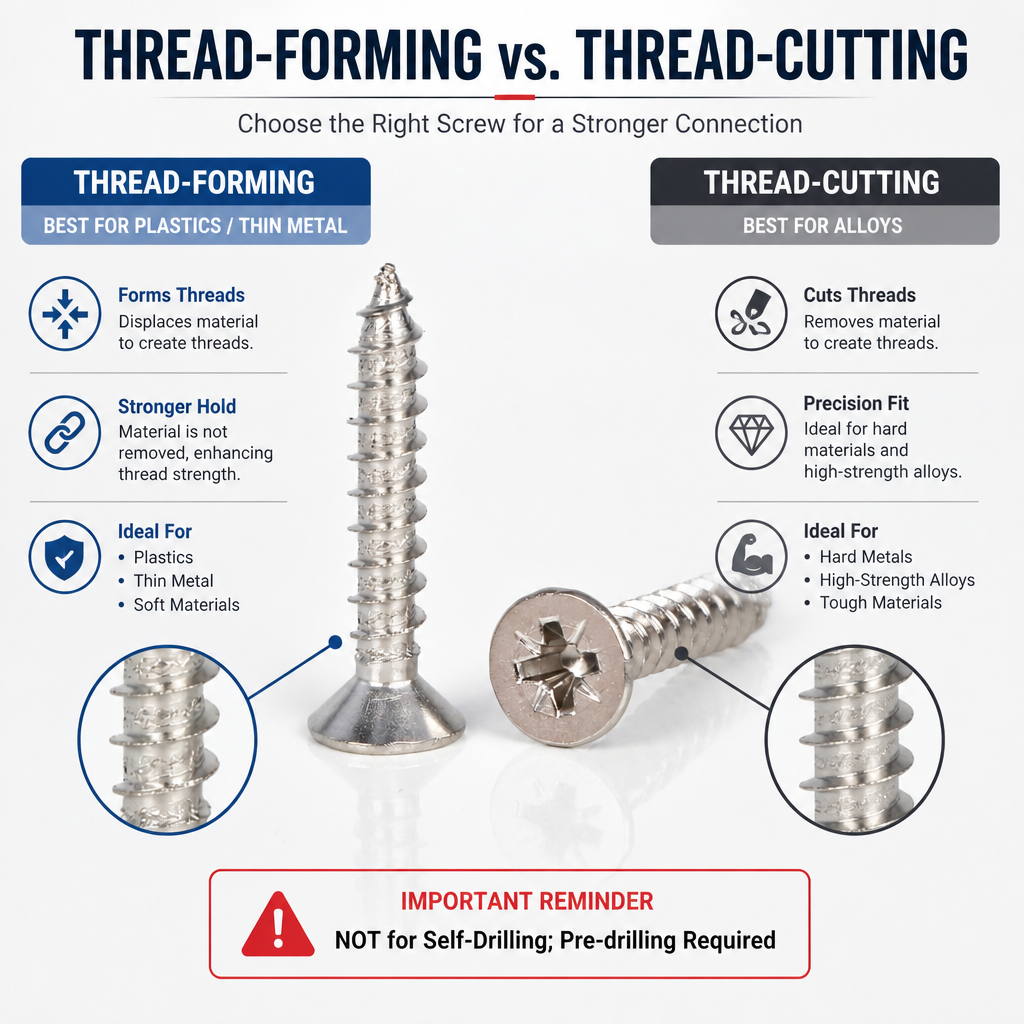
Most buyers mix‑up thread‑forming and thread‑cutting variants when ordering self tapping screws. These two subgroups perform very differently even though they fall under the same large product category.
Thread‑forming self tapping screws squeeze and displace base material without cutting chips away. This style fits thermoplastic housings and thin soft sheet‑metal best. It lowers the risk of plastic cracking during mass‑volume assembly, which makes it popular for electronics and new‑energy module parts.
Thread‑cutting self tapping screws come with cutting flutes on threads, shaving away small material chips as they install. Engineers tend to pick this version for harder thin metal, cast alloy and denser composite substrates. One real‑world downside: you need to clear away debris generated during installation.
Important note: Neither of these two equals self‑drilling screws. self tapping screws still require pilot holes, while self‑drilling screws feature drill‑points to make holes on‑spot. Mix‑up will bring broken screws or cracked work‑pieces.
Material & surface finish choice for self tapping screws
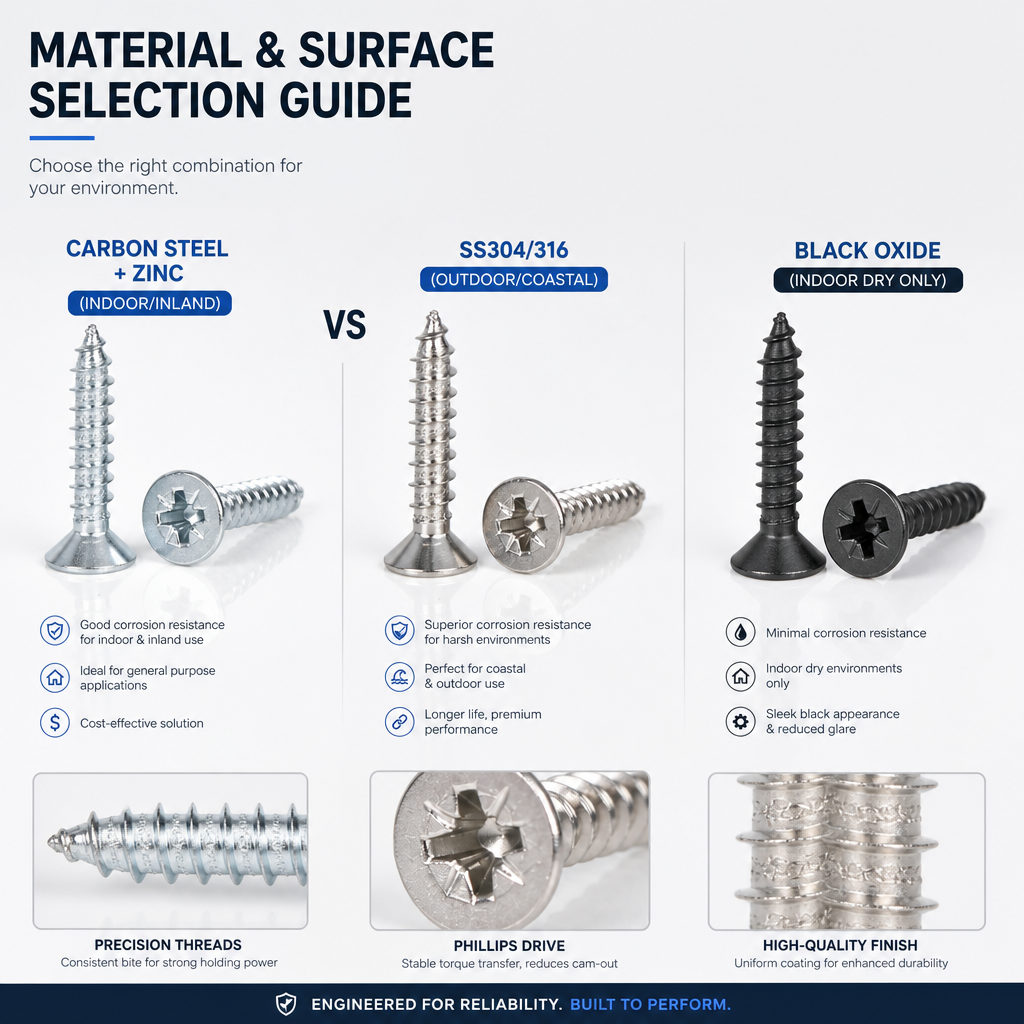
Carbon‑steel self tapping screws with zinc‑plated finish work fine for most indoor cabinet, machinery and general sheet‑metal assembly. Keep in mind zinc plating cannot stand long‑term coastal salt‑spray exposure. If your project sits outdoors or runs under high‑humidity conditions, shift over to 304 or 316 stainless‑steel self tapping screws.
Black‑oxide surface treatment offers dark appearance with only mild rust resistance, and we only suggest it for fully dry indoor environments. When projects have special demands such as nickel‑plating or Dacromet coating, communicate your site environment with fastener suppliers ahead of ordering.
Typical industry deployment for self tapping screws
Production installers use self tapping screws across multiple sectors.
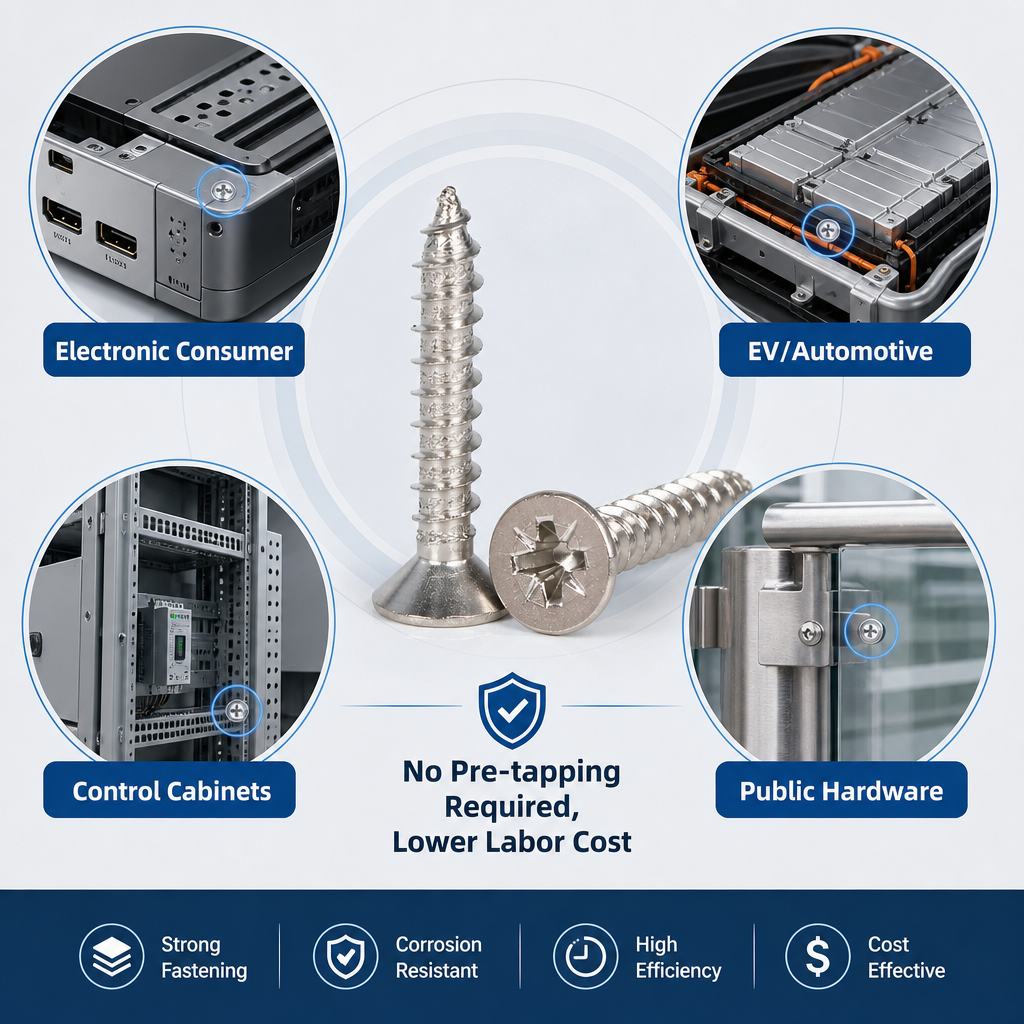
- Electronics & consumer devices: Fasten plastic enclosures, control‑box sheet‑metal shells and internal component brackets. Thread‑forming types reduce plastic crack risk for mass assembly lines.
- Automotive & new‑energy equipment: Secure plastic parts, battery module housing accessories and light sheet‑metal sub‑assemblies.
- Light machinery & cabinet hardware: Assemble equipment frames, distribution cabinet panels and indoor fixture parts.
- Furniture & public hardware: Join thin metal and composite panels for indoor non‑corrosive working conditions.
Practically speaking, using self tapping screws removes separate pre‑tapping steps, which helps factories cut total assembly labour cost for large‑volume orders.
Common on‑site mistakes when working with self tapping screws
From real‑project feedback, many failure cases come from simple operational mistakes.
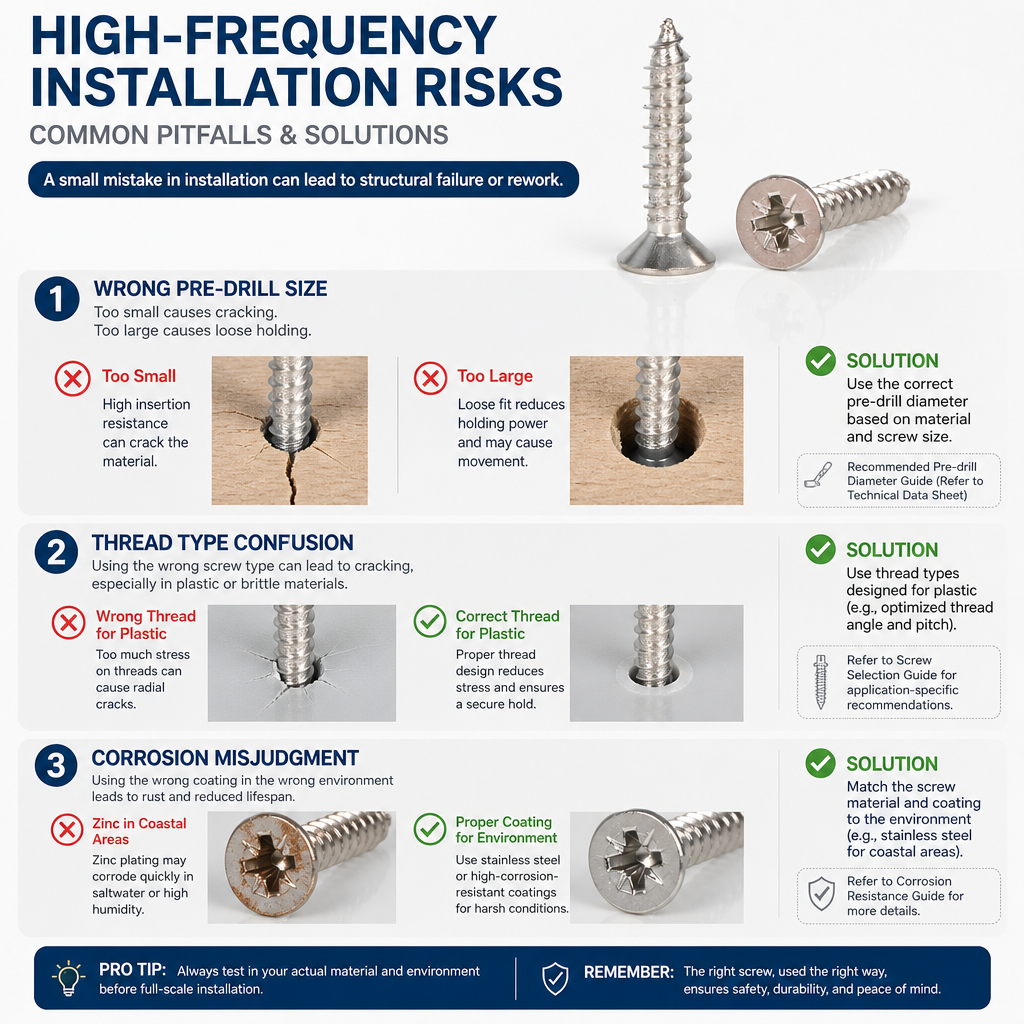
First, pilot‑hole diameter mismatch is the top trouble source for self tapping screws. Too‑small pilot holes create extreme driving torque and crack plastic or thin metal parts. Over‑sized pilot holes lead to weak pull‑out force and loose connections later. You should set hole size according to your actual substrate material, not just follow screw outer diameter.
Second, people confuse thread‑forming and thread‑cutting types. Putting thread‑cutting self tapping screws onto thin soft plastic will create heavy cracking risk.
Third, mis‑judge corrosion performance. Many buyers select zinc‑plated carbon‑steel self tapping screws for coastal outdoor projects, which leads to early rust‑caused joint failure.
Practical bulk‑sourcing checklist for self tapping screws
Before releasing formal PO for bulk‑volume self tapping screws, procurement and engineering teams can go through these check‑points:
- 1 Confirm screw category: thread‑forming or thread‑cutting, do not mix‑up with self‑drilling screws.
- 2 Define head style: pan‑head / countersunk‑head matches installation space and surface‑flatness requirement.
- 3 Lock in material grade and surface coating according to humidity, salt‑spray and outdoor‑exposure level of deployment site.
- 4 Confirm pilot‑hole reference size from supplier, test fit with real production material before full‑scale mass‑production.
- 5 Clarify custom needs: special length, head dimension, drive type if standard stock items cannot meet project demands.
Best practice: arrange small‑batch trial run first. Test real torque, pull‑out performance and anti‑crack effect on your actual work‑piece material, to avoid large‑batch loss risk.
Short‑term market observation for self tapping screws
As automated assembly lines expand globally, demand for well‑matched self tapping screws keeps growing. Buyers no longer only focus on unit price; more project teams care about whether fasteners can lower assembly defect rate and reduce after‑sales maintenance work.
Suppliers who can give targeted material‑matching advice and support dimension customisation will keep attracting global B2B purchasers. If you have special fastening puzzles for your plastic or sheet‑metal projects, you can send your substrate information and assembly requirements to fastener manufacturers for pre‑order technical consultation.
Post time: Aug-17-2026





