
Lots of design teams treat Sealing Screws as ordinary bolts, only paying attention to thread size. Once deployed in field conditions, improper selection triggers avoidable troubles: seal crushing, water penetration, oil leakage or early rubber ageing. Below are five typical mistakes collected from real‑world OEM projects.
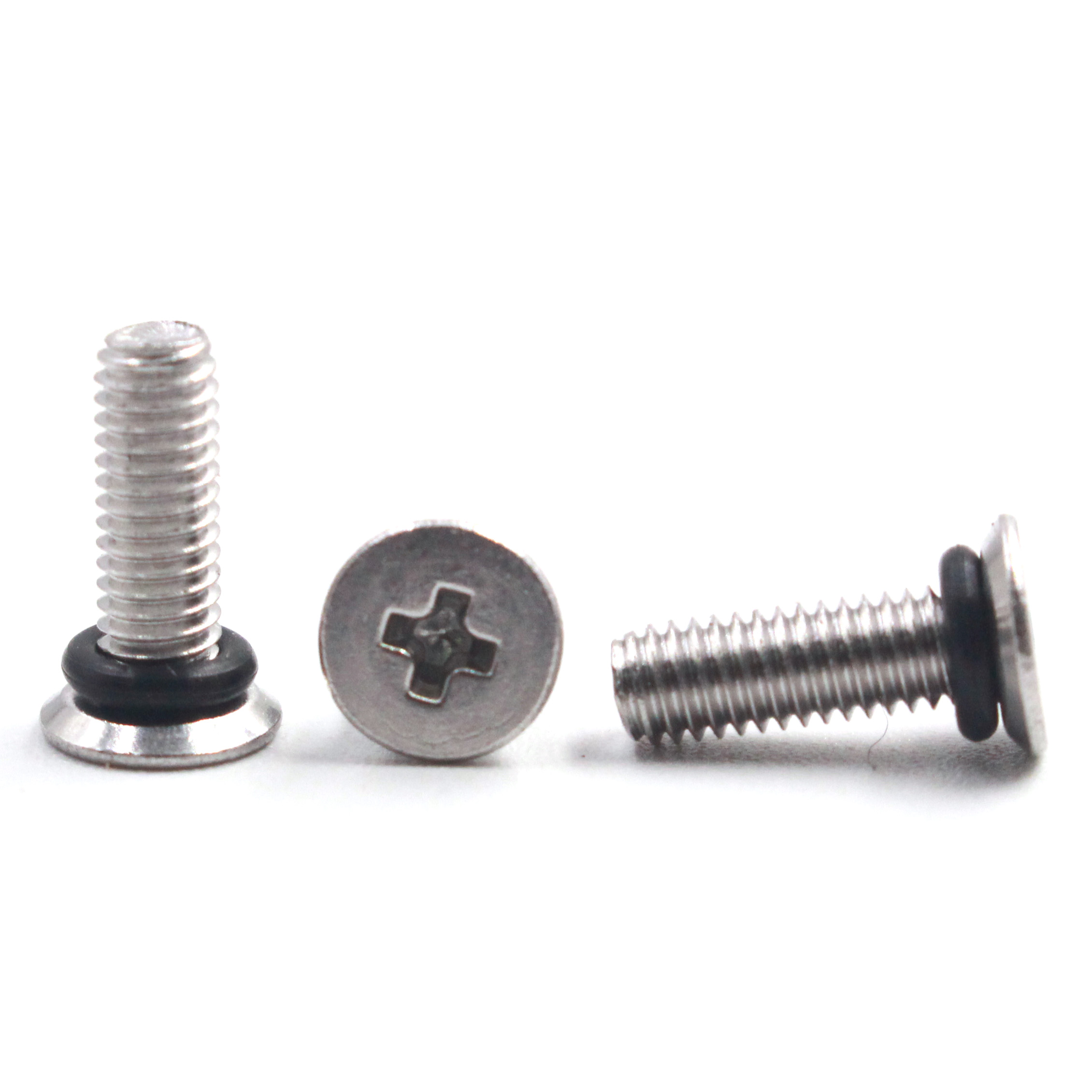
Mistake 1: Using wrong sealing rubber for actual working medium
On‑site phenomenon: Seal becomes swollen, softened or cracked within short service time, waterproof performance completely fails. Root cause: EPDM seal is applied for oil‑mist / fuel‑contact parts; or nitrile‑NBR rubber is used for long‑term UV outdoor exposure. Different rubber formulas fit different media. Recommended fix: Outdoor rain & UV‑exposed assemblies choose EPDM‑seal Sealing Screws. Oil‑mist / fuel environment select NBR nitrile rubber. High‑temperature scenarios adopt silicone sealing compound.
Mistake 2: Excessive tightening torque crushing integrated sealing element
On‑site phenomenon: After installation, rubber washer / O‑ring gets crushed, cut or permanently deformed. Sealing capability disappears even though screw thread is well‑fastened. Root cause: Engineers apply high torque values from ordinary steel bolts onto sealing‑screws without checking rubber‑part tolerance. Recommended fix: Define maximum assembly‑torque for Sealing Screws. Complete torque‑range verification with pre‑production samples before mass‑PO release.
Mistake 3: Carbon‑steel screw‑body for coastal & marine projects
On‑site phenomenon: Screw body suffers corrosion rust under salt‑spray environment. Rust spreads to sealing boundary and destroys sealing interface. Root cause: Zinc‑plated carbon‑steel lacks enough salt‑spray resistance for seaside / marine equipment. Recommended fix: Coastal, marine or high‑humidity outdoor hardware shall adopt 304 / 316 stainless‑steel‑body Sealing Screws. Carbon‑steel options are limited to fully‑indoor dry‑condition use.
Mistake 4: Using loose separate rubber washers instead of integrated sealing‑screws
On‑site phenomenon: In mass‑production assembly, gaskets shift, drop or skew; large batch products have unstable waterproof pass‑rate. Root cause: Design uses ordinary machine‑screws plus loose independent rubber washers, instead of factory‑integrated Sealing Screws. Manual assembly brings high human‑error risk. Recommended fix: Prioritize factory pre‑assembled integrated sealing‑screws for mass‑volume OEM projects, to stabilize sealing yield and cut assembly‑time cost.
Mistake 5: Ignoring workpiece surface flatness requirement
On‑site phenomenon: Even correct sealing‑screw specification, water still seeps through mounting hole. Root cause: Workpiece mounting surface has burrs, scratches or unevenness. Rubber seal cannot fully compress and fill micro‑gaps. Recommended fix: Ensure mounting surface is flat and burr‑free. If surface defects cannot be eliminated, re‑evaluate structure or consult fastener supplier for modified Sealing Screws solution.
Pre‑order validation checklist for Sealing Screws
Complete these checks before releasing bulk‑PO:
- Confirm working‑medium: rain‑water / UV / oil‑mist / high‑temperature, select matched sealing‑rubber material.
- Confirm working‑environment corrosion risk, choose proper screw‑body material grade.
- Confirm maximum allowable assembly torque, prevent seal‑element crushing damage.
- Evaluate workpiece mounting‑surface flat‑ness, remove burrs and sharp scratches.
- Complete real‑workpiece assembly & water‑proof performance test with pre‑production samples.

Closing summary
Field performance of Sealing Screws depends not merely on thread specs, but on sealing‑material matching, torque control, screw‑body corrosion resistance and workpiece‑surface condition. Many sealing‑failure cases come from overlooking rubber‑component related parameters. Clarify medium, temperature and environment requirements in design‑phase, and hand‑over full specifications over to fastener suppliers, to avoid preventable mass‑production troubles.
About Our Factory & How To Reach Us
We are an experienced sealing‑fastener manufacturer supplying both stock and custom‑built sealing screws for global B2B clients. Our in‑house QC covers raw‑material incoming inspection, sealing‑component assembling monitoring and finished‑product waterproof‑performance testing. We support sample evaluation, small‑batch prototype and large‑volume OEM orders.
If you meet selection confusion for Sealing Screws or need quotation support for your upcoming project, kindly send your drawing, medium info and application background. Our technical‑sales team will respond with targeted suggestions for your project.
Post time: Sep-11-2026