

1. Pick drive type based on your existing production tools
Drive style decides whether your on‑site tools can cooperate well with machine screws. If screw drive does not fit your existing screwdriver bits, your production line will run into frequent bit slipping, jamming and frequent bit replacement, slowing down whole‑site assembly progress.
- Phillips drive: Works for manual work and semi‑automatic lines. Widely adopted for consumer electronics, household appliances and normal‑load packaging equipment.
- Hex socket drive: Handles higher torque. Most site technicians select hex‑socket machine screws for heavy‑duty machinery, automation frames and metal structural parts.
- Torx drive: Reduces bit‑slip risk under high torque. Suitable for factories running high‑speed automated assembly and precision equipment manufacturing.
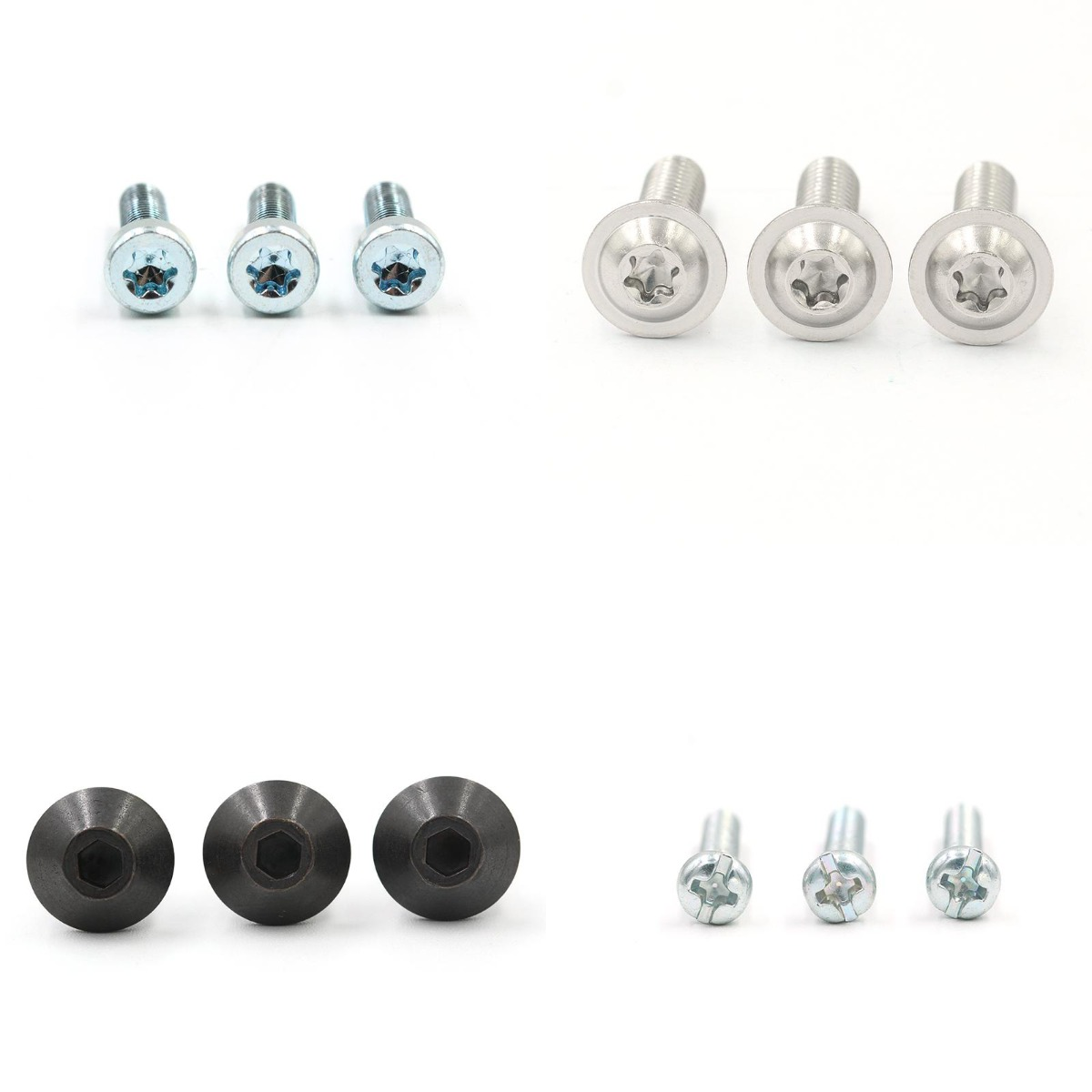
2. Select material & surface finish according to actual working environment
Do not choose machine screws only by unit cost. Think over your real‑life service conditions first before confirming material and surface options.
- Zinc‑plated carbon‑steel: Cost‑saving option for dry indoor conditions. Common for electronic boxes, appliance housings and general mechanical assemblies.
- 304 / 316 stainless steel: Recommended for damp workshops, coastal areas and outdoor exposed hardware. They lower rust risk and extend component service life.
- Brass material: Good conductivity for low‑current scenarios. Fit for terminal blocks, wiring connectors and instrument panel assemblies.
3. Head style matches installation space & surface requirement
Head shape directly influences installation effect. Many operators overlook counter‑bore requirement when using countersunk variants.
- Pan‑head machine screws: Easy to mount and remove. Use when you do not need fully flush surface. Common for cabinet and indoor device assembly.
- Countersunk flat‑head machine screws: Require pre‑machined counter‑bore hole, so the head can sit flush with workpiece surface. Shallow counter‑bore will leave protruding head; too deep will cut clamping force.
- Socket‑cap machine screws: For high‑clamping‑force scenarios, widely used for equipment frames.
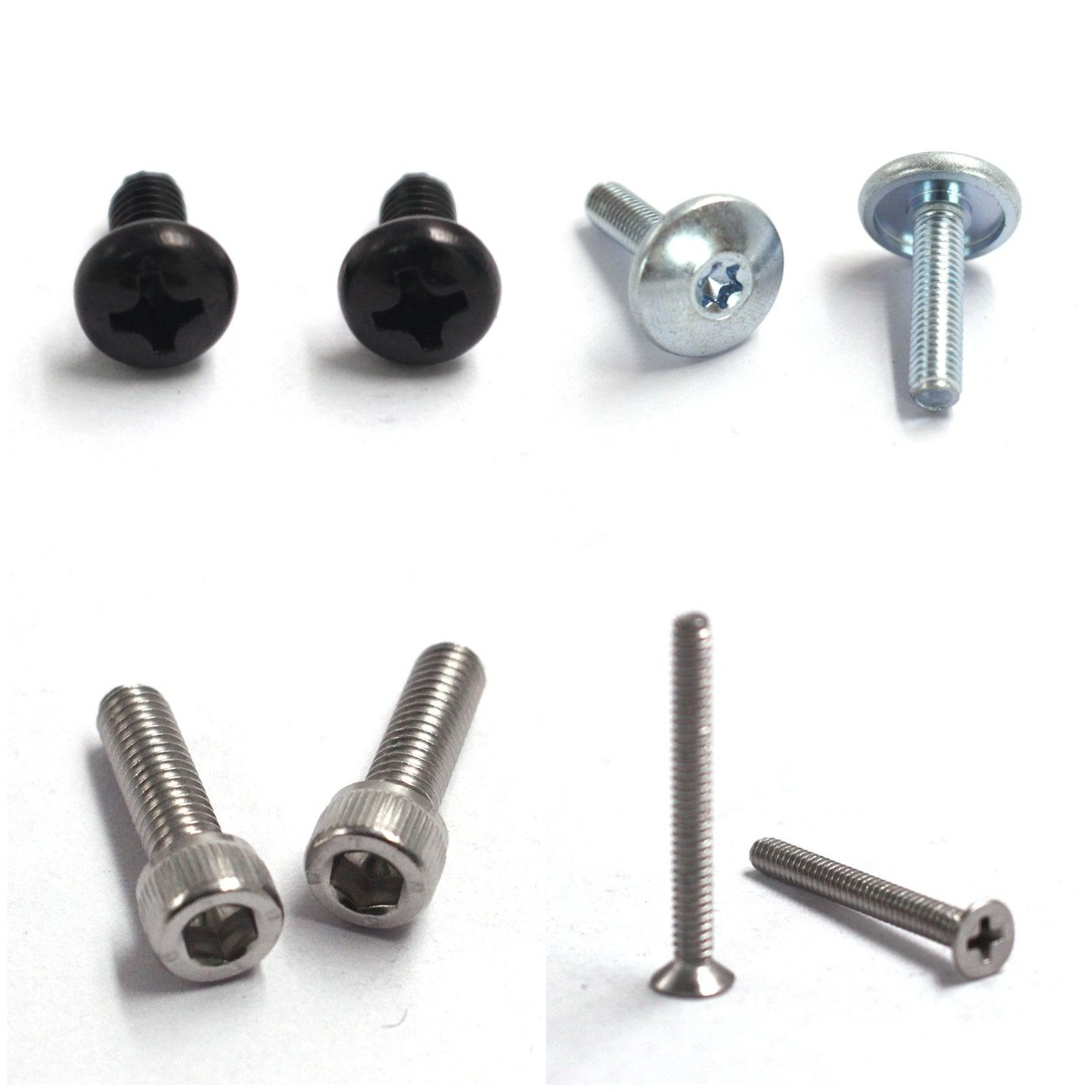
4. Common on‑site mistakes you need to avoid
These small errors bring huge re‑work loss in mass production, our factory met these issues from lots of customer feedback.
- 1 Never mix metric‑thread machine screws with UNC / UNF inch tapped holes. Mismatched pitch will destroy threads during tightening.
- 2 Do not apply excessive torque on tiny electronic‑grade machine screws. Over‑torque can snap screw shanks easily.
- 3 For countersunk‑head screws, keep counter‑bore depth matched with screw head height.
5. Practical pre‑order suggestion for bulk purchase
Before releasing large PO for machine screws, finish simple sample verification steps:
- 1 Test assembly with your real workpiece samples
- 2 Check fitting status of screw head and installation space
- 3 Confirm compatibility between drive recess and your screwdriver bits
- 4 Verify anti‑rust performance if units will run in humid environment
Small‑batch trial helps you spot hidden problems ahead of mass production, and prevents costly batch rework.
Post time: Aug-25-2026





